


 Shkruar nga Pamfleti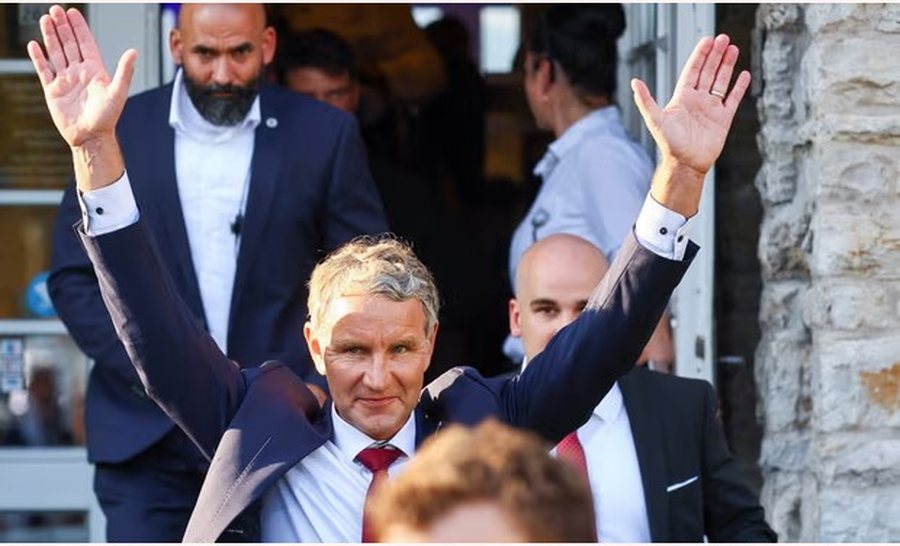
The AfD's rise has been cast as a protest vote against persistent inequalities in income, employment and living standards.
After the fall of the Berlin Wall in November 1989, former West German Chancellor Willy Brandt predicted that reunification would finally allow "what belongs together to grow together."
How optimistic that image sounds 35 years later.
Yesterday's historic election results in Thuringia and Saxony paint a picture of a Germany whose eastern and western regions are, if anything, drifting further apart, Philip Ottermann points out in an analysis for the Guardian.
The far-right, anti-immigration Alternative for Germany (AfD) is riding a populist wave in Europe's largest economy.
If federal elections were held tomorrow, the latest polls show the party could become the second-strongest group in the Bundestag.
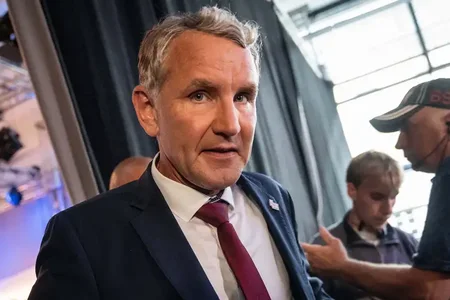
But only in the eastern states can the AfD claim to have the mandate to form the next government, as its leader from Thuringia, Björn Hocke, has already done after coming out on top in state elections for the first time.
And in no western state do the polls predict the established center-right and far-right challenger center-left parties as seriously as in Saxony, where forecasts put the AfD in a head-to-head race with the conservative Christian Democrats. Union (CDU), with the latter slightly ahead in the exit poll.
In Brandenburg, the state surrounding the capital Berlin, the AfD is expected to become the strongest party at the end of this month.
As long as the remaining parties manage to keep a cordon around the far right and prevent it from winning a majority, its dreams of taking power are likely to remain just an aspiration.
However, the AfD's emergence as a dominant regional force raises serious and troubling questions about Germany's political identity and how to stem the rise of such forces in the future.
For years, it was assumed in Germany that once the eastern states "caught up" economically with the rest of the country, their political prospects would match.
According to such reasoning, the rise of the AfD was cast as a protest vote against persistent inequalities in income, employment and living standards.
But economics and demographics only go so far in explaining the outcome of Sunday's vote.
Popullsia në lindje është më e vjetër se ajo në perëndim, por demografikisht nuk është më e “gjakderdhur” siç ishte gjatë viteve të fundit të Republikës Demokratike Gjermane (RDGJ) dhe dy dekadave që pasuan.
Në fakt, çdo vit që nga viti 2017, gjithnjë e më shumë njerëz kanë migruar nga perëndimi në lindje.
Papunësia është më e lartë, por vetëm me një fraksion - kontrasti i vërtetë këtu është midis Gjermanisë veriore dhe jugore.
Në dy vitet e fundit, ekonomitë e vendeve lindore janë rritur më shpejt se ato të perëndimit, pasi lojtarët globalë si Tesla dhe Intel ngritën fabrika në vendet lindore.
Nivelet e imigracionit në shtetet lindore që shkuan në kutitë e votimit të dielën mbrëma janë ndër më të ulëtat në të gjithë Gjermaninë.
Sipas një sondazhi të lëshuar nga qeveria e Olaf Scholz në fillim të këtij viti, rreth 19 për qind e gjermanolindorëve thonë se ndjejnë se kanë mbetur prapa.
Kjo është dy herë më shumë se në perëndim (tetë për qind), por gjithsesi do të sugjeronte që 80 për qind e popullsisë së pesë shteteve lindore nuk ndjejnë se po humbasin.
Megjithatë, një numër i konsiderueshëm prej tyre hodhën votat e tyre për partinë e cila në degën e saj në Turingi është e certifikuar si ekstremiste e djathtë.
Sociologu me origjinë lindore Stephen Mau shpiku termin ossification për këtë prirje - një lojë me zhargon për ish-qytetarët e RDGJ-së dhe procesin biologjik me anë të të cilit indet ngurtësohen në kockë.
Larg nga "e kapur ende hapin", shkruan Mau në librin e tij të fundit Ungleich Vereint, Gjermania Lindore voton ndryshe nga Perëndimi, pikërisht sepse ajo tashmë e ka kapur dhe tani pretendon se pohon identitetin e saj të veçantë.
Në librin e saj Tausend Aufbruche (Një mijë fillime), i cili fitoi çmimin kryesor gjerman të këtij viti për letërsinë jo-fiction, historiania e lindur në RDGJ, Christina Morin thotë se AfD po fiton në lindje, sepse ka qenë në gjendje të kuptojë një kuptim të veçantë të asaj që demokracia përfshin, e cila ka formësuar 40 vjet nën sundimin komunist dhe ndryshe nga ajo në perëndim.
Kjo mund të tingëllojë paradoksale, pasi RDGJ ishte një diktaturë njëpartiake pa zgjedhje të lira dhe pa ndarje të pushteteve shtetërore.
Megjithatë, regjimi i RDGJ-së pretendoi konceptin e demokracisë për qëllimet e veta dhe prerazi.
“Gjermania Lindore pohoi gjithashtu për vete se kishte gjetur një përgjigje demokratike ndaj nacionalsocializmit”, tha Morina për Guardian në një intervistë të fundit.
“Është thjesht se historia e komunistëve se si funksionon demokracia ishte thellësisht populiste, duke pretenduar se ishte më e vërtetë dhe më përfaqësuese e njerëzve realë sesa demokracia në Perëndim, për të cilën ata thoshin se organizonte vetëm hierarki klasore dhe përfaqësonte interesat e kapitalizmit”.
Përvoja historike e asaj lloj pseudo-demokracie, argumentoi ajo, ishte një nga arsyet pse AfD arriti të mobilizonte shumë më tepër jovotues të mëparshëm në lindje sesa partitë e tjera.
Unlike the established centrist parties, the AfD not only held election campaign rallies, but organized spaziergang, "walks" through city centers designed to provoke peaceful protests on the Monday that followed the fall of socialist East Germany.
It is the only party in Germany that requires the president to be elected directly by citizens, rather than a federal convention, and has championed direct democracy with regular Swiss-style referendums.
"In its election campaigns, the AfD used very effectively the experience that is widely shared among East Germans," says Morina.
There is every reason to distrust the AfD's claim that it simply represents a different democratic tradition.
Underlying his story of empowerment is a deeply racist chain of thought that portrays Easterners as purer Germans because they resisted multiculturalism and all the ideas that entered West German discourse after the 1968 student revolutions.
But both Mau and Morina suggest that winning over far-right voters can only work if they directly engage them through unconventional and creative means, such as local citizens' assemblies.
To stop and ultimately reverse Germany's east-west shift, the political center must start thinking outside the box./ The Guardian




Lini një Përgjigje