


 Shkruar nga Pamfleti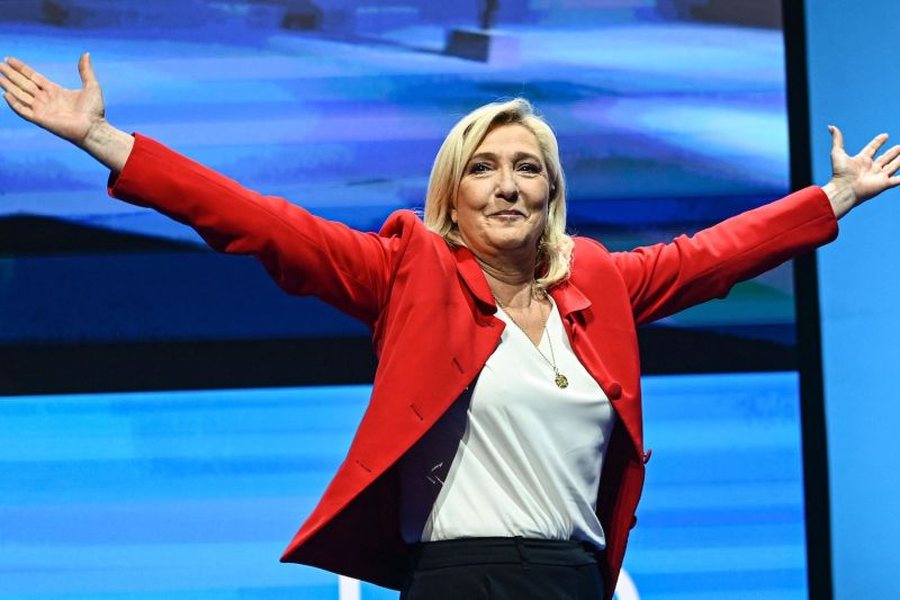
An anti-EU France would be a disease in the heart and brain of Europe.
Whether in Brussels or any other European capital, these days it is impossible to discuss France without referring to the risk of opposition leader Marine Le Pen's presidency in 2027.
Several questions immediately arise; The Europeanization of France's nuclear deterrence, would Le Pen keep this promise? France's long-term commitment to Ukraine? "Would Le Pen support it? 'Enlargement?' She would oppose it."
Just as former US President Donald Trump has been able to set the parameters of America's foreign policy outside the White House, there is a risk that Le Pen may now be able to do the same for France and the EU from outside the Elysee.
There are several reasons to believe Le Pen could become president on her fourth attempt, the first of which has little to do with her and everything to do with the fickle nature of the French electorate.
Voters in France like to oust incumbents. In 2022, French President Emmanuel Macron became the first president of the Fifth Republic – the first in 64 years – to be re-elected without first losing control to the opposition in parliamentary elections.
Macron cannot run for office again, but by 2027, his centrist alliance will have been in power for a decade. Moreover, both the left and the old center-right show no signs of producing a credible candidate. So if the French electorate wants something new – as they usually do – Le Pen will be their only real option.
Moreover, Le Pen has spent the last two years saying and doing as little as possible while trying to appear presidential – and will likely spend the next three years doing the same. And her 88 MPs in the National Assembly, under orders to look serious and not say anything too radical, have given her party a veneer of respectability.
Moreover, the further rise of her National Rally (RN) party has reached an atmosphere of inevitability. Few young voters are outraged by the family and its party's ties to the Vichy collaborationist regime of 1940-1944.
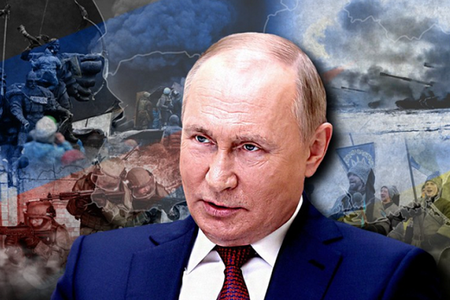
Then there are Le Pen's financial and political ties to Russian President Vladimir Putin, which would be a problem if the election were held now. And while they may still be a problem in 2027, even now they haven't stopped her party from building an almost 10-point lead in the polls ahead of European Parliament elections in June.
The French public's loyalty to the idea of Europe remains theoretically strong, but passion or real understanding of the EU is weak – which is why Le Pen's de facto policy of dismantling the bloc from within is poorly understood.
The "normalization" of Le Pen has been based on the successful deception that she is now a moderate who wants to shift power and economic advantage to ordinary citizens. But while its economic program remains interventionist and left-wing, its social, European and international policies remain as ultra-nationalist as ever. And while a French parliament hostile to Le Pen could block many of her proposals, it is unlikely to be able to block all of them.
If elected, a Le Pen presidency would at best lead to five years of diversion and confusion at home and in the EU capital. At worst, it could drive a nuclear power, a member of the G7 and a permanent member of the UN Security Council out of the Western alliance, starting a process that could tear the EU apart – at least in form its current.
For example, while Le Pen may have distanced herself from Putin since he invaded Ukraine, she still says France needs to reduce its "dependence" on Berlin and Washington. And although it says it would remain in NATO, it would fundamentally undermine Ukraine's ability to ever join the alliance — as well as block the country from becoming a member of the EU.
Under Macron, France has not distinguished itself in its arms supplies to Kiev – its economic aid has been more generous. But if the fight continues for another three years, under Le Pen, both could end.
Furthermore, almost all of Le Pen's economic programme, and much of her social and migration policy, hinges on breaking EU law – something she does not openly acknowledge, instead counting on the fact that many in France do not know how the EU works.
As I have said before, with a constitutional amendment, Le Pen will try to make it possible to discriminate against foreign residents – including EU residents – for jobs, welfare and housing. It would give preference to French business in all national and local government contracts and give additional subsidies to French farmers. It would restore controls on France's land borders with Belgium, Luxembourg, Italy and Spain. All these policies would break EU laws on free movement and free trade, threatening to destroy the EU's single market.
Le Pen also says she will freeze part of France's contribution to the EU budget. But under EU law, this is European money - not French money. And if implemented, these policies would bring legal action and financial retaliation from Brussels and domestic courts, which would trigger a crisis of historic proportions in the EU.
At the center of Europe both politically and geographically, under Le Pen, France could find itself isolated – or leading a small group of dissident nations like Hungary. But a Hungary or Slovakia against the EU is equivalent to a sprained knee or elbow. An anti-EU France would be a disease in the heart and brain of Europe./ Adapted "Pamphlet" from "Politico"





Lini një Përgjigje