


 Shkruar nga Pamfleti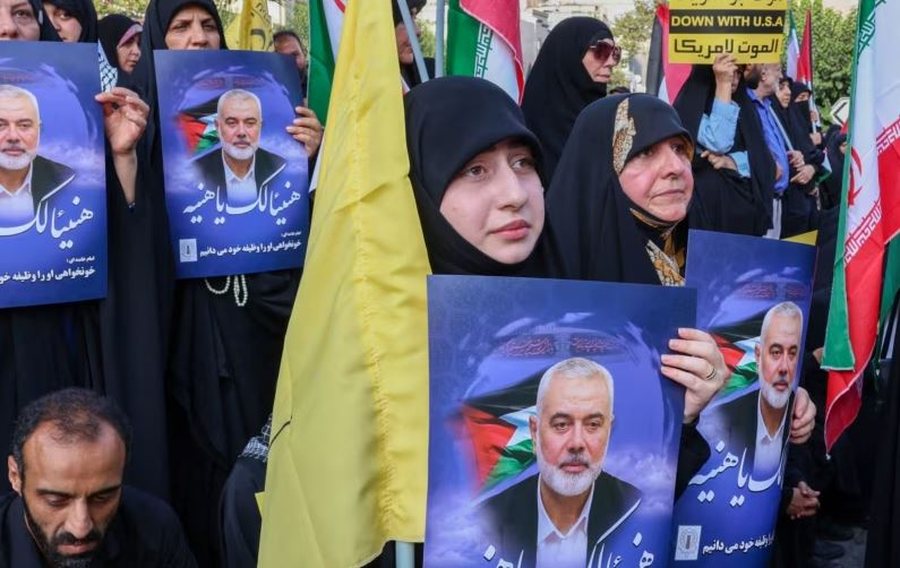
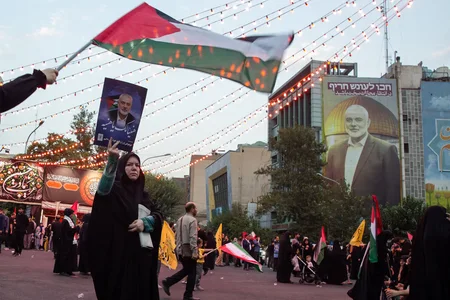
The funeral ceremony began Thursday in Tehran for Ismail Haniyeh, the political leader of the Iranian-backed Palestinian extremist group Hamas, which has been designated a terrorist organization by the United States and the European Union.
Iran has said Haniyeh, 62, was killed on July 31 in Tehran in an airstrike it blamed on Israel. The attack has raised fears of a full-scale war in the Middle East.
Iran's Supreme Leader, Ayatollah Ali Khamenei, led prayers for Haniyeh as crowds gathered in central Tehran carrying portraits of Haniyeh and Palestinian flags.
Haniyeh is expected to be buried late Thursday in the Qatari capital, Doha.
Khamenei has threatened "severe punishment" for the murder of Haniyeh.
Muza Abu Marzouk, a member of Hamas' political office, has vowed revenge as well.
"The killing of leader Ismail Haniyeh is a cowardly act and will not go unanswered," said Marzuk.
The Islamic Revolutionary Guard Corps (IRGC), which first announced Haniyeh's death, said it was investigating the attack in which he was killed while he was in Tehran to attend the July 30 inauguration of the country's new president. Iran, Masud Pezeshkian.
Israel's government has not commented on his killing, but a photo of Haniyeh with a stamp on his forehead that read "eliminated" was posted by the Israeli government's media office on Facebook. The post, which was later deleted without explanation, did not indicate that the attack was carried out by Israel, although it noted that the Hamas official was "killed by a precision strike in Tehran".
Israeli Prime Minister Benjamin Netanyahu has vowed to destroy Hamas after the group carried out an attack inside Israel on October 7, killing around 1,200 people. Over 250 others were kidnapped that day, some of whom have since been released.
Some of the hostages have died in Gaza, where Israel is engaged in a massive military operation it says aims to root out Hamas. A number of hostages are believed to be still alive.
Haniyeh's killing has fueled fears that the situation in the region will escalate, as tensions have been consistently high since the war in Gaza began.
He was killed at a time when Washington is pressing to persuade Hamas and Israel to agree to a temporary ceasefire and a deal to release hostages being held in Gaza. Senior officials from the United States, Israel, Qatar and Egypt are involved in the latest rounds of talks to reach an agreement.
The US Secretary of State, Antony Blinken, told reporters that Washington is "not aware of nor involved" in the killing of Haniyeh and will not speculate on the impact it may have on the region.
He said, however, that "the best way to calm the blood" is to push for a cease-fire between Hamas and Israel.
The UN Security Council held an emergency meeting on July 31 at Iran's request to discuss Haniyeh's death, where Tehran's envoy, Amir Saeid Iravani, urged members to take "immediate action to ensure accountability for these violation of international law".
Ali Mamouri, a researcher at Australia's Deakin University and Middle East specialist, told Radio Free Europe's Radio Farda that, while full regional war is still far off, "there will be escalation to new levels of conflict".
Former Israeli Prime Minister Ehud Olmert told Farda Radio that there is "a possibility that the Iranians will look for a way to react to the elimination of Ismail Haniyeh."
"But I think that the fact that the Israeli government did not publicly and officially accept any responsibility...will somehow affect the extent or the severity of Iran's response. I think [Iran's response] will be somewhat more moderate than it would have been under other circumstances,” he said.
Haniyeh became the political chief of Hamas in 2017 and lived in the Gaza Strip until 2019, when he moved to live in exile in Qatar./REL



Lini një Përgjigje