


 Shkruar nga Pamfleti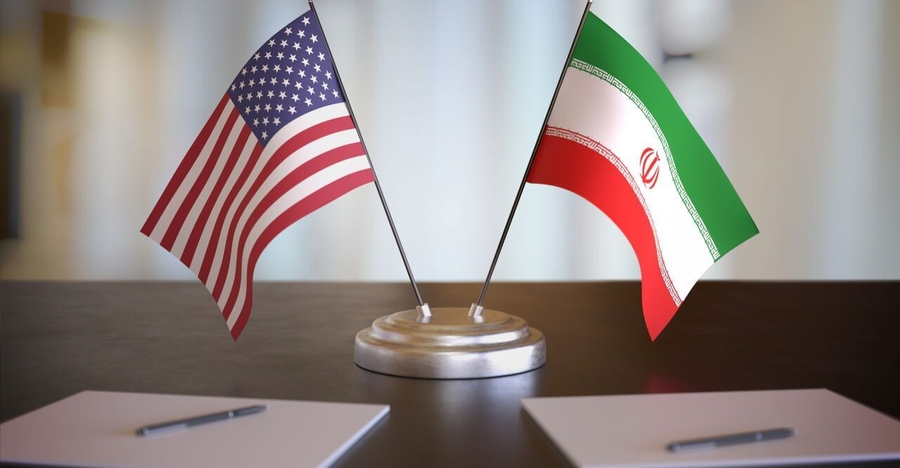
This is where the USA differs from other world superpowers!
Against the backdrop of the war with Iran, two developments seem important at this historical moment.
First, there is the spectacle of the helplessness of Iran's two major allies and traditional protectors: China and Russia.
Second, the return of the US dollar, for the time being quietly, perhaps temporarily, to its traditional status as a "safe haven currency," that is, as a currency that gains value in times of geopolitical crisis.
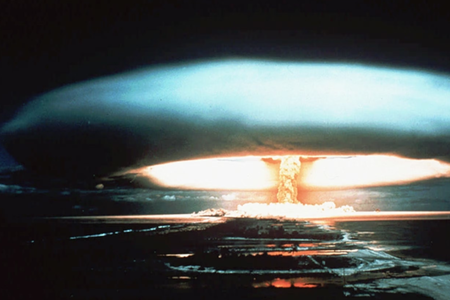
These, combined with the spectacular demonstration of military force that the US provided with the bombing of Iran this weekend, lead to a simple observation: The American Empire is difficult to destroy.
For decades, many predictions have been made about its decline, and even American elites have been obsessed with the idea of an end similar to that of the Roman or British Empires for a century. And it is normal for the US to follow the historical cycle of any other power. The question is when will this happen and how long will it take until a real alternative emerges.
This current crisis shows that America's strength is not accidental, nor built on temporary factors, but rests on strong and structural foundations that do not disappear so easily.
From history, economics, and geopolitics, we learn that the US possesses the so-called "magic quadrilateral" that has also characterized previous empires:
-Technological superiority
-Global currency (dollar)
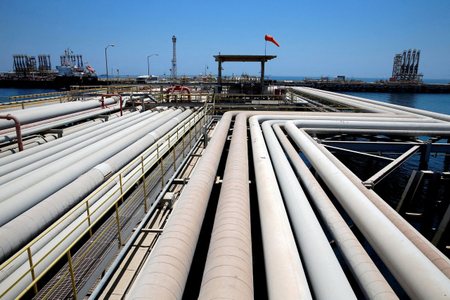
-Energy security
-Stable demographics
In the 21st century, these elements are key. The US continues to lead in technology (although China is competing), the dollar is still the main international currency, America is energy independent, unlike China, Japan, India or Europe, and this gives it an extraordinary geopolitical advantage.
None of the other superpowers have these four pillars. China has a demographic crisis and is dependent on energy imports. Russia is shrinking in population and does not have a competitive economy. Europe is fragmented and does not really possess any of these four key points.
Of course, the “magic quadrilateral” is a simplified metaphor. There are other factors weighing on America. Among them: the quality of international alliances, which is increasingly important in a multipolar world. The US has always had the advantage of strong allies like Japan or Germany, but their credibility is being questioned, and the most delicate case is Israel: an ally with great military power, but which in the Palestinian issue creates many problems for America with world public opinion.
Another indicator of the strength of a superpower is public finances. And here the US has a big problem: high debt that has been growing for more than 20 years. However, other large countries, China, Japan, Europe, are in the same situation, and Russia is a special case.
Last, but not least, is the internal unity of the country. American society is divided, politics polarized. This is seen as a sign of a possible decline. But even in the past, in the '60s and '70s, America has experienced deeper divisions and much more violent protests than today. Even in 2003, the protests against the war in Iraq were much larger than those seen yesterday against the bombing of Iran.
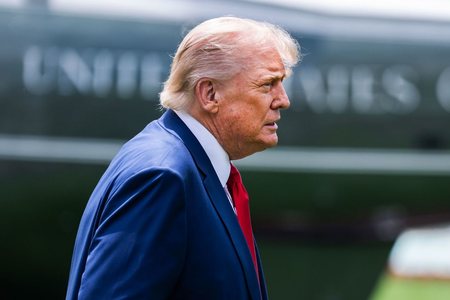
There are those who say that attacking Iran could hasten America's decline, because Trump is repeating the mistakes of Bush and Obama, getting bogged down in a Middle East crisis and neglecting more important challenges in the Indo-Pacific, such as the rise of Chinese influence. The transfer of the Nimitz aircraft carrier from the Pacific to the Mediterranean to focus on the base in Qatar is a clear signal of this strategic deviation.
This is precisely the mistake Obama made, who, despite promising a shift to the Asia-Pacific, ended up mired in Afghanistan and then Libya. Therefore, some analysts believe that China could benefit from this US focus on the Middle East.
Likewise, unconditional support for Netanyahu could increase hatred of America in the Arab world and heighten the tide of global anti-Americanism.
But history teaches us that empires do not collapse in a single crisis. The US laid the foundations of its power in the 19th century. Therefore, before declaring the end of the American empire, we must take into account the long-term factors, the weaknesses of opponents and the structural foundations that continue to keep American power afloat. / Adapted from “Corriere Della Sera”



Lini një Përgjigje