


 Shkruar nga Pamfleti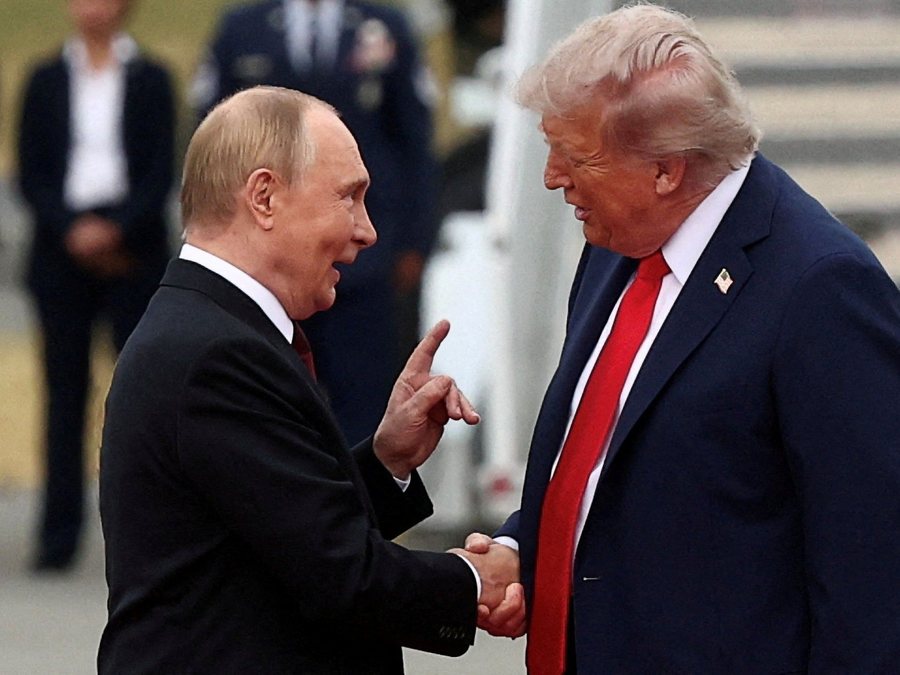
The Kremlin announced today that Russian President Vladimir Putin "received an invitation" to participate in the Peace Council, an initiative by his American counterpart Donald Trump, whom he said would "go down in history" if he placed Greenland under US control.
"President Putin has received an invitation through diplomatic channels to participate in the composition of the Peace Council," Kremlin spokesman Dmitry Peskov said today during a press conference.
He added that Russia “wants to clarify all the nuances” of this proposal. At the same time, the Kremlin assessed that it is difficult to disagree with experts who say that Trump will go down in history if he places Greenland under American control.
However, Peskov stressed that he is not discussing whether this action will be good or bad, noting that he is simply referring to an event.
"Here, perhaps, it is possible to remove from the discussion whether this is good or bad, whether it will be in accordance with the parameters of international law. There are international experts who believe that by resolving the issue of Greenland's integration, Trump will certainly go down in history. And not only in US history, but also in world history," he added.
Moreover, when asked to comment on the US president's statements that Russia poses a threat to Greenland, the Kremlin spokesman responded that there has been a lot of "disturbing information" recently and added that Moscow will not comment on alleged Russian plans for the Arctic island.
Last week, the Russian Foreign Ministry announced that it is unacceptable for the West to continue to claim that Moscow and China threaten Greenland.
The US-EU war over Greenland
The European Union is preparing for a major trade clash with the United States if US President Donald Trump does not back down from his threat to impose new tariffs related to the Greenland issue. On the eve of the Davos Economic Forum, European capitals have signaled that countermeasures against Washington, worth a total of $93 billion, could automatically come into effect on February 6.
These counter-tariffs were prepared by the EU in August, but were "frozen" to pave the way for a trade deal with the White House, which was reached in late summer. Now, according to sources in Brussels, their suspension may not be extended any further. It is enough for the EU to take no additional action and the tariffs will be automatically reinstated.
The European Commission and the Council see Trump's stance as an attempt to divide the Union and undermine NATO unity, suggesting different treatments for individual member states. A scenario that, according to Brussels, is also technically difficult, due to the European common market and the intertwined origins of goods.
However, the official line remains one of de-escalation. The EU aims to keep the dialogue open and avoid a full-blown transatlantic crisis. But if there is no withdrawal from Washington by February 1, the European partners are ready to react.
In addition to the $93 billion package, tougher measures are also on the table: suspending the August agreement that removes tariffs on American goods and, as a last resort, activating a legal instrument that would significantly limit access for American companies to the European market.
The issue will be discussed at an extraordinary European Council, called by the President of the Council, Antonio Costa, who has stressed the need for unity, support for Denmark and Greenland, as well as readiness to defend against any form of pressure. At stake, Brussels warns, is not only trade, but the very cohesion of the EU and NATO.


Lini një Përgjigje