


 Shkruar nga Gjergj Zefi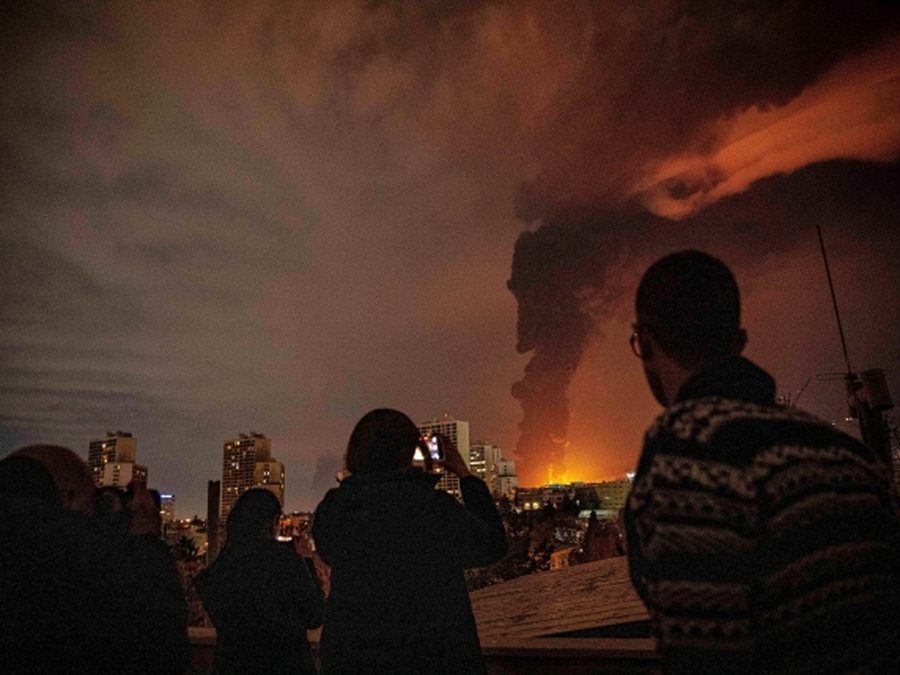
Diplomacy is not a business contract. The US-Iran memorandum collapsed because it was built on the logic of transaction, while the Middle East continues to function according to the logic of balances of power.
There is a constant temptation in international politics: the belief that any conflict can be resolved if the parties sit down at the table and find a deal that benefits everyone. Donald Trump elevated this philosophy to the level of doctrine. He believed that his experience as a negotiator and entrepreneur could also be translated into diplomacy.
States, according to this approach, are not much different from corporations; they negotiate interests, weigh costs, and end up in a compromise when the cost of conflict becomes higher than the benefit.
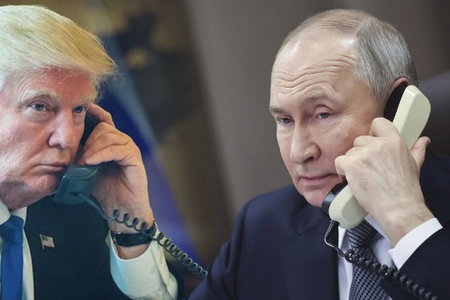
The memorandum of understanding between the United States and Iran was built on this logic. It was not a historic treaty, nor a final agreement on the Iranian nuclear program. It was a political ceasefire, an attempt to temporarily freeze military escalation and give diplomacy a window of opportunity.
But this window closed much sooner than anticipated.
Today's American attacks and Iranian retaliation don't just mark the end of the memorandum. They undermine a much larger idea: that the Middle East can be governed by the same principles that work in the business world.
This was the fundamental mistake.
In business, contracts are based on law, arbitration, and economic interest. In geopolitics, agreements are based on trust, the balance of power, and the perception of security. When trust is lacking, every document remains just a piece of paper.
Iran does not see its relationship with the United States as a trade negotiation. For the Islamic Republic, conflict with Washington has been part of its political identity since the 1979 Islamic Revolution. In this logic, resistance is not just a strategy; it is a source of legitimacy for the regime. Any compromise that is perceived as surrender in the face of American pressure could have more serious domestic political consequences than the sanctions themselves.
Washington also did its own calculations. The Trump administration relied on a strategy of "maximum pressure": economic sanctions, a show of force, and a willingness to negotiate. The idea was simple: increasing the cost of the conflict would force Tehran to accept more favorable terms.
In theory this seemed convincing. In practice it produced the opposite effect.
The more the pressure increased, the more the Iranian leadership became convinced that any concession would be interpreted as a sign of weakness. As a result, every American strike required a counterattack. Every Iranian response justified another American operation. Diplomacy became hostage to the logic of revenge.
But the failure is not only related to the two capitals.
The Middle East is not a chessboard where only Washington and Tehran move. Israel, the Gulf Arab monarchies, Turkey, Russia, China and a network of non-state actors influence this equation; from militias in Iraq and Syria to armed groups in Lebanon and Yemen. Each of them has its own interests, red lines and strategic calculations.
This means that even the best bilateral agreement can be derailed by a local incident, a drone strike, a missile launched by an allied group, or a political decision made away from the negotiating table.
Another weakness of the memorandum was the lack of international guarantees.
The agreements that have survived in history have not relied solely on the political will of leaders. They have had monitoring mechanisms, oversight institutions, international guarantors, and clear procedures for crisis management. When these are absent, the agreement depends on the political climate of the day. And the political climate changes much faster than diplomatic texts.
For Europe, the failure of the memorandum is a wake-up call. The continent remains dependent on the stability of the Middle East for energy supplies, maritime security and the control of migratory flows. Any crisis in Hormuz is reflected almost immediately in the markets and the European economy. This is why Brussels has a vital interest in diplomacy prevailing over the logic of escalation.
Diplomacy cannot be reduced to a transactional process. International agreements do not work just because the parties have an economic interest. They work when they build trust, when they offer guarantees, and when they address the causes of conflict, not just its consequences.
If the memorandum collapses after the first military strike, the problem is not just the one violating the agreement. The problem is the very architecture of the agreement.
And this is precisely where the failure of "business diplomacy" lies. It assumes that states behave like companies. But history shows that states behave like political powers, guided by historical memory, identity, threat perception, and the ambition to maintain prestige.
These are not measured by financial balance sheets and are not resolved by the logic of a commercial contract.
Today's bombings do not just mark the failure of a memorandum. They mark the end of the illusion that peace can be built on pressure. The history of diplomacy has repeatedly shown that the opposite is true: without trust there is no lasting agreement, and without lasting agreements there is no peace./ Pamphlet


Lini një Përgjigje