


 Shkruar nga Pamfleti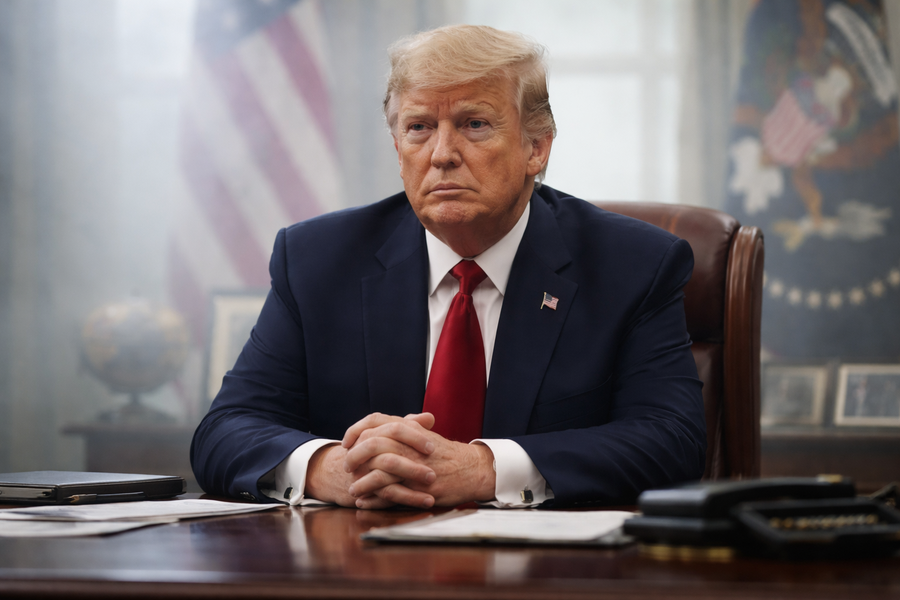
Trump is keeping his strategy toward Iran vague, combining signals of negotiation with military preparations on the ground. But it remains unclear whether this is a tactic to buy time and increase pressure, or a diplomatic bluff to avoid escalation. Meanwhile, sending troops and ultimatums to Tehran increase the risk that the “fog of diplomacy” will turn into open conflict...
We usually talk about the “fog of war”: the uncertainty and lack of clear information on the battlefield that makes it difficult to understand the enemy’s real intentions and positions. But yesterday’s Wall Street Journal editorial had a different headline: “The Fog of Diplomacy.”
Last Monday, President Trump threw the Middle East, markets, Americans, and allies into this fog, announcing that "productive" talks were underway and postponing the ultimatum to reopen the Strait of Hormuz by five days.
Even Republicans emerged from a closed-door briefing on Iran in the House of Representatives shrouded in uncertainty. Mike Rogers, chairman of the Armed Services Committee, demanded more information about the objectives of the troops sent to the region: “ We want to know more about what is happening, what the options are and why they are being considered. We are not getting enough answers .” Representative Nancy Mace declared in X: “ The war machine in Washington is in motion, they are trying to draw us into Iran to turn it into another Iraq .”
Bluff or way out?
The ambiguity is also related to the fact that it is difficult to understand whether Trump's optimism about negotiations is a bluff to gain time, awaiting the arrival of thousands of troops, or a real attempt to find a way out of the war.
The White House has proposed Vice President JD Vance as a potential negotiator in Pakistan, as the “good cop,” while Defense Secretary Pete Hegseth is portrayed as the “bad cop,” who “doesn’t want a deal, but a win.” “We negotiate with bombs,” he declared. On the other hand, the Iranians, who have been hit hard in previous rounds of negotiations, see this as a trap.
The US administration insists that the deployment of 1,000 airmen and two units of about 2,200 marines is intended to increase the pressure in the negotiations: one hand outstretched, the other ready to strike. The first unit of marines is expected to arrive on Friday, the day that also coincides with the expiration of Trump's new ultimatum.
The White House is seeking to test whether Iran is willing to make concessions it was unwilling to make before the war. But if the regime is not willing to accept American demands, spokeswoman Caroline Leavitt warned that Trump is “not bluffing and is ready to unleash hell”: “If Iran does not accept reality and understand that it has been defeated militarily, the president will ensure that it is hit harder than ever before.”
However, Leavitt further added to the ambiguity by stating that the 15-point plan published in the media “is not entirely accurate,” without clarifying which parts are true and which are not. The lack of details, including who is negotiating on the Iranian side, may be intentional, to create pressure within the regime.
Two readings of the situation
There are two ways to interpret the situation. The first is that the opening to negotiations is simply a tactic to stabilize markets and create the perception of success through force. By announcing talks, even when Tehran denies them, Trump is shifting the blame to the other side.
In the event of escalation, he can argue that he “tried diplomacy.” Meanwhile, this gives the military time to position forces in case it decides to intervene to reopen the strait or for operations on strategic islands.
The second reading is that Trump is genuinely seeking a way out of the conflict. He has declared several times that the war “will be over soon” and even suggests that regime change in Iran may already be underway, another way of declaring success.
According to the analysis of the situation, Trump closely follows the reaction of the markets and often makes statements to influence them. He has also shown a tendency to escalate, followed by sudden withdrawals.
It is possible that both of these impulses are at play simultaneously. Until he makes a clear decision, the situation is expected to remain in the "fog of diplomacy." /Adapted from 'Corriere Della Sera'.


Lini një Përgjigje