


 Shkruar nga Pamfleti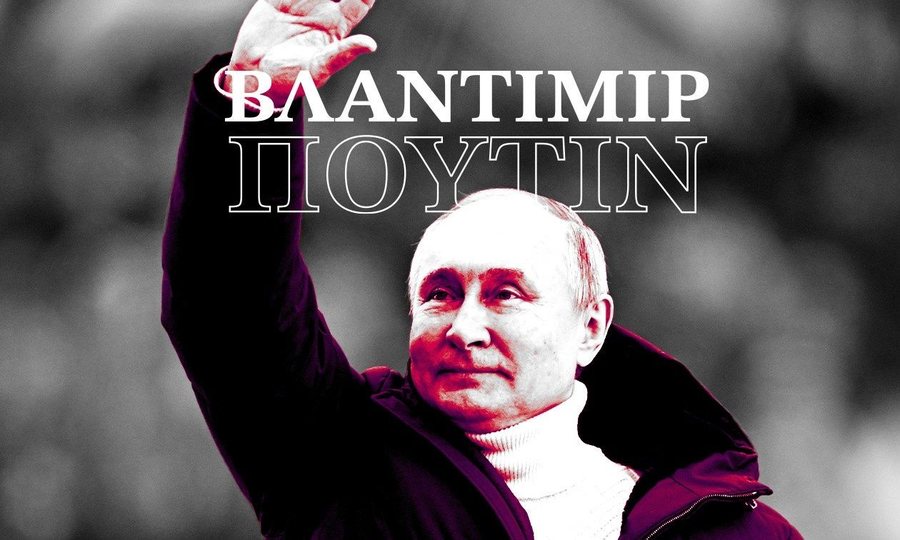
On December 31, 1999, then-Russian President Boris Yeltsin went on the radio to suddenly announce to his countrymen that he was relinquishing power and handing over the reins to his then-unknown Prime Minister, Vladimir Putin.
Russia's first post-Soviet leader was known for his unexpected decisions, from ordering tanks to attack the rebellious parliament to crush his political opponents to conducting a military orchestra in Germany under the influence of alcohol.
But he saved one of his biggest surprises for last. " I'm leaving. I did everything I could, " Yeltsin said the next day, slurring his words in a televised speech on New Year's Day 1999, as the world prepared to celebrate the new millennium. Russia's then-leader had half a year left in his second term, and no one expected him to resign prematurely.
" Why stay in power when the country has a strong leader who could become president, a man on whom almost all Russians pin their hopes for the future? " he said, acknowledging the pain Russians had suffered from the collapse of the Soviet Union.
The strongman he was referring to was a politician relatively unknown to Russians: a former KGB officer named Vladimir Putin, who this year marks 26 years at the helm of Russia, as president and during a temporary four-year term (2008-2012) as all-powerful prime minister.
Below are seven lesser-known elements that help to understand his profile.
1. A Difficult Childhood
Putin grew up in post-war Leningrad, in a family of modest economic circumstances. His parents had experienced firsthand the consequences of World War II, while the family lived in a shared apartment with other families, without basic conditions such as hot water. His two brothers had died before his birth, a fact often mentioned in his biographies as part of a difficult family context.
2. A Not-So-Good Student
During his school years, Putin was not a standout academically. According to Russian media sources, he often displayed problematic behavior in class and struggled with some subjects. However, he later managed to focus on his studies and was accepted to the Faculty of Law at Leningrad University, a step that influenced his path to state structures.
3. Involvement in martial arts
From a young age, Putin was involved in sports such as judo and sambo. He won local competitions and later earned a high rank in judo. This involvement has often been used to build his public image as a disciplined and physically active leader, although some critics have questioned the true level of his skills.
4. Interest in Western music
In contrast to his political profile, Putin has stated that he likes the music of the British group “The Beatles”. According to an account by photographer Platon for Time magazine, he has mentioned the song “Yesterday” as one of his favorites. This detail is often cited to show a more personal side of his figure.
5. Luxury Residence on the Black Sea
One of the most controversial elements is the residence known as “Putin’s Palace” on the shores of the Black Sea. The complex includes numerous buildings and luxurious facilities, with an estimated value of over $1 billion. Russian authorities have not officially acknowledged its ownership, while the issue has been the subject of criticism and investigations by political opponents.
6. Nominations for the Nobel Peace Prize
Putin has been nominated twice for the Nobel Peace Prize, in 2014 and 2021. These nominations are related to his role in international affairs, including his mediation in the chemical weapons crisis in Syria. However, these proposals have come from individuals rather than from major international institutions.
7. Special relationship with animals
The Russian president is known for his affinity for animals and often appears in public with them. He has also supported legal initiatives to protect animals, including regulations on their treatment in public spaces. These actions are part of efforts to build a softer image in the public opinion.


Lini një Përgjigje