


 Shkruar nga Gabriel Zucman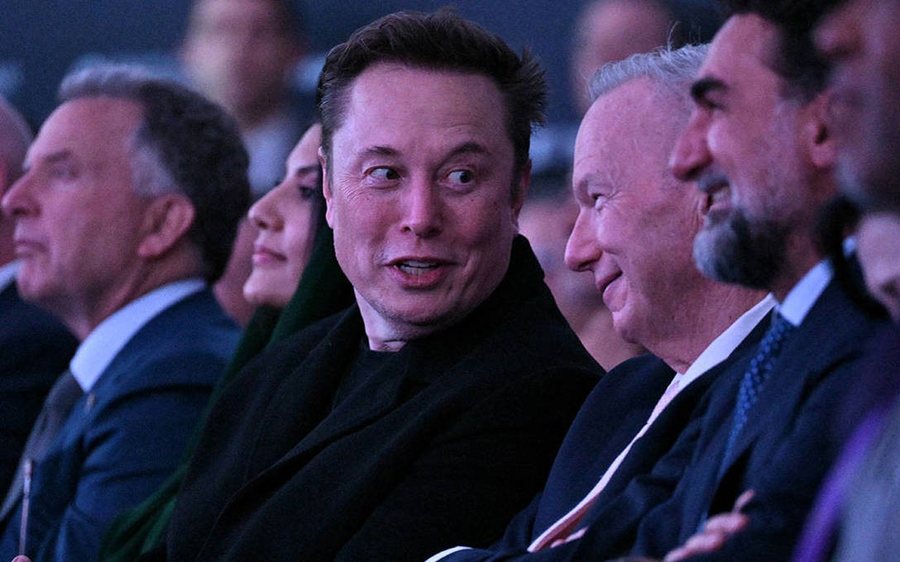
America's greatest weakness in a new trade war is its highly internationalized oligarchy of ultra-wealthy individuals whose wealth depends on a global consumer base.
Amidst a slew of executive orders, US President Donald Trump has spent his first weeks in office trying to dismantle the current international order, largely built by the United States itself after World War II.
Under the banner of “America First,” his administration has withdrawn from the Paris Agreement on climate change, the World Health Organization, and the UN Human Rights Council. And now it is poised to go even further.
A comprehensive review of the country's membership in all multilateral organizations is currently underway to determine whether the US should stay or leave them. Meanwhile, Trump is also determined to change the international trading system.
Less than two weeks after taking office, he announced the imposition of high tariffs: 25 percent on imports from Canada and Mexico, and 10 percent on imports from China (in addition to the taxes already imposed).
Since giving Canada and Mexico a one-month deadline in early February, he has signaled that tariffs “will be imposed,” albeit with an apparent one-month delay. He has also announced a 25 percent tariff on all steel and aluminum imports, and has hinted at additional taxes on cars, pharmaceuticals, and computer chips.
Europe could also find itself with its back against the wall very soon. The consequences of the trade war that Trump seems determined to start could be severe, and not only because of the huge volume of trade at stake. Today, supply chains are highly integrated across national borders, accounting for around 50 percent of intra-regional trade.
In many cases, many spare parts cross borders multiple times before being finally assembled into a product. So paying a 25 percent tariff every time a component crosses a state border would quickly add up to costs.
Take Mexico, which has surpassed China as America’s largest trading partner in goods. Beyond disrupting Mexican avocado supplies (a well-known example), tariffs would have serious consequences for an agricultural sector that supplies 63 percent of U.S. vegetable imports, and 47 percent of fruit and nut imports.
The auto industry — one of Mexico’s key economic sectors, employing more than 1 million people and accounting for about 5 percent of GDP — would also take a big hit. A recent report by S&P Global shows that Mexico is now the largest source of light vehicle imports to the U.S., surpassing Japan, South Korea and Europe.
For example, Nissan makes 27 percent of its U.S. sales from its Mexican subsidiary. For Honda, the percentage is nearly 13 percent and for Volkswagen, 43 percent. What should Mexico do in these circumstances? When Trump imposed tariffs on America's neighbors in 2018, Mexican authorities responded strategically, targeting products from countries that were politically important to the United States.
It has imposed tariffs on apples, cheese, blueberries, pork and potatoes. But this approach has its limits, especially given the sheer size of the US economy compared to its neighbors. However, Mexico, Canada and Europe have their own trade weapons.
America’s “Achilles heel” is its highly internationalized oligarchy: a small group of ultra-wealthy individuals whose wealth depends on access to global markets. This weakness gives foreign governments influence. The most effective countermeasure is simple: high tariffs on the oligarchs.
Countries should condition market access for foreign multinationals and billionaires on fair taxation. Once Trump starts imposing tariffs on Canada and Mexico, those countries should retaliate by taxing American oligarchs.
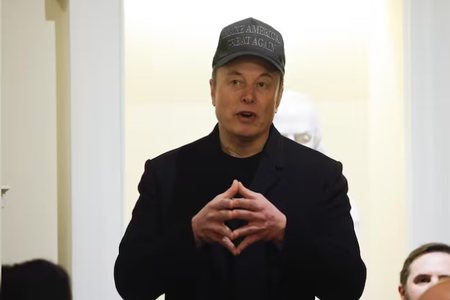
For example, if Tesla wants to sell electric cars in Canada and Mexico, Elon Musk — Tesla’s largest shareholder — would have to pay taxes in those countries. Of course, this strategy is clearly extraterritorial, as it requires tax obligations on foreign actors in exchange for access to domestic markets.
But rather than fearing this approach, countries should embrace it as a means of enforcing minimum standards, curbing inequality, preventing tax evasion, and promoting sustainability. Unlike traditional tariffs, an oligarch tax targets those who benefit most from globalization: billionaires and the corporations they control.
This approach shifts economic conflict from a battle between countries - which fuels nationalist tensions and economic revenge - to a battle between consumers and oligarchs.
Moreover, it could trigger a virtuous cycle. Countries with large consumer markets could collect taxes that multinational corporations have avoided elsewhere, gradually undermining the appeal of tax competition.
This would make it pointless for companies or individuals to move to low-tax countries, because the savings would be offset by the higher taxes they have to pay in countries with large consumer markets. Thus, the race to the bottom would soon be replaced by a race to the top.
Trump's return to the White House carries alarming consequences. But it also presents an opportunity. So now is the time to rethink international economic relations, calmly but radically. The best answer is a new global economic framework that neutralizes tax competition, fights inequality, and protects our planet.
Under such a framework, importing countries would enforce tax justice beyond their borders, ensuring that multinational corporations and their billionaire owners pay their fair share. If it’s the trade war Trump wants, consumers in Mexico, Canada, Europe, and beyond should join in making sure Musk and his oligarchic colleagues feel the cost. / Adapted from “Pamphlet” by “Project Syndicate”
Note: Gabriel Zucman, professor of economics at the Paris School of Economics and director of the EU Tax Observatory.






Lini një Përgjigje