


 Shkruar nga Pamfleti
The world order established 80 years ago is being deliberately overturned. Trump is creating a multipolar international system that is intended to serve primarily American interests. If Ukraine is a pawn in a grand resource deal with Putin, Taiwan could be leveraged in a grand trade deal with Xi Jinping.
“The establishment of the UK Soft Power Council in London by Foreign Secretary David Lammy and Culture Secretary Lisa Nandy comes at an interesting time. With Donald Trump in the White House, a narrative has developed in which persuasion and influence have been replaced by command and imposition in world affairs. Everyone is saying that we have entered an age of strength. But the reality is more elusive and paradoxical.”
So wrote the British philosopher John Gray recently in the New Statesman. According to him, hard power and soft power are not opposites, completely separate and distinct from each other. They constantly interact, sometimes in seemingly contradictory ways. Threats of trade tariffs fall somewhere in between.
Trump has used them to achieve non-economic goals, such as border control - Panama, Mexico and Canada have quickly withdrawn - and in this regard he is emerging as a more rational actor than previous US presidents. The US and its allies have used heavy military force in Iraq and Afghanistan.
The predictable result has been defeat and retreat. Without strategic goals and abandoning its allies, the West has proven itself unreliable. The paradigm of negative soft power is Britain’s energy policy. The effect of a zero-emissions Britain on global warming would be minimal, and the prospect of anyone emulating Ed Miliband’s policies is remote.
Miliband himself is following the example of Germany, whose Energiewende – the transition from coal and nuclear power to clean energy – has weakened the country’s industrial base. Especially in the Global South, countries shape their energy mix according to their circumstances and needs, rather than according to the messianic views of “first world” politicians. The main result of a zero-emissions policy is deindustrialization, which reduces the ability of countries that pursue it to protect themselves.
The renewable energy supply chain is owned by China, which controls many of the necessary minerals located in Africa (where rivalries on this front have fueled devastating wars). Trump’s determination to “take” Greenland may seem strange, but he is not wrong to see it as one of the last great places for the materials needed in the next phase of industrialization.
Giant AI data centers are very energy-hungry. With a more compliant government in Kiev, Putin and Trump could divide Ukraine's natural wealth between them. There have been reports of possible Russian-American cooperation in the Arctic, including opening new shipping routes through melting glaciers.
A new era of resource wars and great-power alliances, fueled by technological progress, has begun. There has been much talk of a Trump sell-off of Ukraine, in a style similar to the Munich Conference of 1938, when Nazism was given its due, an approach that proved disastrous.
A better historical analogy is the division of Europe and the world at the Yalta Conference.
In February, for the first time since the 1945 Black Sea Conference, the United States voted on a global security issue with Russia against Europe, the United Kingdom, Canada and other Western countries, rejecting UN resolutions condemning the Russian invasion.
The world order established 80 years ago is not so much coming to an end as being deliberately overturned. Trump is creating a multipolar international system that aims to satisfy primarily American interests. If Ukraine is a pawn in a grand resource deal with Putin, Taiwan could be sacrificial in a grand trade deal with Xi Jinping.
Multipolar competition is a notoriously risky business, and Putin and Xi are masters of realpolitik, at which Trump believes he excels. Europe cannot match Russia in Ukraine without American support, which may not come. Despite current sanctions, Russia has built a formidable military machine that is decisive in long wars. Rearmament in Europe presupposes reindustrialization, a time-consuming endeavor, and is prohibitively expensive if the goal is genuine independence from the United States. Then there is the problem of political will. Countries that have been “balkanized” by identity politics will not find it easy to mobilize against their enemies.
Emmanuel Macron's offer to expand France's nuclear shield will not prevent the escalation in the coming years of the campaign of sabotage, cyberattacks, and assassinations that Russia is already waging in Europe. In its unconsciousness, Europe's ruling caste seems to understand and accept its own impotence.
But geopolitics is not just about resources. It is also a war of myths. Like the myth that liberal societies are destined to defeat authoritarian regimes in technological innovation. Tsarist Russia, imperial Germany, and Meiji Japan industrialized without being or becoming liberal.
They largely imported technologies invented in open societies like Britain and the United States, as China has done in recent decades. Myths are stories that people tell to give meaning to their lives, and they cannot be used as scientific theories. The monotheistic foundations of Western values have been destroyed.
Every trace of the West's successes has been erased by indoctrination with the myth of its unique collaboration in oppression fueled by racism. All that remains is the legend of its inherent technological superiority. China's myth of national renewal may be more enduring.
Under the guise of surveillance and repression, many of the weaknesses of liberal societies can be hidden: chronic debt, youth unemployment, lack of purpose in life. China’s advantage is that its ruling elite is not consumed by contempt for its own history and traditions. It teaches its people that its civilization is superior to that of the West. And that’s where Donald Trump comes in. His landslide victory in the recent elections expressed a broad rejection of the electorate by a leftist ideology that slandered and mocked American civilization.
The great change it has fostered—soft power in its purest form—is currently unconquerable. Shaken by an upheaval they never imagined, progressives are currently in deep crisis. However, the euphoria could quickly fade.
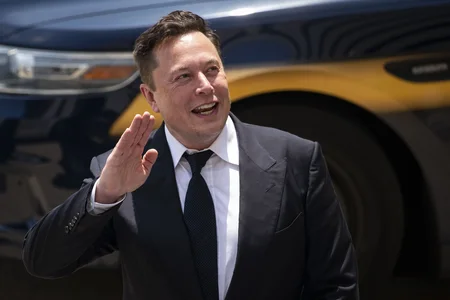
As Steve Bannon denounces Elon Musk as “truly evil,” the MAGA coalition of nationalist populists and techno-futurists is fractured. Trump regime change could
be another phase of decadence and decline of the West. Whatever the final outcome, the impact of his presidency will be irreparable. / Adapted from “Pamphlet” by “Il Foglio”




Lini një Përgjigje