


 Shkruar nga Alessandro Campi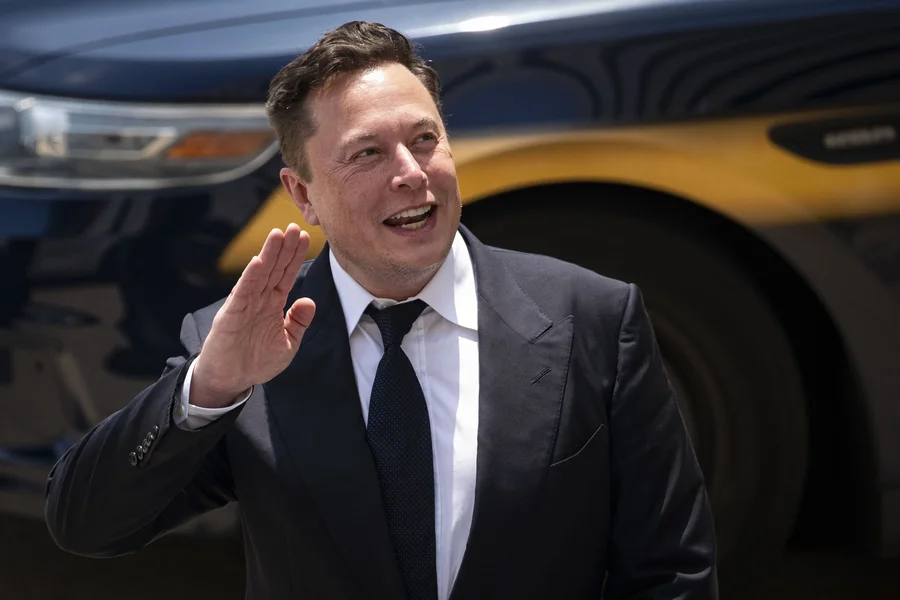
Elon Musk is not only influential in politics. He represents a form of political-institutional power in itself, which considers itself competitive and alternative, as he has shown with his sensational split with Donald Trump, compared to the traditional democratic one.
Elon Musk is not only, as is often repeated, the richest man in the world. He is also endowed, for this reason alone, with enormous direct and indirect power. Which would make him a crucial ally for politics, when a difficult and costly electoral battle like the one for the White House must be won.
But also a very difficult partner to manage once victory is achieved. This is also due to a character considered by most to be full of excesses, selfish, capricious and mostly unpredictable.
In reality, given the highly strategic sectors in which it operates on a global scale, often with monopolistic positions, if we want to find a formula capable of effectively describing its role and behavior, we can say that it is an independent political actor, endowed with a form of sovereignty similar to that of the state.
In addition to being a brilliant innovator and a visionary entrepreneur, he is a kind of independent statesman, dedicated to implementing a vision of society, politics, and human progress, imbued with technological futurism and an apocalyptic spirit, in which he considers himself, if we take his words and manner of acting on the public stage seriously, as a prophet chosen by fate.
So Musk is not just influential in politics. He represents a form of political-institutional power in itself, which considers itself competitive and alternative, as he has shown with his sensational split with Donald Trump, compared to the traditional democratic one.
He can do the same things as the president, except that he derives his legitimacy not from popular consensus expressed through voting, but from his subjective will to lead the processes of radical transformation of the world that are currently underway: artificial intelligence, the colonization of space, the transition to the post-human and interplanetary dimension of communications, etc. These are processes that traditional politics is unable to understand, let alone direct. For example, thanks to the vast network of satellites that he personally controls, he is able to collect information and transmit data to every corner of the world, pursuing a foreign and defense policy that is potentially autonomous from those of the states with which he cooperates or with which he has signed partnership agreements.
Let's briefly recall the ongoing war on the eastern border of Europe: its final outcome could really depend on Musk's decision to block Ukraine's access to satellite images of the Starlink network. Active in the field of cryptocurrencies, of which he is an ardent supporter also for ideological reasons (they are the expression of a decentralized market distanced from the planning and control capacity of that state, which the anarcho-libertarian Musk steadfastly opposes), and in which he has invested large financial resources.
It also has digital payment and monetary exchange systems that make it an economic-political force that is essentially sovereign and distanced from the control of traditional public powers.
With the billion-dollar purchase of the social network Twitter, later renamed X, created as a digital platform for the publication and exchange of messages, photos and videos among millions of users, Musk owns a planetary megaphone that allows him to intervene in real time, with a media power greater than that of a normal head of government or state, in the international public debate, with the aim of orienting it according to his personal vision of the world and his personal interests.
This intervention would seem like a form of legitimate manifestation of his political sympathies, which certainly cannot be prevented or criticized just because they come from a man with practically unlimited economic resources. In reality, the logic with which Musk operates is not that of a polemical, counter-current and controversial supporter of his extremist or heterodox ideological positions.
On the contrary, it seems to operate with the logic of a startup and a political investor: in different contexts, it chooses a peripheral political actor, a minority or eccentric party, supports it from a propaganda and financial point of view. In this way, it aims, on the one hand, to make it a hegemonic subject in the political market of reference, and on the other hand, to insert it into its personal political-diplomatic network.
For all these reasons, it is clear why it took a few weeks to reach a sensational and controversial divorce between him and his longtime friend and ally Donald Trump. But this is much more than a clash of incompatible charismatic personalities or a conflict caused by disagreements over the implementation of the Republican government program.
This has been seen in his stances on election campaigns in various countries. In the case of Germany, he invited Germans to vote for the far-right Alternative for Germany. In the case of the Romanian elections, he openly sided with presidential candidate Calin Georgescu, who was disqualified from the race by a controversial decision of the Constitutional Court.
But this has also been seen with the open and decisive support he offered for the re-election of Donald Trump. It seems more like the beginning of a confrontation, which extends beyond the borders of the United States, between political (democratic) power and economic-financial power. And who really commands in the final instance?
And how can the former control or restrain the latter? An old question, but one that is of much more decisive importance in our days than in the past, given the weakening of democracy as a political form, and of politics as a means of decision-making.
It's a question that has already been raised in Russia, due to the conflict between Putin and the oligarchs who hoarded raw materials after the collapse of the centralized Soviet economy, or in China with the clash between the Communist Party and the e-commerce and big tech giants that emerged in the shadow of state capitalism.
In both cases, the political power has used a heavy hand, oppression, and physical violence to exercise its hegemony against those who have dared to openly challenge it. But to curb the excessive power of indirect political powers, a democratic society can only follow the legal path of constitutional regulation and checks.
Is this enough in the face of global economic powers, which, in addition to increasingly controlling the fate of billions of people, now openly aspire to ever-increasing political dominance? Meanwhile, there is another question raised by the ongoing clash between Trump and Musk. Is technological innovation, of which the latter is the proclaimed standard-bearer, always synonymous with progress, development and freedom?
Or can it also be an instrument of oppression and conditioning? What exactly lies behind Musk's libertarian and ultra-liberal rhetoric, which presents technology as a form of liberation of individual energies? In reality, we know from the historical experience of totalitarian systems that technology can also be used politically as an instrument of domination over individuals and the masses.
Should we prepare for a scenario in which not only society, but also politics itself, will end up being controlled by technology and its prophets? Musk dreams of a technopolitical revolution, led by him, with disturbing consequences.
Could Trump, who until yesterday seemed like he was Muks' companion, be the unwilling but courageous hero who will stop his dangerous ambitions to be the master and lord of the "new world"?/ Adapted from "The Pamphlet" by "II Massaggero"



Lini një Përgjigje