


 Shkruar nga Federico Rampini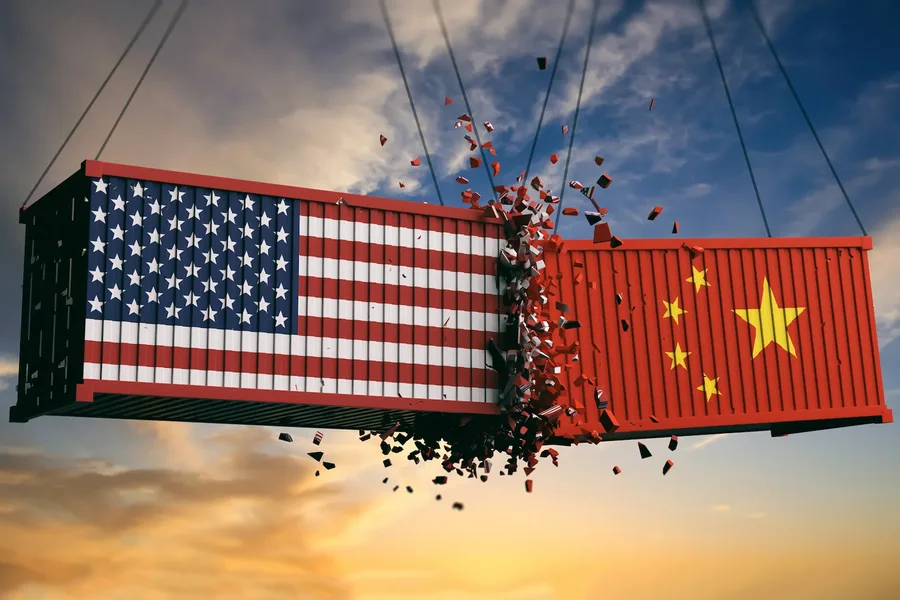
Trump is making China anxious, not everyone is enthusiastic...
The trade war has drawn so much European (and global) antipathy towards Trump that many are looking for anyone who can teach the American “bully” a lesson. In this climate, it is normal to encounter Europeans of all political stripes dreaming of a grand coalition (Europe, China, Japan, Canada, Mexico) capable of bringing the United States to its knees.
There are those who hope that Xi Jinping will teach his American counterpart a lesson. Although understandable, the emotional climate risks making us lose sight of the true balance of power. The temptation to mistake one’s desires for reality is irresistible. In this context, it is interesting that some lessons in realism, pragmatism and lucidity come from Beijing. Not from Xi Jinping’s official propaganda, which should undoubtedly exude confidence and instill faith in ultimate victory. But one only has to look within Xi’s entourage, among the pundits close to the regime, to find a more diverse range of voices, a range of pluralistic analyses, including some anxious and very untriumphal positions.
I suggest you read this short summary by an authoritative observer, Paddy Stephens, in the Sinification newsletter. Here is his review of China's reactions to Trump's tariffs:
“Beijing’s official response has been blunt and harsh. On Tuesday, the Ministry of Commerce said that China “will fight to the end.” In a post on X, Foreign Ministry spokeswoman Mao Ning said that “we will not retreat,” accompanying the message with a historic video of Mao Zedong, in which the founder of the People’s Republic vowed to continue fighting in the Korean War (1950-53 for as long as necessary).
President Xi stressed China's strength: the country's economy - "a big sea, not a small pond" - will withstand strong winds and storms. While officials acknowledge that the US tariffs will be painful, they try to assure that, to use the image chosen by the People's Daily, "the sky will not fall."
Chinese online comments are more worrisome. Prices for agricultural products like soybeans, of which the United States is the world's top exporter, are expected to rise. Even well-known American brands will become more expensive in China. For some, however, there is a silver lining: an opportunity for Chinese consumers and businesses to buy and sell domestic products.
Some Chinese scholars and analysts see further benefits in the tariff chaos, seeing it as an opportunity to turn American pressure into a stimulus to boost the country's much-desired domestic demand.
Semiconductor expert Gu Wenjun believes that despite some short-term disruptions, the tariffs will accelerate the de-Americanization of China's chip supply chains and further stimulate the boom in China's semiconductor industry.
Others, instead, adopt a much darker tone. Political scientist Zheng Yongnian disagrees with Western media outlets like The Economist, nor with some Chinese social media users, who claim that Trump is “Making China Great Again” (MCGA). He highlights the damage the tariffs will cause and the importance of a response based on long-term strategic thinking.
The thesis behind this “MCGA” argument is that Trump’s tariffs will drive a wedge between America and its partners in Asia and Europe, bringing them closer to China. Gu sees an opportunity to center technology supply chains around a hypothetical low-tariff bloc that includes the EU, China, South Korea and Japan. Others, like Jin Canrong – a former international relations scholar – are more skeptical: the global influence of the United States remains unmatched, and very few countries seem willing to resist it.
Luo Zhiheng, a young economist at the Private Sector Development Institute, notes that strengthening trade ties between China and the rest of the world risks triggering a backlash if other markets are hit by a surge in Chinese exports.
Amidst the market turmoil, some analysts are speculating about Trump's next moves. What will come after the trade war? Historical parallels drawn with trade wars during the Great Depression offer an alarming answer. Zheng, however, believes that the conflict with the United States "should not be scary." According to him, it is more likely to accelerate the American decline than the Chinese one. /Adapted from "Pamphlet" by "Corriere Della Sera"






Lini një Përgjigje