


 Shkruar nga Michael Evans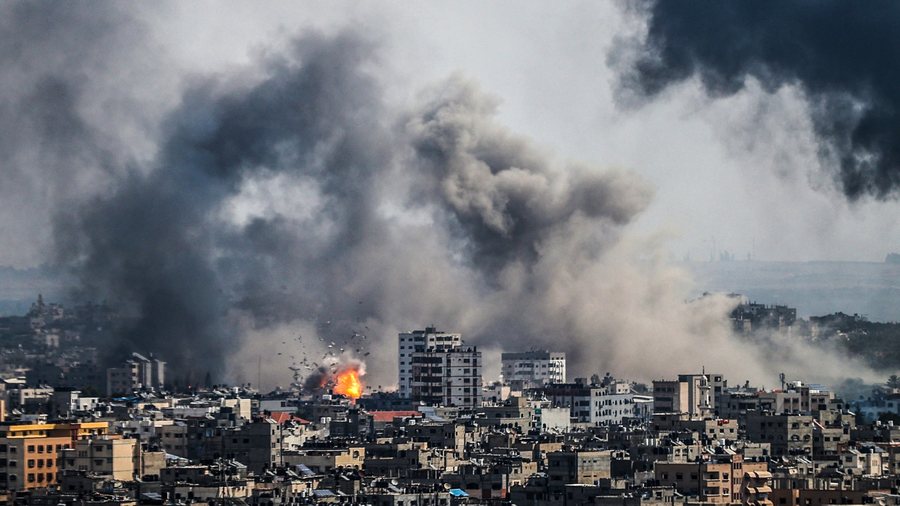
From Netanyahu's point of view, accepting a ceasefire that includes the withdrawal of all Israeli troops, while Sinwar and Deif are still the leaders of Hamas, and have perhaps 10,000-12,000 fighters under their command, would be impossible. to be accepted.
Ceasefire agreements to end the war in Gaza have come and gone. US President Joe Biden's surprise announcement on the latest formula for a settlement of the conflict, allegedly proposed by Israel, has already been dropped.
In fact, Biden's 3-phase ceasefire deal looked very similar to the previous ones: 6-week ceasefire, withdrawal of Israeli troops from populated areas, release of some hostages in exchange for hundreds of Palestinian prisoners; an Israel/Hamas negotiated settlement for a permanent end to the war; and most recently the full reconstruction of Gaza.
However, Israel's attack on the southern Gaza city of Rafah, growing hostility around the world to Benjamin Netanyahu's determination to destroy the organization it labels as a terrorist organization, and the perceived failure to curb the deaths of Palestinian civilians added a new sentiment. emergency.
Biden's move was unusual. First, he claimed that the latest ceasefire proposals came from Tel Aviv, not Washington. Second, it appears that the White House did not warn the Netanyahu government that Biden was planning to tell the world about the proposed new deal.
Third, there seemed to be an element of psychological shock, placing Tel Aviv before the fait accompli. But the strategy didn't work. And the reason is that there is a fundamental flaw in the behind-the-scenes negotiations between Washington and Tel Aviv, but also in the broader ceasefire talks involving the US, Egypt and Qatar: only Israel, and Netanyahu in particular, is truly committed. to the total destruction of Hamas as a terrorist organization, and as the governing body of the Gaza Strip.
Biden initially agreed with this goal, but now he is wavering. He has publicly stated that the Israel Defense Forces (IDF) have inflicted such damage on Hamas that as a military group it will no longer be able to carry out another attack like the one on October 7, 2023, when 1,200 Israelis were killed. , women were brutally raped and when more than 250 hostages were taken.
It is clear that Netanyahu does not share this assessment. Despite Hamas suffering heavy losses, with nearly 15,000 fighters dead, the group remains stable. The IDF has had to return to areas of Gaza it thought had been cleared of Hamas fighters.
And because of the restrictions on military operations in Rafah imposed by Washington, there are still enough combat battalions left to continue the war with Israel. Most importantly: the 2 main leaders of Hamas in Gaza, Yahya Sinwar, the overall leader in the Gaza Strip, and Mohammed Deif, the commander of the Izz ad-Din al-Qassam Brigades, are believed to be still alive and leading the battle against the IDF from a maze of underground bunkers.
Netanyahu says they were the architects of the October 7 massacres. Israel has a famous reputation for pursuing its enemies, no matter how long it may take. After the murder of 11 Israeli athletes at the 1972 Munich Olympics by the Palestinian terrorist group Black September, Mossad, the secret intelligence agency, spent years trying to find and kill those responsible.
From Netanyahu's point of view, accepting a ceasefire that includes the withdrawal of all Israeli troops, while Sinwar and Deif are still the leaders of Hamas, and have perhaps 10,000-12,000 fighters under their command, would be impossible. to be accepted.
Furthermore, it would also lead to Netanyahu's political downfall, as the 2 most conservative members of his coalition cabinet, Finance Minister Bezalel Smotrich and National Security Minister Itamar Ben-Gvir, have vowed to resign and topple his government if he gives in to pressure from Washington and agrees to the cease-fire agreement.
Then there is another important problem, which is causing a seemingly intractable divergence of views between Washington and Tel Aviv. Biden, who has his own reasons for ending the war in Gaza — growing antipathy toward him among young pro-Palestinian voters in the U.S. who oppose arms sales to Israel — has a grand scheme in mind for reorganizing and reshaping relations in the Middle East to create greater stability and a more effective alliance against Iran.
At the heart of this big idea is for Saudi Arabia and Israel to establish close diplomatic relations, a potentially historic development that would also include a vastly expanded strategic partnership between Washington and Riyadh, with the addition of arms sales. advanced and auxiliary to building a civilian nuclear industry.
According to the US State Department, the potential deal was very close to being finalized when Hamas launched its October 7, 2023 attack on Israel. As a result, all further steps were canceled, or at least put on hold for the foreseeable future, which was a blow to Joe Biden, who would have counted this diplomatic achievement as a strong point in his campaign for re-election to office.
However, no such deal would be possible if Netanyahu did not accept the formation of a Palestinian state as part of a grand bargain. That was always going to be the trickiest element because the Israeli leader was against it, and now after the October 7 attacks, it's not going to happen.
Or at least not until Netanyahu is in charge of Israel. So overall, Washington's hopes of pressuring Tel Aviv to agree to a ceasefire, and a permanent end to the war in Gaza, would seem premature, if not unrealistic. Meanwhile, Netanyahu has made it absolutely clear that he intends to meet his military objectives before a cease-fire can even be contemplated, let alone discuss any kind of meaningful future for the Palestinian people.
Tragically, this means there will inevitably be more Palestinian civilian deaths, more property destruction, and the sheling of Biden's hopes of reshaping the Middle East. Whether Netanyahu will ever succeed in eliminating Hamas is highly debatable.
Perhaps some of its elements will survive. Moreover, the organization's political leadership resides in a secure base in Qatar, beyond the reach of the Mossad to strike, or at least while the cease-fire negotiations are ongoing, and hopefully successful./ Adaptation "Pamphlet" from "The Spectator"







Lini një Përgjigje