


 Shkruar nga Pamfleti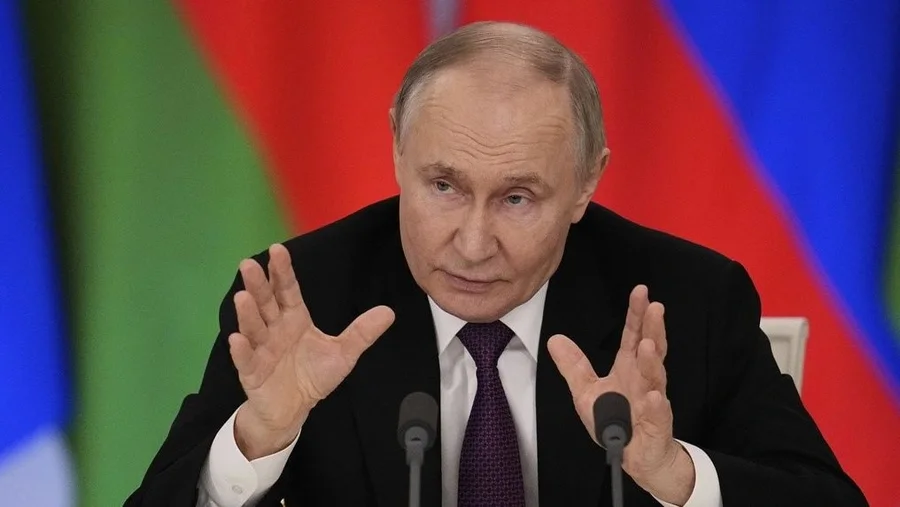
Vladimir Putin has decided to once again change the deck and declare a ceasefire from May 8 to 11 on the Ukrainian front.
This is obviously a move that was not made without some strategy behind it, as the Russian president does not announce initiatives unless he has something to gain.
Officially, the cessation of hostilities is linked to the glorious celebrations of the 80th anniversary of Russia's victory in World War II.
However, it is most likely that the Russian president is trying to keep the upper hand while Trump seems to be losing patience with the fact that there is no progress in the negotiations after approaching Ukrainian President Volodymyr Zelensky on the sidelines of Pope Francis' funeral.
Immediately after the Russian president's announcement, White House press secretary Caroline Levitt reiterated that Donald Trump has made it clear that he wants to see a permanent ceasefire in Ukraine instead of temporary pauses in fighting, while Kiev is calling for an immediate ceasefire.
"I understand that Vladimir Putin has proposed a temporary ceasefire," Levitt said, adding, "The president has made it clear that he first wants to see a permanent ceasefire to stop the killing and the bloodshed."
In a post on X, Ukrainian Foreign Minister Andriy Sbykha stressed that if Russia truly wants peace, then the ceasefire should come into effect immediately.
Possible motives behind Putin's decision
To secure the US
The United States is clearly becoming impatient with Russia for seemingly delaying a permanent ceasefire, with Donald Trump saying he is "disappointed" with Moscow. Trump's concern comes as relations between the US and Ukraine have warmed after the US president's tete-a-tete meeting with Zelensky in St. Peter's Basilica over the weekend. According to analysts, Trump is becoming tougher on the Russian leader after his meeting with Zelensky. "The change in the atmosphere between Zelensky and Trump has made the US president no longer hide his irritation with the Russians. And I think the Russians feel they have to say something," they point out.
However, Washington is clearly impatient for a full ceasefire and that this pause "will not come soon enough" for the US.
Defense of Moscow
Putin wants to protect Moscow from Ukrainian drones during the Victory Day parade on Red Square. Moscow is hosting about 20 foreign leaders on May 9 for the event, which this year will mark 80 years since the end of World War II. Among those heading to the Russian capital for the event are Chinese President Xi Jinping, Slovak Prime Minister Robert Fico and Belarusian President Alexander Lukashenko.
Ability to move bodies
There is no doubt that a pause in the fighting would bring a much-needed break to Ukrainian troops fighting on the front lines in the country’s east. However, it could also be the perfect opportunity for Moscow to rev up its war machine, using the cessation of hostilities to move its troops onto the battlefield without distraction. “That gives it three days to regroup and send more soldiers to the front before it starts attacking again,” notes one analyst.
Russia remains steadfast in its positions
And perhaps this scenario has the most basis. Russia has long rejected a full ceasefire unless Ukraine accepts a list of maximalist Kremlin demands, including demilitarization and the surrender of a large chunk of territory.
Sergei Lavrov, Russia's longtime foreign minister, told Brazilian newspaper O Globo that "international recognition" of Crimea, which Russia illegally annexed in 2014, as well as Donetsk, Luhansk, Kherson and Zaporizhia, regions that the Kremlin would partially occupy after any "full invasion of Ukraine" would be "2022" in its full negotiations.
Lavrov's comments came just days after Trump declared that "Crimea will remain in Russia" and attacked Ukrainian President Volodymyr Zelensky for refusing to recognize the annexed peninsula as Russian.
The US recently presented Kiev with a peace plan, which envisages the handover of Crimea to Russia and American recognition of the occupied territory.
Ukraine has strongly rejected any negotiated solution that involves handing over land to Moscow, seeing it as capitulation to an aggressor, although hopes that Kiev could retake the peninsula militarily have diminished.
The European Union has also refused to recognize Crimea as Russian. “Crimea is Ukraine,” the EU’s top diplomat, Kaia Kallas, said last week. / Adapted from Pamphlet/


Lini një Përgjigje