


 Shkruar nga Pamfleti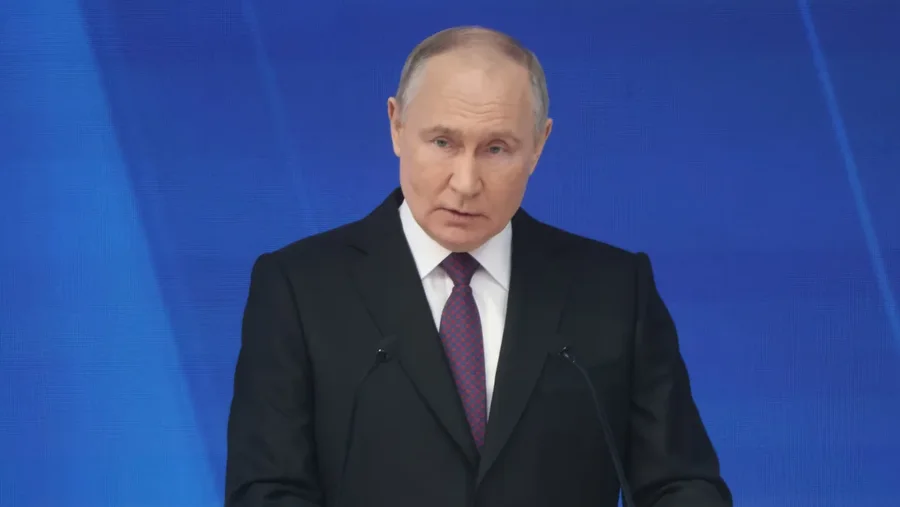
Russian President Vladimir Putin has warned that Russia is technically ready for nuclear war and that if the US sends troops to Ukraine, it would be considered a significant escalation of the war.
A few days before the elections in Russia, Putin said that he is not "in a hurry" with the scenario of nuclear war and that he does not see the need to use them in Ukraine.
"From a military-technical point of view, we are certainly ready," Putin told Rossiya-1 television and the RIA news agency in response to a question about whether the country was really ready for a nuclear war.
"In the USA there are many specialists in the field of Russian-American relations and in the field of strategic limitation. Therefore, I don't think that everything is rushing towards it (nuclear confrontation), but we are ready for it," Putin said.
The war in Ukraine has caused the deepest crisis in Russia's relations with the West since the 1962 Cuban missile crisis, and Putin has warned several times that the West risks provoking a nuclear war if it sends troops to fight in Ukraine.
Putin sent tens of thousands of troops into Ukraine in February 2022, triggering full-scale war after eight years of conflict in eastern Ukraine between Ukrainian forces on one side and pro-Russian Ukrainians and Russian proxies on the other.
Western leaders have vowed to defeat Russia in Ukraine, but after two years of war, Russian forces control just under a fifth of Ukrainian territory.
In an election year in the US, the West is struggling with how to support Kiev against Russia. Kiev says it is defending itself against an imperial-style war of conquest designed to erase its national identity while Russia says the areas it controls in Ukraine are now its own.
Putin is 71 years old, a decade younger than US President Joe Biden. He may be well past the average life expectancy of a Russian male, but his recent public appearances seem to indicate someone in poor health.
But while Putin appears to be in no rush to find a successor, some Kremlin watchers note that Putin's re-election highlights a problem: that the system built over the past two decades under his rule is fragile, gerontocratic and vulnerable to a major shock, primarily the illness or death of the person in charge.
"Different challenges ... may be closer than we think," said Andreas Umland, an analyst at the Stockholm Center for East European Studies. "Putin can theoretically rule for another 12 years. [But] I don't think this will happen, especially if Ukraine achieves new victories that will have consequences in Moscow," he said.
Umland said the armed uprising last year by Wagner's mercenary Yevgeny Prigozhin – successfully quashed, but the biggest challenge to Putin's rule – and the baseless rumors about Putin's health that appear on anonymous Telegram channels and social media suggest that legacy concerns may be lurking behind. the dark facade of the Kremlin.
"It's not so much the content of the rumor, but the fact that the rumor can spread" that is significant, Umland said.


Lini një Përgjigje