


 Shkruar nga Pamfleti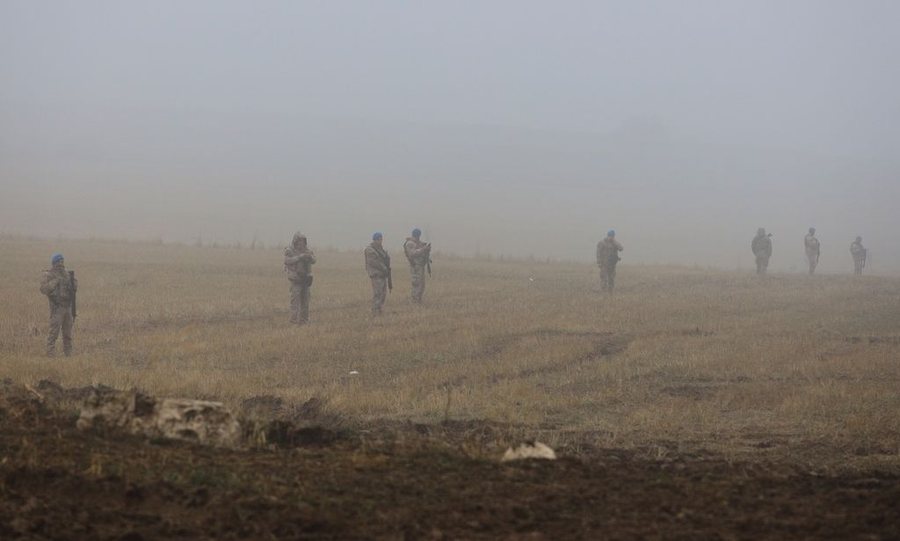
Almost minute-by-minute communications between the control tower and the Falcon 50 aircraft that crashed outside Ankara on Tuesday evening were revealed by the Turkish government on Wednesday.
The plane had Libyan army leaders on board, and a total of 8 deaths are reported.
The plane's black box will be analyzed at a neutral location. "The analysis of the cockpit voice recorder and the plane's black box, which will help determine the causes of the crash, will be carried out at a neutral location," said Turkish Transport Minister Abdulkadir Uraloğlu. According to Turkish authorities, the plane had a high-ranking military delegation from Libya on board. Among those on board was the Chief of General Staff of the Tripoli government's Armed Forces, Lieutenant General Mohammed Ali Ahmed al-Haddad.
Conversation with the control tower
Before the plane crashed, the following conversations took place between the Esenboga Air Traffic Control Center, the captain, and the co-pilot:
At 20:17 local time, aircraft HMJ185 took off from Esenboga Airport in accordance with standard procedures. After takeoff, Esenboga Tower handed over control to the Approach Control Unit and then to our Center Area Control Unit, in accordance with established procedures. The aircraft was allowed to gradually climb to the required altitudes.
At 8:25 p.m., permission was given to cruise at an altitude of 34,000 feet.
At 20:31, while the aircraft was at an altitude of approximately 32,000 feet, it transmitted PAN-PAN, PAN-PAN, PAN-PAN signals (level below the MAYDAY signal), reported a general electrical failure, and requested radar vectoring (flight course) to return to Ankara.
At 20:32, following instructions from the air traffic controller, the aircraft was given the course and descent level to return to Esenboga Airport.
At 20:33, the pilot activated emergency code 7700. After the controller confirmed the problem, it was discovered that the aircraft's altitude information was no longer visible on the radar.
At 20:34, due to interference in pilot-controller communications, the controller confirmed the noise level with the pilot. At the same time, the aircraft was handed over to Approach Control, after its altitude was confirmed by Area Control.
At 20:35, the aircraft transmitted the PAN-PAN signal again, contacted Control for the return, and received instructions for vectoring and descent levels.
At 20:36, communication clarity was lost and the pilot's voice became slurred. At the same time, there was some loss of flight data on the radar screen.
At 20:38, the aircraft completely disappeared from the radar screen. At the same time, there was no response to the controller's calls. For about 5 minutes, attempts were made to communicate via different frequencies, but without success. The competent units were immediately informed to begin search and rescue operations.
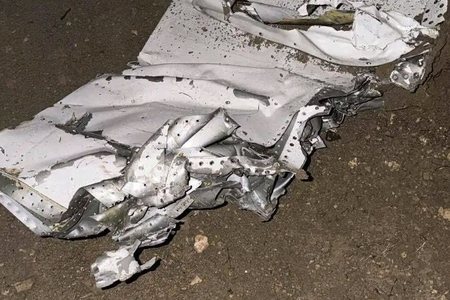
The Air Force's Air Defense Reporting Center confirmed that a plane crashed near the village of Kesikavak, in the Haimana region. Immediately, teams from the Transportation Safety Investigation Center headed to the scene for an on-site investigation.
During the initial investigation, the cockpit voice recorder (CVR) and the flight data recorder (FDR) were recovered. The preliminary report has already begun, and it has been decided that the recorders will be examined at a neutral location to determine the causes of the crash.






Lini një Përgjigje