


 Shkruar nga Pamfleti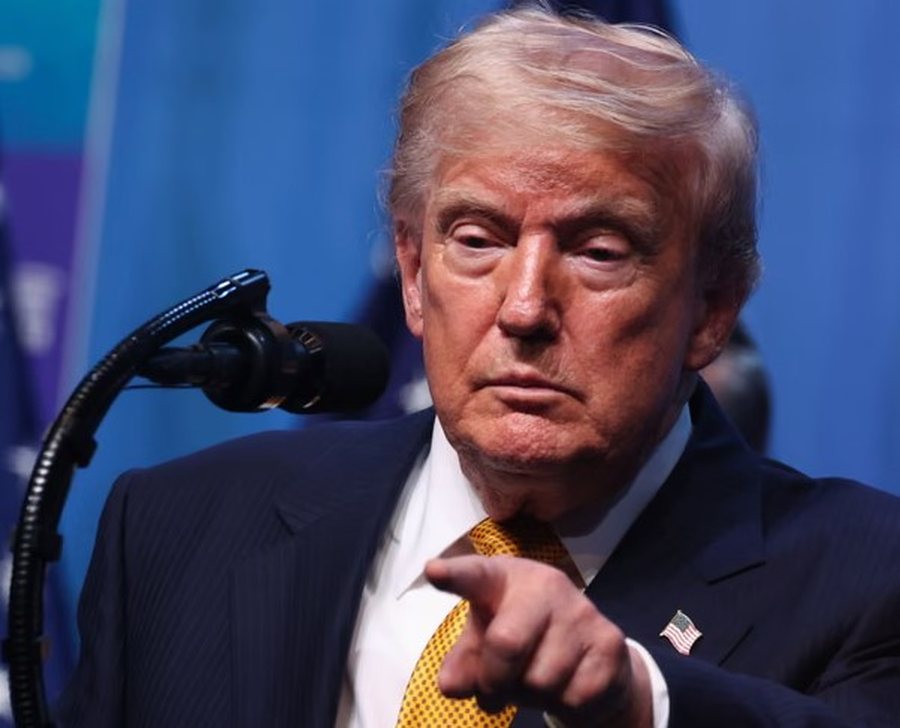
The resumption of bombing shows that the American president has plunged the US into an endless conflict and the global economy into a new crisis.
Incompetent and without a clear strategy, Donald Trump, according to the author, is stuck in the conflict with Iran, without finding a way out of the war he himself started. The US military has resumed bombing Iran, increasingly hitting civilian infrastructure. The author argues that these attacks, instead of weakening the Iranian regime, only strengthen its resilience, despite the heavy cost paid by the population.
According to the author, repeated statements by Trump and US Secretary of Defense Pete Hegseth about major victories do not match the reality on the ground. Although the president claims that the US is "winning convincingly", the author emphasizes that few believe this, while the world is viewing with skepticism the American inability to achieve the declared objectives.
The author writes that control over the Strait of Hormuz, which he says has been closed as a result of the escalation of the conflict, is now the White House's main objective. Meanwhile, the more ambitious goals of the US and Israel - eliminating Iran's nuclear program, weakening Tehran's allied militias and changing the regime - seem more unattainable than ever.
According to him, if Iran were truly the existential threat that Trump describes, then logic would lead to a full-scale military invasion. The author brings up as a comparison former President George W. Bush's decision to invade Iraq in 2003, acknowledging that it was a catastrophic mistake, but arguing that at least Bush was willing to take responsibility for his decision.
The author continues that Trump does not dare to undertake a similar operation against Iran, but at the same time does not admit that he was wrong to enter into a conflict that he cannot end. Instead, according to him, the American president is exposing the civilian population and American troops to a long war of attrition, endangering Arab allies in the Persian Gulf, damaging the global economy and weakening the international order, only to avoid admitting his mistake and returning to diplomatic negotiations.
In this perspective, the author concludes that "Trump's ego, and not Iran, is the world's main enemy," describing it as "a single weapon of mass destruction."
Ai argumenton se modeli është i njohur: Trump, sipas tij, hyri në luftë pa konsultuar Kongresin, aleatët amerikanë apo opinionin publik, pa një strategji afatgjatë dhe duke u mbështetur në premtime optimiste për një fitore të shpejtë. Autori pretendon se presidenti amerikan u befasua nga kundërpërgjigjja iraniane ndaj bazave amerikane në rajon, megjithëse, sipas tij, një reagim i tillë ishte i pritshëm.
Më tej, autori e zgjeron kritikën edhe ndaj politikës së Trumpit në Lindjen e Mesme. Ai kujton planin prej 20 pikash për paqen në Gaza, të prezantuar një vit më parë, duke argumentuar se asnjë nga elementët kryesorë të tij rindërtimi, krijimi i një force ndërkombëtare stabilizuese apo çmilitarizimi nuk është realizuar. Ndërkohë, sipas autorit, luftimet vazhdojnë dhe kriza humanitare mbetet e pazgjidhur.
Një kritikë e ngjashme, sipas tij, vlen edhe për qasjen e Trumpit ndaj luftës në Ukrainë. Autori pretendon se presidenti amerikan nuk u mor me shkaqet e konfliktit apo me motivet e presidentit rus Vladimir Putin, por u përpoq të ushtronte presion mbi presidentin ukrainas Volodymyr Zelensky për të pranuar një kompromis të njëanshëm. Kur kjo nuk ndodhi, shkruan autori, Trump e reduktoi mbështetjen ndaj Kievit, ndërsa vazhdoi të kërkojë marrëdhënie më të mira me Moskën.
Autori ndalet edhe te memorandumi i mirëkuptimit i nënshkruar në qershor, i cili parashikonte ngrirjen e konfliktit për 60 ditë gjatë zhvillimit të negociatave. Sipas tij, Trump e paraqiti këtë marrëveshje si një sukses personal, por ajo rezultoi e paqëndrueshme. Autori pretendon se një nga nenet e saj dukej se pranonte de facto kontrollin iranian mbi Ngushticën e Hormuzit, gjë që, sipas tij, e ka bërë Teheranin edhe më mosbesues ndaj presidentit amerikan.
Në vijim, autori argumenton se pasojat e konfliktit po bëhen gjithnjë e më të rënda. Ai krahason Trumpin me një person që përsërit të njëjtin veprim duke pritur një rezultat ndryshe, duke theksuar se bombardimet e vazhdueshme nuk kanë arritur të ndryshojnë qëndrimin e regjimit iranian, por vetëm kanë shtuar intensitetin e konfliktit dhe kanë larguar perspektivën për një zgjidhje diplomatike të çështjes bërthamore.
Sipas autorit, vendimet e fundit të Trumpit përfshirë propozimin për vendosjen e tarifave detare në Ngushticën e Hormuzit dhe tërheqjen nga kjo ide vetëm një ditë më vonë, si edhe sulmet ndaj infrastrukturës civile tregojnë mungesë të një strategjie të qartë. Ai paralajmëron se një bllokadë e Detit të Kuq nga rebelët Houthi të mbështetur nga Irani do të kishte pasoja të rënda ekonomike në shkallë globale.
Autori shton se aleatët evropianë po e ndjekin me shqetësim situatën, ndërsa tregjet financiare reagojnë me pasiguri dhe çmimet e naftës vijojnë të rriten. Sipas tij, çdo raketë e re e lëshuar dëmton më tej reputacionin dhe ndikimin ndërkombëtar të SHBA-së.
Finally, the author raises the question of who can stop Trump. He writes that Congress has asked the president to end the war or seek formal authorization, but according to him, this request has been ignored. Polls show that a majority of Americans oppose continuing the conflict, while allies are hesitant to openly challenge him for fear of severing relations.
The author argues that Russia and China are the main beneficiaries of this situation. According to him, Russian President Vladimir Putin benefits from the concentration of American resources in the Middle East, while Chinese President Xi Jinping is carefully watching developments, increasing China's economic and diplomatic influence and creating opportunities for future strategic gains.
In conclusion, the author considers this a problem that must be solved by the American citizens themselves, who, according to him, elected Trump to the head of the country. Referring to the spirit of the American Declaration of Independence of 1776, he writes that Trump has not made America "greater", but smaller, more isolated and more divided. For this reason, he concludes that the world needs a "new declaration of independence from Trump". / Adapted from "The Guardian"




Lini një Përgjigje