


 Shkruar nga Pamfleti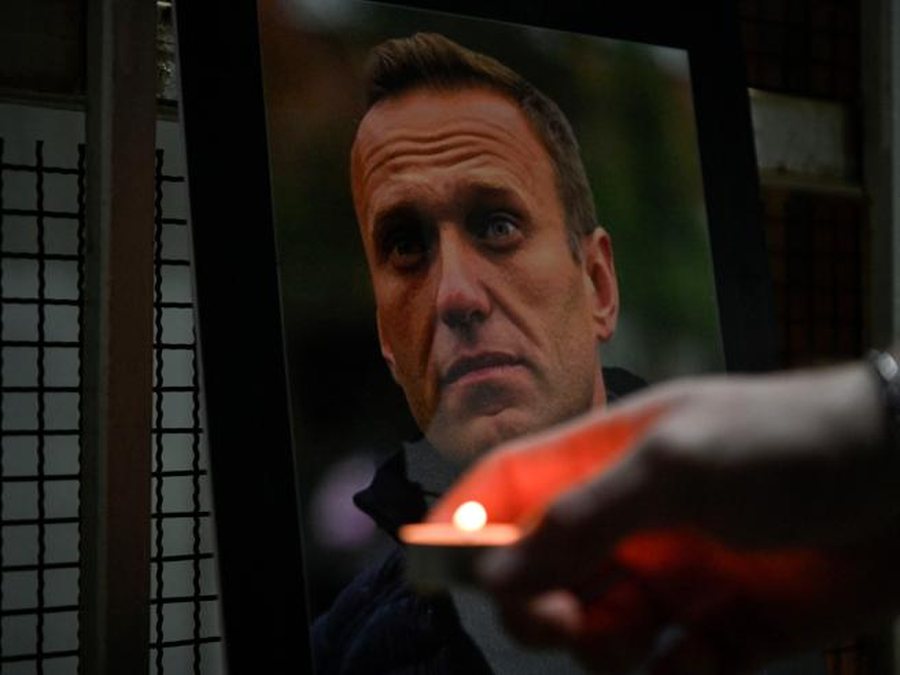
"Hello Sergey! I wrote to Varya about Sorokin, I will write to you about Chekhov! Finally, when I left the colony, I left almost all my books there. And those that were there, I had already finished. When I got here and they put me in quarantine, I said, bring me something from the library. Their selection couldn't have been more appropriate: Resurrection, by Tolstoy, Crime and Punishment, and… short stories and plays by Chekhov. Well, I guess , there is a logic: you wrote me about his comedies, and here they are!
Alexei Navalny's last letter from Siberia is a love hymn to Russian literature, written with the enthusiasm and vitality of a boy. She arrived at her destination last Monday, five days before the death of the Kremlin's most feared dissident. The name of the person who received it shows his loyalty to old friendships. For the people with whom he had shared the beginnings of his journey.
Sergey Parkhomenko was one of the sons of the white revolution in Bolotnaya Square. The former popular voice of Moscow's Echo radio, which reported on the turbulent nineties, along with Navalny he was one of the most popular and exposed figures of the protest movement of 2011-2013. A staunch pacifist, in 2014, after the first invasion of Donbass, he became a member of the Dialogue Committee between Ukraine and Russia. Shortly after that, he chose exile, in the United States and then in Greece, where he has been living for almost two years.
"From the first play I read, I discovered where the expression "Greece has everything" came from, which when I was little I often heard my parents repeating it as a joke at home. From the wedding! But then I had an accident. The prisoners of the special regime treated APC (Anton Pavlovich Chekhov, ed. ) without any honor and tore half the sheets of all other plays. So, alas, the plays are still on my waiting list... But many of his short stories were saved," Navalny wrote.
More of Navalny's letters from captivity will be published, as they deserve. The exchange of letters a year ago (March and April 2023) with Nathan Sharansky, former deputy prime minister of Israel at the beginning of the new century and mythical figure of Soviet dissidence in the previous one, almost has the value of a spiritual testament. . "Everything continues as defined by Ecclesiastes", writes the prisoner. "What will be will be". Sharansky knows what he's talking about, having spent nine years, from 1977 to 1986, in the Siberian gulag Perm-36. "Managing to remain free even in prison, you, Alexei, are influencing the souls of millions around the world."
But in the last months of his life, Navalny certainly wasn't thinking about death. As much as he was allowed, he wrote to friends about books, the American election and even food, as documented by the New York Times. He shunned compassion. Proof of this is another letter addressed to Fishman, where he thanks him for giving him details about his daily life in the Netherlands. "Everyone thinks I need touching and pathetic words. But what I really miss is catching up on reality, daily weariness, news about life, food, salaries, gossip." In his first and final appeal against the Kharp gulag administration, where he arrived last December, Navalny complained about the seizure of some letters sent to him. In fact, on Friday February 16, the day of his death, the appeal was accepted. The court hearing was scheduled for March 4.
"And you know, Sergey, then I continued reading and thought to share with you and write to you. Since our school days we have had the impression that Chekhov's stories are small and simple things. A little funny, but not much. But then I read this kind of Cargo-200 (the reference is to the 2007 film of the same name, one of the darkest works of the Brezhnev era, ed. ) that comes from the end of the nineteenth century (…). I can't find the same darkness in the description of despair and poverty in FMD (Fyodor Mikhailovich Dostoevsky). In fact, after I finished Into the Ravine, I stared blankly at the wall for five minutes. Who would have thought that the darkest Russian writer was Chekhov? So you're definitely right. You should read the classics! We don't know them!"
Navalny's last known letter ends like this. 'In the Ravine' is a short story where the protagonist is sentenced to six years of forced labor in Siberia. Anton Chekhov wrote it inspired by a true story he was told during his trip to the penal colony on the remote island of Sakhalin, where he later denounced the corruption of the prison guards and the inhumane conditions of the prisoners./ Corriere della Sera




Lini një Përgjigje