


 Shkruar nga Lucan Ahmad Way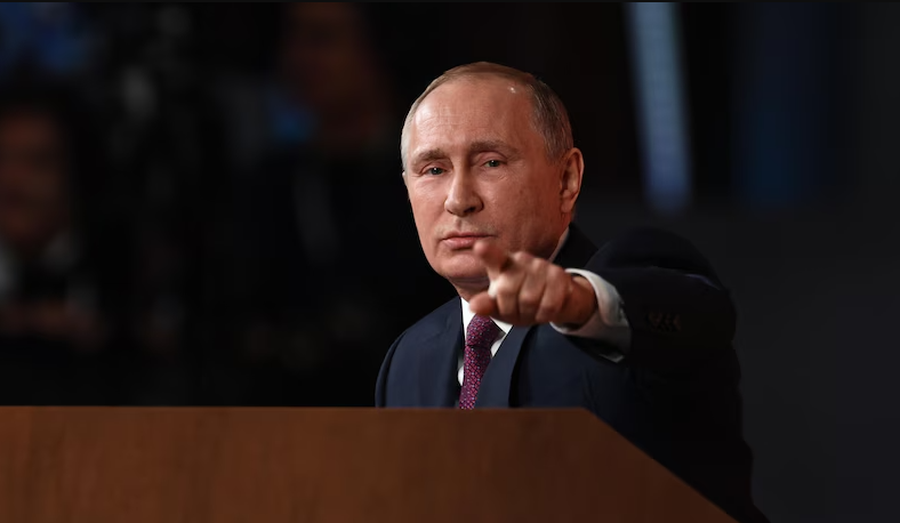
Western restraint in response to the annexation of Crimea did not deter Russia, but it is likely to escalate the chances of Russian aggression.
The latest wave of nuclear threats from Russia has prompted renewed calls to limit military aid to Ukraine, with the aim of preventing an international escalation of the Russian-Ukrainian war.
The Biden administration, along with analysts from both the right and the left, have argued that Western restraint is necessary to avoid a nuclear war. Such warnings have been echoed by Russian President Vladimir Putin himself, who claimed at the end of May that "continued escalation could bring very serious consequences".
However, rewarding Russian aggression is more likely to escalate the conflict with Russia than to create any kind of lasting peace. Calls for caution are blinding us to a very real danger: limiting Ukraine's ability to respond to Russian aggression will make a wider European or world war more likely, reducing the perceived costs of Russian escalation.
Support for trickle-down aid to Ukraine in the face of Russian attacks is based on the belief that Russia will somehow reward the West's prudent behavior, and if we back down in the face of nuclear threats, Moscow will not make such threats again in the future. .
But if Russian threats of nuclear war compel the West to impose more restrictions on Ukraine, then why would Russia stop making such threats? If she feels that she can exhibit aggressive behavior at no cost, then she will most likely want to engage in even more aggressive behavior.
In fact, the start of Russia's full-scale invasion of Ukraine in February 2022 was provoked in part by weakness and restraint rather than Western hostility. Britain did little to punish Russia after it killed a Russian-British citizen on its soil in 2006.
Western powers responded with remarkable restraint, even as the Russian government flagrantly violated key international norms by invading the sovereign territory of Ukraine and annexing Crimea in 2014. In the event, US military assistance remained limited.
Sanctions against Russia, meanwhile, had little visible impact on the Russian economy. At the same time, the German government refused to stop the construction of the gas pipeline "Nord Stream 2", which connects Germany with the Russian company Gazprom. Thus, Russia remained Europe's largest gas supplier.
Both of the main parties there, the SPD and the CDU, have many politicians with close ties to Russia. French and Italian politicians, from both the right and the left, support closer relations with Russia.
Vladimir Putin has had close personal ties to European leaders, including Hungarian Prime Minister Viktor Orban, former Italian Prime Minister Silvio Berlusconi and former German Chancellor Gerhard Schroeder.
The United States and its allies reluctantly began sending significant military aid to Ukraine, and helped train the Ukrainian military. But they refused to send their most advanced weapons, and did nothing to bring Ukraine closer to NATO membership.
In the months leading up to the February 2022 invasion, Russian state media itself admitted that Ukraine's NATO membership was “unrealistic,” and that despite promises made in 2008, “over the past 12 years, Kiev...has moved away from the prospect membership in the alliance".
However, the West's restraint was not rewarded. Instead, instead of easing tensions, Putin launched a full-scale invasion of his neighboring country. The Russian government did this not in response to Western threats, but almost certainly because the Russians assumed that the West was too weak and passive to respond effectively.
Finally, Putin had important allies in the European elite, and controlled access to key energy sources. Western restraint in response to the annexation of Crimea did not deter Russia, but it is likely to escalate the chances of Russian aggression.
And so it is today. Western powers have done little to respond to Russia's concerted efforts to foment global chaos, including the severing of undersea communications cables between Lithuania and Sweden, and plots to send incendiary devices to the United States and Canada.
If we really want to prevent Russia from invading sovereign countries and causing instability in Europe and the United States, we must make such behavior very costly to Moscow. After all, this is the best way to prevent escalation. / Adapted "Pamphlet" from "National Interest"
*Note: Lucan Ahmad Way, Professor of Democracy in the Department of Political Science at the University of Toronto and Fellow of the Royal Society of Canada.




Lini një Përgjigje