


 Shkruar nga Pamfleti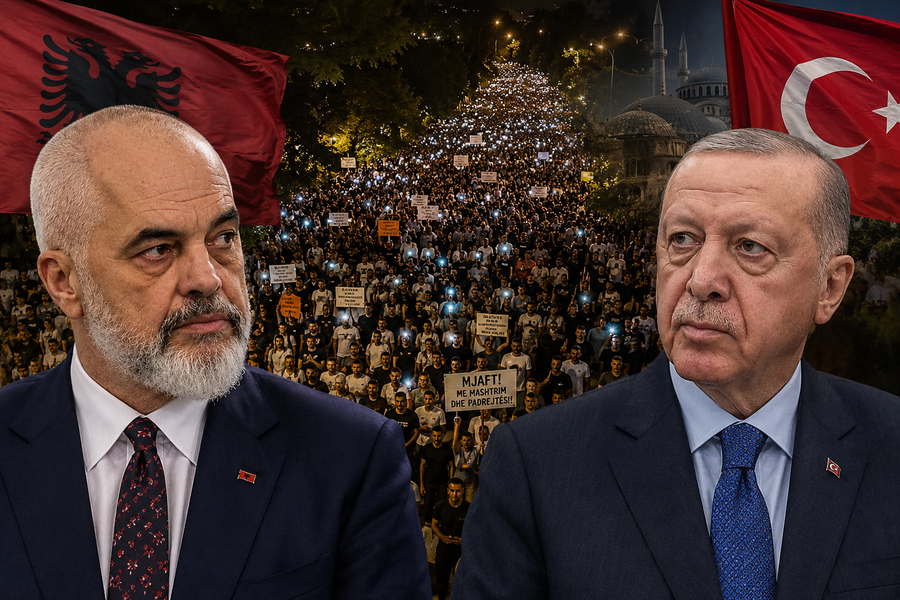
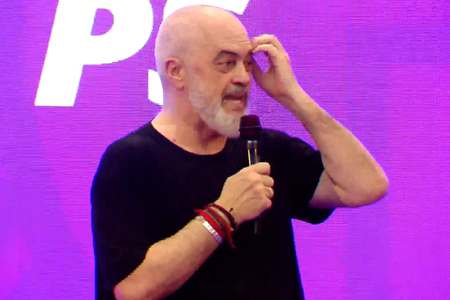
For years, Edi Rama has had Ankara as one of his strongest international supporters. But as the protests in Albania are taking on national proportions, important Turkish media outlets are openly siding with the protesters, reading the revolt as a crisis of Rama's government and not simply as a debate over tourism projects...
Turkish media have turned their attention to Albania, paying special attention to the protests that have been keeping the political debate in the country heated for days. But unlike many international reports that have focused on the tourist projects in Zvernec and Sazan, in Ankara the protest is being interpreted as something much bigger: a revolt against Edi Rama's way of governing.
From "Türkiye Today" to "Independent Türkçe", from "Yeni Arayış" to "Nupel TV", Turkish media have published analyses and reports where the emphasis is not placed on resorts or investments, but on citizens' dissatisfaction with transparency, accountability and the way public decisions are made in Albania.
"Türkiye Today", in a long analysis dedicated to what it calls the "Flamingo Revolution", writes that the story is not really about the Trump family or a luxury resort. According to Turkish media, the protest has turned into a national debate on governance, transparency and the right of citizens to have a say in decisions that affect the future of the country.
The political magazine "Yeni Arayış" also appears in the same vein, arguing that the protests are the result of an "erosion of trust" that has been building for years. According to it, accumulated dissatisfaction with public projects, concessions, institutions and the political climate has now come to the surface through the protests.
Even "Independent Türkçe" describes the situation as an important test for Edi Rama's government, emphasizing that the protesters' criticism goes beyond environmental issues and touches on corruption, lack of transparency, and governance problems.
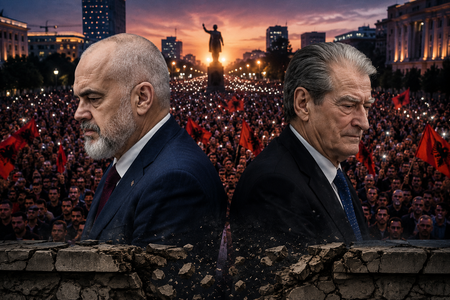
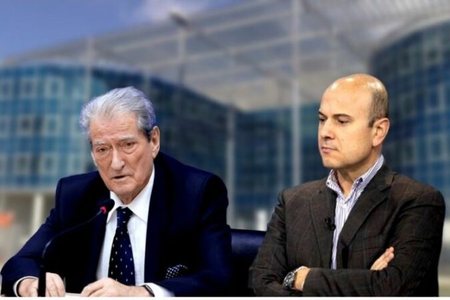
Meanwhile, "Nupel TV" reported from Tirana that protesters are directing criticism not only at the government, but at the entire Albanian political class. The media singles out slogans against Edi Rama and Sali Berisha as a sign of dissatisfaction that transcends traditional party lines.
Attention has also been drawn to the fact that several popular profiles and platforms on Turkish social networks have broadcast the protests live from Tirana, dedicating an unusual space to developments in Albania.
For many years, Turkish television has talked about Turkish investments in Albania, strategic cooperation, and the special relationship between Rama and Erdogan. Today, instead of inaugurations and agreements, the spotlight is on Albanian protesters and their criticism of the government.
What seems to have caused the biggest scandal was Rama's visit to Israel and the praise he paid to Netanyahu. It seems Erdogan will not forgive him easily.
The way the Turkish media is reading and broadcasting the Albanian revolt is increasingly feeding the belief that the unconditional support that Edi Rama has enjoyed for years in Turkey no longer seems as secure as it once did. Not to mention that the Turks are turning against him. /Pamphlet



Lini një Përgjigje