


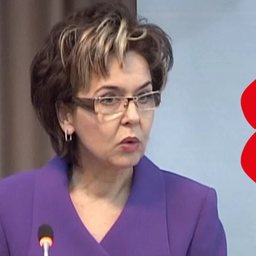
 Shkruar nga Dijana Toska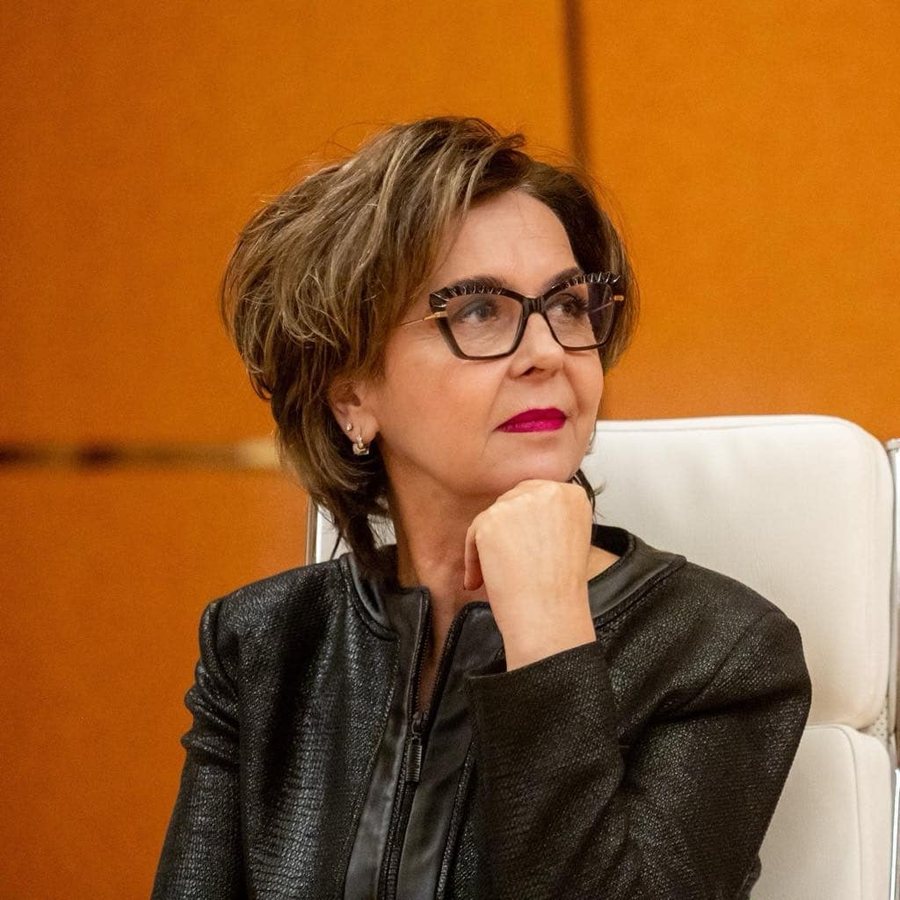
Should Albania accept without debate a contested status for Albanians in North Macedonia?
Following my public request to the Albanian Ministry of Foreign Affairs for clarification regarding yesterday's statement by Minister Elisa Spiropali, who placed Albanians in North Macedonia in the context of "minority reciprocity", constitutional law professor Jeton Shasivari reacted, considering my reaction as directed at the wrong address.
However, in his reaction, the professor brought to light a 2004 legal act, filed with the Council of Europe, about which public opinion has not been informed.
It turns out that this act was produced during a period when DUI was part of the governing coalition with SDSM and has profound consequences for the way in which the status of Albanians in North Macedonia has been internationally fixed.
Feeling a moral obligation and deep civic concern, I am responding to Professor Shasivari, while at the same time inviting the academic community to open an open, constructive and responsible debate on this extremely delicate issue, which directly affects the political and constitutional status of Albanians in North Macedonia. Opening a debate on a legal, but not legitimate, issue!
I appreciate the professor's reaction and legal approach, as well as the clarification regarding the 2004 declaration filed with the Council of Europe. The debate on the legal status of Albanians in North Macedonia is not only necessary, but also overdue.
However, precisely because it is a fundamental constitutional and political issue, a legitimate and inevitable question arises: if this 2004 declaration had such great legal weight and long-term consequences for the status of Albanians, why was this issue not publicly articulated at the time?
Why did it remain silent in academic, political and public discourse for almost two decades, while a formulation that contradicts the spirit of the Ohrid Framework Agreement and the very terminology of the 2001 constitutional amendments, which speak of “non-majority communities”, not national minorities, was normalized?
Secondly, even if we accept the fact that the 2004 declaration exists and produces legal effects in relation to the Council of Europe, this does not automatically transform it into a political, discursive or principled standard for the mother state.
Albania is not a party to the internal compromises of 2004, nor is it obligated to reproduce a language that, even today, remains contestable from the perspective of real political equality. My question was not legal-technical, but political, principled and national: Should Albanians in North Macedonia be treated in the Albanian state discourse as a minority equal to the national minorities in Albania, or as an autochthonous people and a state-forming factor, despite the deviations imposed in some international documents?
Finally, the statement that “if we don’t take care of ourselves, Albania won’t make it” is correct, but incomplete. Because taking care of ourselves does not only mean passive acceptance of inherited legal realities, but also the courage to challenge them when they conflict with substantive equality and the spirit of the political agreements that ended the 2001 conflict. Today’s debate is not overdue. It is necessary. And precisely for this reason, it should not be closed with procedural explanations, but opened with academic, political and moral responsibility.
Honorable professor, I am glad that this reaction of mine opened a necessary debate and brought to the surface a legal and political reality, which I openly accept, for the first time I am hearing and understanding in all its weight. And this is precisely what makes the debate valuable. But I cannot help but ask a fundamental question: in a country that today has dozens of universities, research institutes and a considerable number of academics of constitutional and international law, how is it possible that this topic has not been seriously addressed in public, academic and institutional debate for two decades?
If a 2004 declaration has managed to have such a profound impact on the legal status of Albanians, then the silence surrounding it is no longer a procedural issue, but a problem of the culture of public and academic debate. For me, this constitutes one of the most serious political compromises with long-term consequences. Therefore, the questions are legitimate: how did the state of Macedonia sign such a binding act?
If Albanians are the pillar of the state, how is it possible that their status in the international order is determined without any parliamentary debate? These questions are not rhetorical. They are questions of historical responsibility, which should be demanded not only by the state, but also by the DUI as a coalition partner, which did not have a mandate from the people to reduce the status of Albanians from a state-forming people to a minority. This act is legal today, but not legitimate.
And this is already in our collective conscience: do we want to change it, or accept it in silence? I hope that this discussion will not remain a random reaction, but will turn into a broader social and academic reflection. Because only through open and reasoned debate can awareness, political dignity and real equality be built. / Pamphlet



Po supozojmë: Nga Kumanovë- Shkup -Tetovë-Gostivar- Strug dhe Ohër, i kalojnë Shqipërisë dhe Kosovës. Pjesa tjetër e Maqedonisë i kalon Bullgarisë .Ndoshta shtetet pjesëmarrëse në këtë 'treg' dhe popujt respektiv dakordësohen. OKB dhe KS e miraton, pasi është në përputhje me parimin bazë të vetvendosjes së popujve. Ku qëndron problemi këtu?
Problem i vështirë shumë shekullor.,,që veç shqiptarët nuk e zgjidhin dot