


 Shkruar nga Pamfleti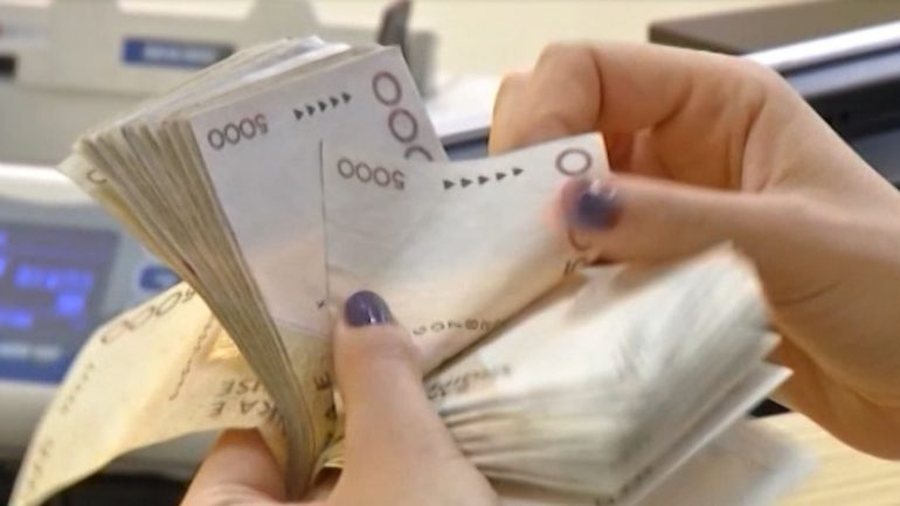
Digitization does not succeed in defeating tradition in terms of how Albanians pay for certain goods or services. Apart from the efforts to increase electronic payments or the use of bank cards, 402.6 billion ALL have circulated outside the banks until July.
At the end of July, 402.6 billion ALL circulated outside the banks, from 398.2 billion ALL in July 2023, increasing by nearly 4.4 billion ALL.
In relation to the total amount of money circulating in the Albanian economy, which is estimated at 1.71 trillion ALL, informal money constitutes more than 23.5% percent of the total.
To understand the high level of money outside banks, it is enough to say that in the countries of the European Union this indicator does not exceed the level of 9%.
To reduce cash, the government initiated the law on basic accounts where all pensioners must have a bank account to receive their pension. While a suggestion of the European Commission for this reduction of the phenomenon was the setting of a limit for cash payments. Tax for businesses is available up to 150 thousand ALL.
The problem of the increase in the use of cash, the central bank raises this phenomenon as a concern in its annual report.
According to the Bank of Albania, the use of physical money remains a dominant phenomenon for the Albanian economy, which has high costs for it. While suggesting that electronic payments have increased, the bank emphasizes the cooperation between institutions to reduce the use of physical money.
Economic experts estimate that the high amount of money outside the control of banks is a potential risk of money laundering and the main reason for distortions in the exchange rate./A2CNN




Lini një Përgjigje