


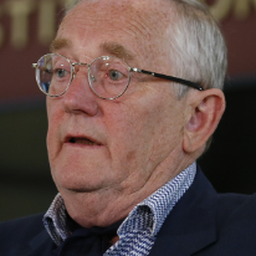
 Shkruar nga Robert Service
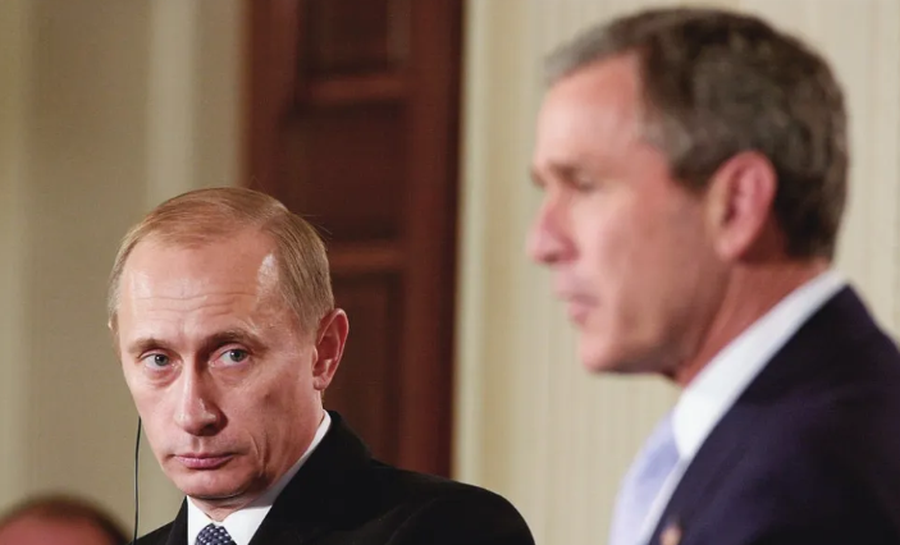
Would it really be strange if Vladimir Putin started pitting America and China against each other in the geopolitical arena? If he had a bigger vision, he would have done so all those years ago when he was attacking the US as the "global Satan."
I noted this in my 2019 book, “The Kremlin Winter,” as evidence of his long-term incompetence. But Russian policymakers were no longer offering Putin a more flexible perspective on foreign and security policy. As a result, his aggressive paranoia dragged Russia into an unnecessary and barbaric war in 2022.
Donald Trump was the only American leader he always excluded from his public attacks. And they are successfully continuing this alliance. Now Trump, a fan of authoritarian rulers, has given him the glory of a new Russian-American rapprochement.
As we are discovering, Trump's gifts to Moscow include Washington's endorsement of Putin's agenda on the future of Ukraine. The potential deal is diabolical. Putin has apparently promised access to Russian markets for American corporations.
At the same time, Trump is putting extreme pressure on Volodymyr Zelensky to hand over a chunk of Ukraine's post-war economy to America in exchange for vague security guarantees. But is Putin in a position to play double-cross with America and China?
Three years of war have exposed Russia's weaknesses. The latter is already dependent on technical imports from the Chinese. It relies on oil exports to India at below world market prices. It needs Iran for drone supplies and North Korea for new troops on the front.
Russia's autonomy in geopolitics is very limited. However, many American corporations would relish the opportunity to re-enter the Russian economy. When the US imposed a broad trade embargo on Soviet Russia in the 1920s, there was persistent pressure from big business to reverse this policy.
This also happened during Ronald Reagan's presidency in the 1980s, when American oil companies and tractor manufacturers sought to end the ban on trade in anything of potential military significance. The Russian people are likely to welcome the Americans back.
Although, according to polls, two decades of anti-American propaganda have made the US the most unpopular power for most Russians, they are war-weary and want improvements in their standard of living.
If Putin ends the war, there is no doubt that polls would record a decline in his popularity. He has called on American presidents from George W. Bush onward to accept and work within the reality of a multipolar world.
Some American thinkers, notably the late Henry Kissinger, thought the same way. But except during Trump’s first term, the consensus in Washington has been that Russia – except for Obama’s 2014 blunder – is merely a “regional power.” Now Russia is back at the big decision-making table. Last year was a very bad year for it in Syria, when Russian forces were forced to withdraw rapidly. And the Kremlin never managed in previous years to confront China’s expanding influence in Africa and former Soviet Central Asia.
But Putin should hold off on the prospect of a presidential stroll through Red Square with his friend Donald Trump. Whether he would risk turning the visit to Washington into a hostile demonstration in America is another matter.
Should we in the rest of the “West” be concerned if the term still means what we have come to understand it to be? Russia’s armed forces have proven to be as weak as many experts assumed. As in 1914, this war has exposed the great shortcomings of the Russian army.
But the difference now is not just that Trump has abandoned aid to Ukraine, but when he winked at the cameras at the White House last Friday, and declared that he does not even intend to guarantee Lithuania's security.
He is destroying, brick by brick, the NATO alliance, which was once an unquestionable credo of transatlantic relations. However, not everything that has happened in recent weeks is reason to be pessimistic.
In response to Trump's initiatives, Europeans - and not just the EU - have begun to form a military counter-bloc. How far this initiative will go is still unclear. The difficulties are obvious, such as the fact that Britain's nuclear forces are currently subject to the whims of the US.
But just a few years after leaving the European Union, Britain is returning to the center of European policymaking. Trump is causing big surprises. But the surprise that is not his has to do with the reemergence of Europeans' willingness to confront the Russian threat.
Trump and Putin expected multipolarity to include mainly Russia, China, America, and perhaps India and Brazil. But they may be forced to rethink whether old Europe - for the first time in its many centuries - will manage to unite for the sake of its survival and well-being.
Note: Robert Service, professor of Russian history at St. Anthony's College, Oxford. His latest book is titled "Blood on the Snow: The Russian Revolution, 1914-1924."



Lini një Përgjigje