


 Shkruar nga Ylli Pata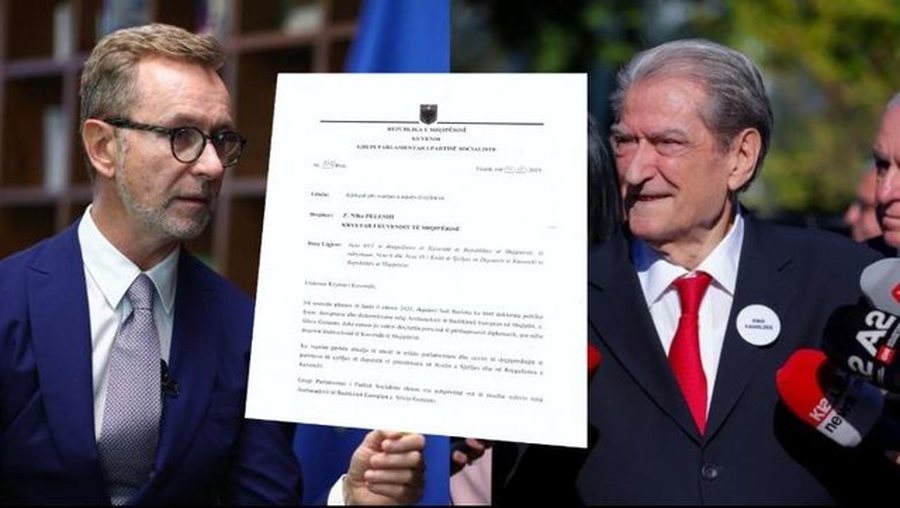
This behavior of Berisha, which has been invasive in some leftist centers in Rome, which are more media-oriented, and which are also considered pro-Russian in the discourse, has caused a significant problem for the DP with the Italian right, namely with the government in Rome.
Albania has had the largest number of EU ambassadors in Tirana, diplomats from Italy. And this speaks volumes about a relationship that official Rome, although it has not properly activated its influence in Albania, has managed to bring its people as representatives of official Brussels. The first EU ambassador in Tirana after the fall of communism was an Italian diplomat. A tradition that has continued even further. Only recently have we had almost three ambassadors in a row; Ettore Sequi, Luigi Soreca and Silvio Gonzato.
The presence of Italian diplomats in the European Union delegation, the only country that has no conditions but has supported Albania in the EU since 1990, is a very important development for Albania.
Italy, meanwhile, apart from openly supporting it, has never had any problems with Albania, and has been very careful in its treatment of the political parties in Albania. Every Italian government, whether of the left or the right, has done this.
From Andreotti in 1990, to Prodi and Berlusconi, to Giorgia Meloni today. Even the Italian right was the only one that respected Sali Berisha, when he was declared Non Grata, and was isolated from all the allied parties of the Democratic Party.
Forza Italia, founded by Silvio Berlusconi, and today led by Foreign Minister Antonio Taiani, was the only representative of the European People's Parties to send representatives to Sali Berisha's Convention, when the latter did not have the DP seal.
But Berisha was ungrateful for this support and was among the first to oppose the Italian plan for an immigrant center in Gjadra. He was even an important sponsor of some Italian leftist circles to create a cause for unrest, which would have results in Italy as well as in Albania. In fact, the opposite happened, Giorgia Meloni won all the elections, from the European ones, where she had the Gjadra center as a counter-cause, to most of the regional by-elections.
This behavior of Berisha, which has been invasive in some leftist centers in Rome, which are more media-oriented, and which are also considered pro-Russian in the discourse, has caused a significant problem for the DP with the Italian right, namely with the government in Rome.
As is known, Georgia Meloni is today in Europe, Donald Trump's most important political ally in Europe. Something that the US president does not leave without mentioning. And in American MAGA circles, of course, where there is talk about the region and the issues with which Italy entered into controversy, such as the Gjadri center, there has also been attention there. Elon Musk, for example, was one of the most ardent when criticizing Italian judges. This fact is that the files related to this issue have also arrived in Washington. And in this case, Berisha's behavior has had its analysis or effect in Washington, even with the comment of diplomats in Rome. Meanwhile, there is no doubt that Italian influence is even stronger today in the EU, especially in Meloni's relations with Trump, but not only. And in this case, Rome's support for Albania in the EU has had an even stronger and more important effect.
Sali Berisha today, even though he has the stamp of the DP, is more isolated than before. Even Athens, for which he performed a great service with the Beleri case, is not with him, as the Greeks made it clear through Fredi Beleri that they demand Berisha's resignation.
Therefore, the attack on the EU ambassador is intended to attract attention after a long period of ignoring. Attention that was received as a result of a violation that is considered serious by European standards, but will likely be the last.



Lini një Përgjigje