


 Shkruar nga Ilir Yzeiri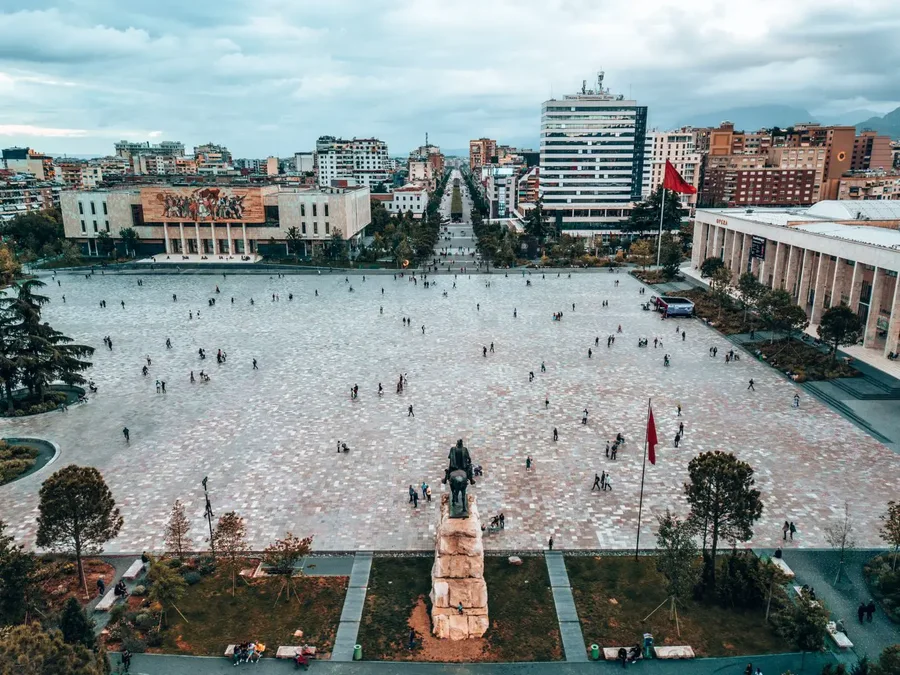
The clichés that are used today in the presentation of the homeland are built on the political stereotypes of the position-opposition dichotomy.
A news recently published in our media "Tema" and "Shqiptarja.com", published on 2.06.2024, with the title "Foreigners make Albania famous on Tik-Tok, surpassing Greece and Italy", surely, in no small part, it will not have been well received by the Albanians themselves, because, here in our country, the collective opinion is built with stereotypes and clichés.
We have not yet managed to separate Albania, our homeland, from the political parties and from those who govern us. Having been taught over the centuries that Albania does not belong to Albanians, but to Baba in the time of the Ottomans or Zog in the time of the kingdom and Enver Hoxha in the time of communism, Albanians excluded themselves from participating in the construction of the identity and image of their country. After the 90s, another remodeling of our image of the homeland took place.
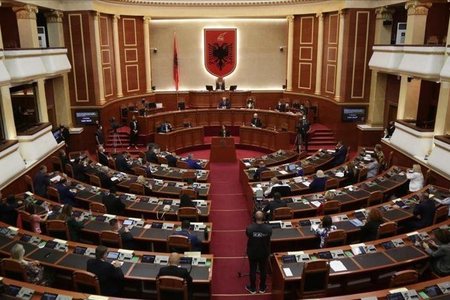
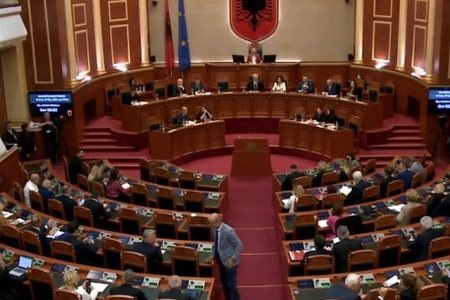
The anti-communist opposition was imagined as the political force of the Albanians that would, henceforth, rebuild the image of the homeland crushed by economic misery, ethnically divided, destroyed by the class war and crippled by the loss of values. Thus, new clichés began to be built again. If until then, in the collective thought, stereotypes of the meaning of life had been built according to the ideological and socialist mentality that divided the past and the present into enemies of Albania and its lovers, now the stereotype was being reversed and new clichés were replaced. in the general collective thought, turning upside down the architecture of Albanian thinking. Here it is not simply about the evaluation of the past, on which Albanian political thought still continues to have more weight than the analysis of historians, it is about the reproduction that we do today of the image of the homeland. The clichés that are used today in the presentation of the homeland are built on the political stereotypes of the position-opposition dichotomy.
If you are in the opposition, according to the cliché built among Albanians, your duty is to insult the government, to instigate everything that is done in this country, to present the work that is done as an action to steal and destroy this country. And according to a stereotype that exists only here, the opposition is always right. Regardless of what she stands for, the mere fact that she is in opposition gives her oracle status.
In the public space, and here I mean the big and small media, you can't find a show that talks about the beauties of this country, you can't even find a single piece of information that has the content of those endless messages that are posted on Tik - Land from foreign bloggers who are amazed by our country. They are amazed by the beautiful nature, the quality of life here, the history, the security of order (only in Albania it happens that foreigners are not affected, but are respected and helped).
We forget that today we are living in a decisive moment. We have a golden opportunity to improve our collective image in Europe, especially, and in the world. Everyone, who more and who less, is a witness to the skepticism, cynicism, doubt and ignorance that foreigners and especially a part of the media have done to us and are still doing to us today. Until recently, no one knew exactly what we are. The Europeans, accustomed to the clichés of evaluating the Balkans according to religious and colonialist stereotypes, saw Albania as a more atypical Muslim country, and as a remnant of the Ottoman Empire in the heart of Europe, which also facilitated the fragmentation of Albanian ethnic lands. Noli, but also Ahmet Zogu tried to deconstruct this image, but the Second World War brought a different reality. The total closure and isolation caused Albania to be forgotten.
Meanwhile, within the country, the Albanians began to cultivate an empty pride, an emphasis that only kept alive the cult of the dictator. After the fall of the dictatorship, Europe saw a frightening reality. The image that was created for us, the Albanians, was included in the new narrative that was being built in Europe, accustomed to evaluating others with cynicism and historical clichés. The murderous immigrant, then the mobster, the criminal, the trafficker, the Albanian as a synonym for evil in that country and a state that did not know why it stood until they were forced to bring here the peacekeeping mission, like the one named "Alba".
So what is happening now, this adjustment of Albania's image is a great historical event that should restore our lost pride. Only now we can talk about our dignified past. Only now can we show our humane values that have created two clichés and two positive stereotypes for Albanians, which are: peaceful coexistence between religious beliefs and the salvation we gave to the Jews when the Hitlerian extermination machine was raised against them. Only now we can tell our famous story with Skenderbeu or Loredan who defended Shkodra. Now we can talk about luminaries like Fishta, Noli and Konica. Only now can Europeans better understand Kadare or Mother Teresa.
I know that most of those who do not accept this reality can say that this is how we make the government and Edi Rama cool. It may be so and of course it is, but that should not stop us from being proud of our country today. No government gets things done by itself without its people. If this government has managed to inspire the Albanians so that they can build this Albania that on the largest Internet network Tik-Tok is valued even more than Italy and Greece and has reached billions of views, happy! When this government leaves tomorrow, Albania will be there, but it will not be like a mass of misunderstandings, but like a new reality.


Lini një Përgjigje