


 Shkruar nga Preç Zogaj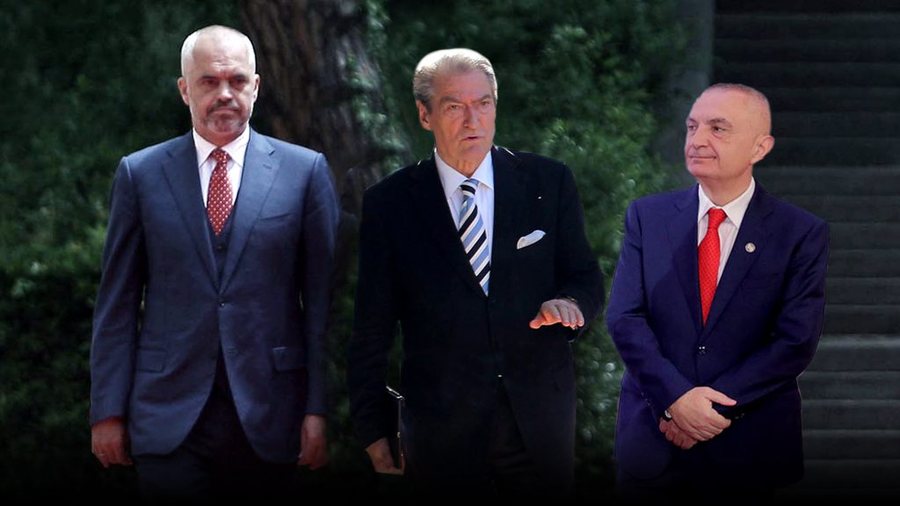
Prime Minister Rama and his government already have a record of corruption in power with a long list of scandals and failures.
Even in a closed political barracks such as the communist regime in Albania, international developments had an impact on domestic politics. Enver Hoxha and Ramiz Alia behind him always kept an eye open and an ear up to what was happening around the world from where they looked for corridors to give a little oxygen to their power.
When this happened, then one can imagine how decisive international developments are in the open Albania of our days.
It is something physiological. Like the climate, macropolitics sees the world from above, touches it and wraps it together with the walls that various states erect in the name of sovereignty, ideology or puritan morality - definitions that are usually nothing more than slogans to disguise and embellish the rule of tyrants and autocrats.
As a member of NATO and in negotiations to enter the European Union with full title, Albania, fortunately, has chosen to be under the cover and radiation of the western democratic order.
But what jumps out in what is and should be the interaction or osmosis between the big western politics and the "small" local politics of Tirana?
The mind goes immediately to what we find and have been living for three decades: Hypocrisy, pretense, embrace of written tasks, but which are not implemented, or are implemented grudgingly. The proverbial example is election standards. For thirty years these standards have been whirling in a never-ending, never-ending spiral of improvement. Because they are sabotaged in implementation.
After more than three decades in democracy, we make the worst elections in the region. OSCE/ODHIR reports photograph every two years a wounded electoral edifice, where the repair of previous blows is answered by new collapses, new wounds. So no end.
The plural solidary political caste of the transition, Berisha-Meta-Rama each have the respective records in this "perpetum mobile" saga without similar on the continent. Prime Minister Rama has refined and raised to a higher level the manipulations of his predecessors, but the conclusion is the same: the elections fail to reach normal standards.
The same hypocritical approach to many other laws that fit nicely into our legislation but usually remain on paper. It is not for nothing that the government and the Parliament of Albania are repeatedly told by their partners an elementary sentence: The law is its implementation. Without implementation it is nothing.
Other examples can be cited where the big politics of the family we belong to and the small politics in our neighborhood are in constant conflict. Mainly because of lustful exercise and living in the projection of permanence in power of our leaders.
But in recent years and recent times, it has been noticed that in the reports of local politics with the game in the chessboard of world politics, something bigger dances. Which is the concealment or exclusion of the international context from the actions and attitudes of caste political actors. It means a kind of self-isolation of them, which in the case of the radical opposition is accompanied by ambiguity in where the limit of the positions against the government is and when the opposition charge goes further and targets itself, without saying it, the positions of the USA, the EU or NATO.
In the case of Rama, in coherence with his culture of authoritarian leadership, this kind of self-isolation in the open appears in the explosions of the sovereignist stamp, which are otherwise translated as "don't break our heads, we know our own business". Here, too, the line between perverse sloppiness and not being "belonging," which is a value, is often fluid.
There is definitely ignorance, short-sightedness and short-sightedness in approaches and attitudes, where the small game makes the big game worse. But there is also benefit, hindsight, purpose, where the small game has as its target the big policy of the USA, EU or NATO, but does not say it openly, knowing that if it comes out openly, it will lose many of the followers.
The DP, the largest opposition party, faced the problem of how realistic and how forced it was, how deserved and how demanding, how effective and how barren its extreme radicalism against the government was before it split. Anyone can draw a conclusion today in the light of the results that kind of radicalism has produced, which in any case kept the opposition large.
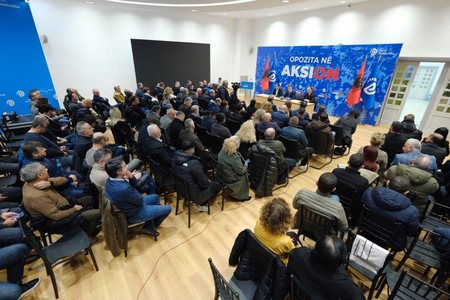
The heir to the unsuccessful radicalism of the united DP of 2017-2020 is today the vector of Berisha's Reestablishment that advertises itself as the real opposition. Any opposition can charge it to the limit with its anti-government rhetoric, accompanied by extreme actions. The government keeps everything. But the essence of oppositionism is effectiveness. As it grows, as it becomes likable to more and more people, does it become a winner. This is never achieved by wallowing in micropolitics, without open relations with partners, without openness of minds.
Especially in this period when the world faces several vital challenges for democracy at the planetary level, the opposition which is assumed to be a state-former in the making, has the duty to know clearly: to what extent its radical struggle is worth weakening the corrupt government and when this battle enters meeting points and leads water, intentionally or unintentionally, to the politics of undermining democracy. As has been made clear several times by our American-European partners and as proven by several events in our region and beyond, the policies of undermining and discrediting democracy are centered in Putinist Moscow and have long been active against every democratic country, exploiting the weak points of the democratic system plus those of the corrupt elites. Many analysts claim that the unprovoked war against Ukraine, the biggest event of our time, began and is being developed as a synthesis by means of war of Russia's war against democracy.
American foreign policy has defined as its priority the fight against corruption at the global level and in particular in allied countries such as Albania, accompanied by the use of the instrument of "non gratta" sanctions. All this in order to strengthen and protect democracy as the greatest asset of free countries, thanks to which these countries maintain the superiority in development over autocratic countries. The USA itself represents in our time the greatest center of global politics on which much of the world's sunshine and rain depends in the near future.
Politics in Albania, no matter how small a country we are, cannot act as if this context does not exist. This context is the very name of our security as a free country.
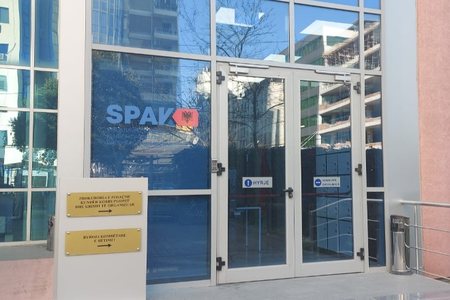
Prime Minister Rama and his government already have a record of corruption in power with a long list of scandals and failures. All of these add up to make them a smart, effective, winning opposition. But an opposition like that of Re-establishment, which treats Rama as the summary name of SPAK, or of the USA, is simply rhetorical, barren, without an echo beyond the shrinking ranks of party fanatics.
The "great enemy" cannot be reduced to the name of Rama. Rama's name cannot be magnified in the proportions of the "great enemy". This game has gotten smoke and paint. Rama still governs because the battle of the sedra of Berisha after the US sanctions destroyed the high result that the opposition scored in the elections with compromised standards of 2021. The preservation of the union, renewal and reflection about the geopolitical equivocations of extreme radicalism would have already produced the parade in DP polls and the united opposition's sure journey to victory in 2025. At the moment this future is a conundrum. But the scenarios of merger and other solutions are open.



Lini një Përgjigje