


 Shkruar nga Endri Kajsiu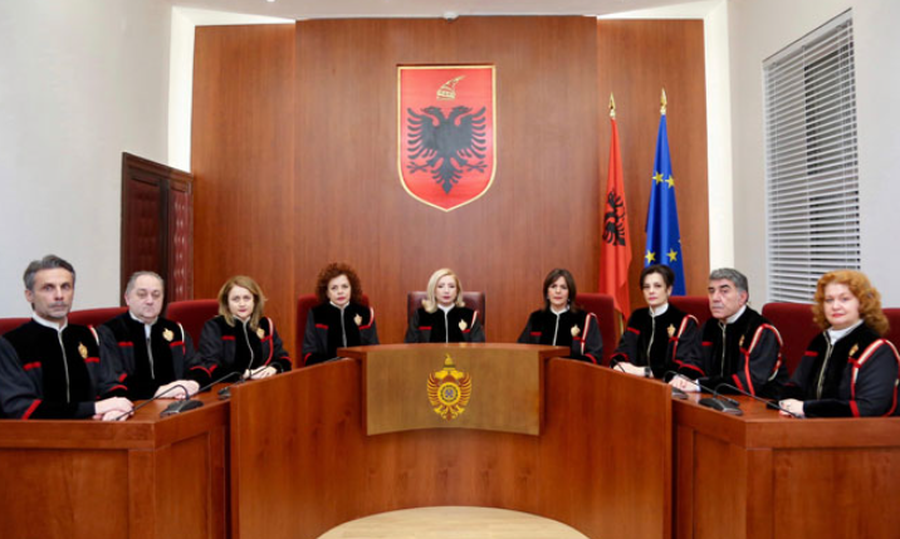
A justice that seeks only for itself, without reflecting on the reality of thousands of citizens awaiting decisions, is a justice that has lost its mission.
1. Justice for wages or wages for justice?
In Albania, justice has been at the center of major reforms for years. Much has been invested in laws, budgets, and international support to make the judicial system more honest and independent. But today, the Union of Judges has addressed the Constitutional Court itself with a request that has aroused great public concern: they are demanding further salary increases through legal tricks. In a country where citizens wait for years to receive justice, where 140,000 cases are in the backlog and where trust in the judiciary is minimal, judges, already among the highest paid in the country, are demanding more salary. But not more responsibility. Just more money.
2. Salary increases, from necessary to excessive
Since 2016, the gross salary of a judge under the justice reform has increased by 177% from 104,856 lek to over 290,000 lek per month. The government and international partners supported this increase as a way to strengthen independence and remove corruption from the judiciary. But has the reality changed? Files still remain unexamined for years. Transparency is low. Citizen trust is not growing with the exception of SPAK, which is an exception, not the rule.
3. What happened with the last CC decision?
Until 2022, with the law on the status of magistrates, the judge had as a reference salary the salary of the general director in the Prime Minister's Office. But in 2022, the Constitutional Court repealed Article 12, point 5, letter "a", of Law No. 96/2016 "On the status of judges and prosecutors in the Republic of Albania", amended by Article 2, point 1, of Law No. 50/2021, as incompatible with the Constitution of the Republic of Albania, ordering an additional increase in the reference salary of judges by 14,000 lek more. The financial effect of this decision on the state budget was 30 million euros. A heavy cost that was met through budget cuts in key development sectors.
In 2023, the Albanian Parliament, respecting the decision of the Constitutional Court, reformulated the repealed article of the law on the status of magistrates, changing the reference salary of magistrates from the director general to the Prime Minister and linking it to that of the President of the Republic, as the highest state official. The reference salary was slightly increased – by 300 lekë, while maintaining the balance between the independence of the judiciary and the public interest.
4. What do judges require today?
The Union of Judges demands the return of the old scheme: to link their salary to that of the Director General in the Prime Minister's Office. This means that every time the salary of this position (Director General in the Prime Minister's Office) increases, the salary of judges should also automatically increase. This request is without constitutional basis. Article 138 of the Constitution clearly states: the salaries of judges cannot be reduced, but it does not guarantee an automatic increase for every increase of another official.
5. Increased privileges without responsibility = deformation
The demand for further growth is no longer about justice. It is about privilege. And privilege without responsibility is a danger to the republic. A justice that seeks only for itself, without reflecting on the reality of thousands of citizens awaiting decisions, is a justice that has lost its mission.
6. No one should be a judge in their own case.
This is a fundamental principle of law. Judges cannot request higher salaries by addressing the Constitutional Court itself, where the decision directly affects its members. A judge cannot be a technician of his salary but a servant of justice for the citizen, this is his noble mission. If the Constitutional Court were to accept such a request that materially affects its members, then it would violate its constitutional integrity.
7. Instead of justice, an untouchable caste?
If we allow each government to set its own salaries, then all balances are destroyed:
The state budget becomes a safe without a key. The authorities turn into privileged castes. The taxpayer becomes a victim of a state that works for itself, not for the citizens.
8. Justice is a mission, not a bargain
Judges are not financial specialists optimizing their salaries. They are the guarantors of freedom, justice, and the rule of law. Any request that circumvents this mission is morally reprehensible and legally unjustifiable.
9. Summons to the Constitutional Court
Today, the CC has a historic responsibility: to protect the morality of justice, not to trample on it. If it falls prey to the absurd demand for further salary increases, then it violates its own oath on the Constitution, and deals a fatal blow to public trust.
10. Ultimately… who is the sovereign?
In a republic where the sovereign is the citizen, justice must protect the citizen, not its own pocket. Justice is not a market for privileges. It is a public service with a high mission. If this is forgotten, then we have no justice. We only have a republic without foundations.







Lini një Përgjigje