


 Shkruar nga Monika Stafa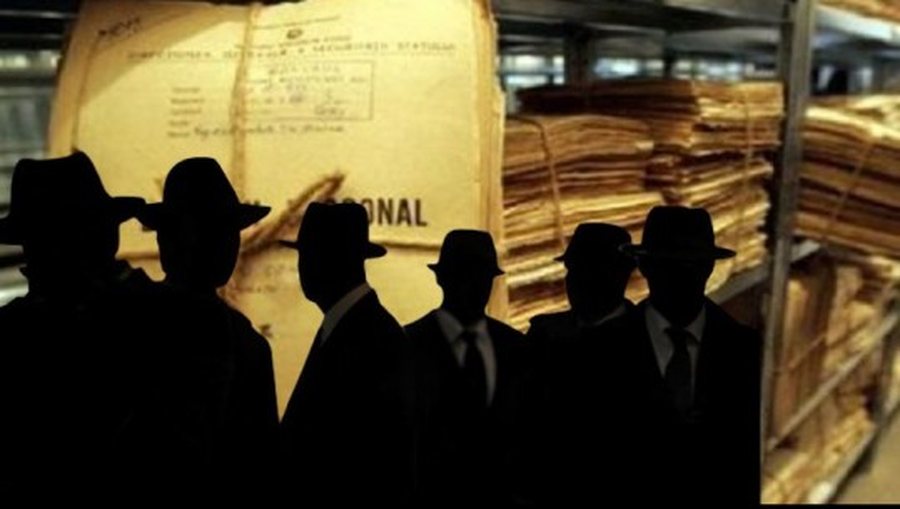
But why are the legislators afraid to recognize the victim's right to know why they were punished, who persecuted them, who punished them?
The Days of Remembrance organized by the Institute for Democracy, Media and Culture are being held in Tirana these days. The goal of this civic and historical initiative is what still does not give us the peace we deserve to leave behind what we call our common past.
The communist past. The regime of an era that weighs on Albania for so long that its people still refuse to face it.
For who knows how many times, the law for opening files, for decommunization, for finding nameless graves, for stolen property of the victims of that regime has been brought back for discussion. And for everything that didn't put you in that layer for more than three decades. For everything he took you in vain, where today in their lands their depositors are sleeping.
Every time the elections approach, so many times there are controversies, laws are drafted, commissions are created (such as the Bezhani commission and the Mezini commission), all with the main topic of files. But the files, the secret ones, the ones that burden not only morally but also legally, nearly three decades after the overthrow of communism, do they continue to be under the same regime of control and all instruments of war and political threat?
The secrecy of these files expresses the power of the past over the present. The departure from the statutory regulation of access to the files of former undercover Security operatives means that today's lawmakers are not free to decide on a break with the past. Through secret archive files, the occult continuity of the old class in government and public administration at all levels is ensured.
Germany is a country that has created a safe filter through the access policy for the full verification of the fate of the victims so that the political elites are cleansed and decommunized, but we cannot insist that the German model be the only one to decommunize the Albanian society .
And is he the best?
Opening files teaches us a lot about our past. How was the previous system. How people have been persecuted and how they have managed to build their own destiny at the expense of others. This is very important for the victims but also for the generations to come.
But why are the legislators afraid to recognize the victim's right to know why they were punished, who persecuted them, who punished them? This is an individual right, which is realized for each individual and has no direct public effect. The only effect is the punishment through the vote, which basically means the rejection of those individuals who still keep the Albanian society within the old mentality and do not allow its decommunization, not in the sense of any new McCarthyism, because in the societies of open there is room for all ideas, but simply by getting the former communists out of power and not allowing them to use power in an occult way.
This would be the freedom of their democratic vote.
If the victim's right is general and unconditional, individual and non-public, this would constitute the first step of illuminating the past and building political prophylaxis to prevent the repetition of persecution. From here would start the process that is usually called "the lustration", which has not been carried out in Albania alone.
The lustration does not end there. The law must also recognize the right of researchers and researchers to navigate according to strict standard rules the formidable database that powers and governments have either hidden with terrible jealousy, or threatened each other with equal arrogance. .
It is the voters who, knowing what everyone's past has been, decide in the most democratic way who they will allow to pass through the filter of their vote and who they will punish by not voting. The fact that none of these rights has been pronounced nor expected to be pronounced, even in this routine edition of the debate about the files, shows that in the high political administration of the state there are many of those who, when the files are mentioned, are actually afraid of voting, despite that they threaten each other with all kinds of nicknames, from rhapsodic ones to ultramodern nicknames.
This is the biggest help we give ourselves in relation to the past. Citizens in his agora. I don't know what fear our political class still has. But I know one thing, that the truth always scares you. And here there were and still are many people who are afraid of opening files, lustration or decommunization. It is the fear of the truth. Fear of conflicts. And fear of pain. No one likes pain.







Lini një Përgjigje