


 Shkruar nga Thoma Gëllçi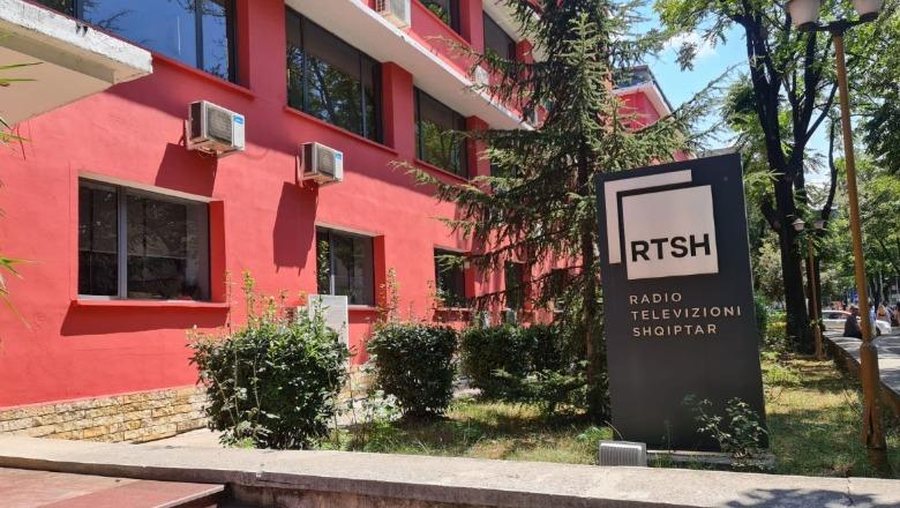
Ideas for closing, downsizing or transforming RTSH should not be seen as solutions, but as alarm signals for democracy and for citizens' access to impartial information...
While in Albania, various political voices are raising the idea of closing, restructuring or radically transforming the public broadcaster, in another European country, the Czech Republic, institutions are taking concrete steps to strengthen public media and guarantee it a sustainable and independent future.
Just a day ago, the Czech Senate passed a landmark decision to increase the tax that citizens pay for public television and radio services – an increase that comes after almost two decades without any change in the level of funding. The decision now awaits the signature of the President of the Republic, who in recent meetings has clearly expressed his support for the importance of public media in the country’s democratic life.
This seemingly technical step is in fact a very significant sign of how Czech politics understands the role of the public broadcaster: as an institution indispensable for the functioning of society, for impartially informing citizens, and for protecting national culture and values. By guaranteeing a stable and independent source of funding, the Czech authorities are ensuring that public television and radio do not depend on government funds or political pressures, but have the autonomy to work in the interest of the public and the public alone.
This is an approach that stands in stark contrast to developments in Albania. RTSH, the Albanian public broadcaster, is partly financed by a tax paid to citizens through their electricity bills – a sum of just 100 lek per month, or less than 1 euro. This is the lowest tax in all of Europe, and consequently, RTSH has one of the smallest budgets per capita on the continent. With such limited funding, it is impossible for this institution to properly fulfill its duties as a public media outlet – to provide verified information, quality programming, education, culture, service to communities across the country and to the diaspora.
Moreover, the fact that a significant part of RTSH’s budget comes from budgetary funds makes it more vulnerable to political pressure. If a public broadcaster does not have guaranteed independent sources of funding, it risks becoming an extension of power, rather than being an open platform for all citizens and a guardian of truth and accountability.
In this context, ideas for closing, downsizing or transforming RTSH should not be seen as solutions, but as alarm signals for democracy and for citizens' access to impartial information. Developments in the Czech Republic clearly show that countries that value public media do not cut back, close down or leave it at the mercy of the market or the government, but strengthen it through sustainable and independent mechanisms.
What Albania needs is not the closure of RTSH, but a serious and open debate on its reform and strengthening. We need to discuss how this institution can be improved, modernized, truly separated from political influence, and above all, adequately funded to be at the level that Albanian citizens deserve. Only a strong public media, with professional staff and guaranteed editorial independence, can be a true pillar of democracy, as it is in many European countries. And to achieve this, the first step is for the state not to weaken it, but to support it. Not with words, but with concrete actions. Just like the Czech Republic is doing today.


Lini një Përgjigje