


 Shkruar nga Ylli Pata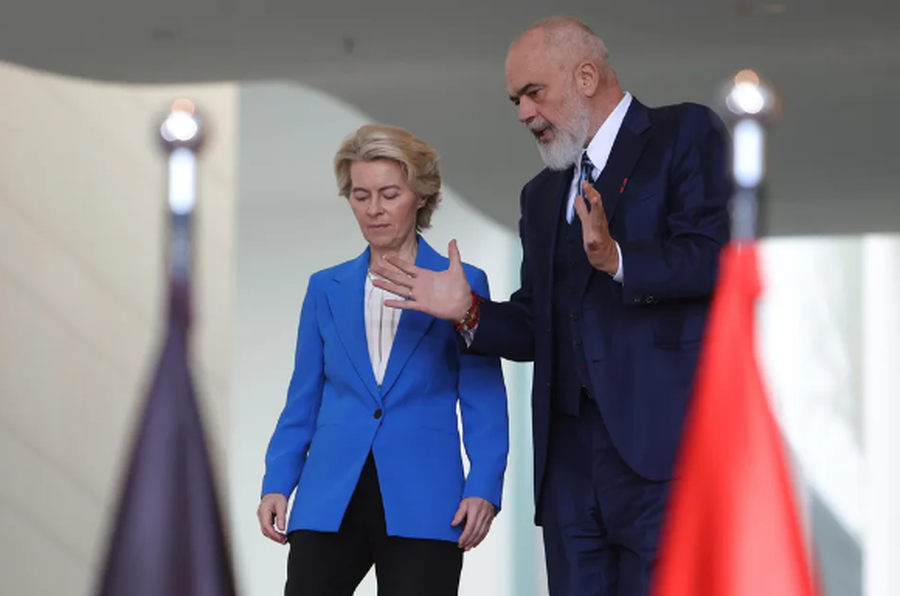
After that, is it possible for the EU to run out of chapters in 2030?
The signing of the chapters of the book with 33-35 such, constitute the last political step for the membership of a country in the EU, according to the charter of today's political Europe.
In our Western Balkans, only Montenegro and Serbia have taken this step. Meanwhile, North Macedonia, Kosovo and Bosnia and Herzegovina are at a different stage.
Montenegro has signed 33 out of 35 chapters, while Serbia has signed 22 out of 33.
The stagnation of Montenegro in the final part of the membership period happened after the country was involved in political and geopolitical problems after the fall of Dritan Abazovic's cabinet.
Montenegro has not reached the appropriate parliamentary majority to elect the members of the Supreme Court and the Constitutional Court, as the parliamentary majority has never been such. As a result of the clash of the pro-Serbian and pro-Russian parties with Abazović, the connection that the anti-Djukanović common front had in 2020 also fell.
So in other words, it was Montenegro that blocked the process of membership advancement.
Meanwhile, Serbia, which has signed 22 chapters out of 35, but is stuck due to its own fault precisely in relations with Kosovo. And this is Belgrade's solution.
In other words, the stagnation of these countries for several years in the process has come because their will has not been to advance the real process, but to postpone it. It has even pushed it so much, both Serbia and Montenegro, that the stages could be burned, and it was the EU Council that approved a special decision on the membership of Serbia and Montenegro, as to give more opportunities to Belgrade to get closer to the West, since it is a country with strong Russian influence, which to a considerable extent also has Montenegro, which is a NATO country.
To simplify the situation: when Albanian Dritan Abazovic was prime minister of Montenegro, he banned Russian Foreign Minister Sergey Lavrov from using his country's airspace to visit Serbia. Decision that was decisive to cancel Lavrov's visit to Belgrade in the middle of the war in Ukraine.
After that, the war started in Podgorica, or better to call it the "white coup" against Dritan Abazovic, who was then overthrown by the government with a motion of no confidence in the Parliament where the opposition of Djukanovic had the largest votes, but who was helped by a ally of the opposition group to him.
This shows that the case of stagnation of Montenegro and Serbia has more geopolitical than technical reasons. Otherwise, the two countries would have closed the book of negotiations today.
Let's come to Albania. Together with North Macedonia, we opened negotiations in 2020 under the Croatian presidency, quite generous and supportive of its Balkan neighbors.
But North Macedonia had and still has a big problem with Bulgaria, a problem that, more than Sofia, it is the Macedonian right in power today that does not want to solve it.
Therefore, the ally of the Macedonian right, Viktor Orban, rather lobbied to divide Tirana with Skopje. An act that came after years of strong lobbying by Edi Rama.
Today, Albania successfully managed to enter a process when it officially opened the 8 basic chapters of EU membership.
Accordingly, Albania opened today the following chapters: Functioning of democratic institutions, Reform in public administration, Judiciary and fundamental rights, Justice, freedom and security, Economic criteria, Public procurement, statistics and financial control.
Meanwhile, Albania, before opening the chapters, has been subjected to the screening process by the EU to see Albania's capacities and will to move forward. Which is an experience where, in all likelihood, the entire process from today is not political.
Only if the government of Tirana goes crazy and breaks the foundations of the pact with Europe. Where it is known, the most important issues are SPAK, justice, and geopolitics.
After that, is it possible for the EU to run out of chapters in 2030? With Rama as prime minister, we have a history when the European Commission has drawn up reports that are factual, which have certified Tirana's path towards the EU. And as a result, if in the second step after the 2022 ceremony 8 chapters passed, there is every possibility that in 5 years all the chapters will be completed. Of course, if things go right.
So far there is no political problem, but simply screening by the European Commission. If the EC passes, i.e. certifies the Albanian government in the chapters, can there be a political decision of the member countries that can oppose it, or even a veto of a member country, for example Greece, Cyprus or another country?
Until now, the political decision has prevailed when the situation was in the first steps, that is, before the granting of candidate status or the opening of negotiations, otherwise, it did not happen. But until then there are many waters that can flow.





Lini një Përgjigje