


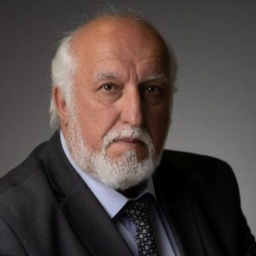
 Shkruar nga Emin Azemi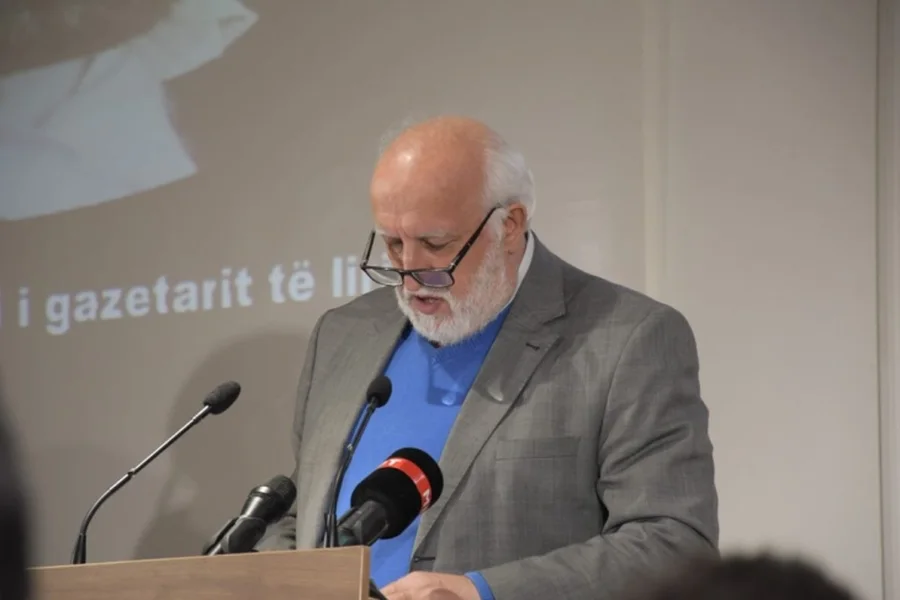
If in the nineties the Albanians acted under the umbrella of a constitution that did not express the multi-ethnic reality of the state, then later when the constitutional changes were made, how is the status of the Albanians defined and is there a discrepancy in the middle of the war they fought in 2001 and the political trophies of that war that nevertheless ranks Albanians as a national minority in all the laws that emerge from the current constitution.
After these Bulgarian-Macedonian identity clashes have passed, the Albanians in North Macedonia must roll up their sleeves and fight for their state-forming status. This is due to the fact that the paradox of Albanian-Macedonian relations lies in the non-definition of the positions that would make the substantial differentiation between white loyalty and cooperation, between the tenant status and the state-forming status. Albanians in Macedonia are notable for their Gandhian loyalty towards Macedonian state-forming policies, but, surprisingly, they have not rounded off the state-forming process for themselves.
The logic of certain segments of Albanian politics in Macedonia to seize a piece of power in the court of the Macedonian prime ministers, without the true factorization of the Albanians, has degenerated the meaning of their dignified-institutional representation.
How much was the cost of loyalty paid to the Albanians, starting from the beginning of the nineties until today? If in the nineties the Albanians acted under the umbrella of a constitution that did not express the multi-ethnic reality of the state, then later when the constitutional changes were made, how is the status of the Albanians defined and is there a discrepancy in the middle of the war they fought in 2001 and the political trophies of that war that nevertheless ranks Albanians as a national minority in all the laws that emerge from the current constitution.
If in the nineties Gligorov told the Albanians: stay calm, don't ask for too much, because you are irritating the nationalist VMRO, now the Albanians are told almost the same thing, but with a different connotation and packaging.
Now the Albanians are being told that they should stay calm because the pro-Russian and pro-Serbian currents use this as a trump card to destabilize Macedonia and, as a consequence, to endanger its European cause. The loyalty of the Albanians is used as geopolitical therapy, because only the Albanians are the ones who are defining the European causes of the state! Even at the price of them being extremely loyal, while the Macedonian authors and editors, in their textbooks, can shamelessly and unobtrusively treat the Albanians as heirs and as usurpers.
On the one hand, Albanians are required to be loyal to the Macedonian state, while, on the other hand, they are treated as a foreign body of this state. In fact, the Albanians "descendants" and as "usurpers", as they are called in the books of Macedonian scholars, are the geopolitical determinants of European Macedonia (!).
Now it is said that constitutional changes have been made, but the Albanians are still not a state-forming nation in North Macedonia. Many issues have been advanced, such as the issue of the official use of the Albanian language and that of adequate representation, but all these issues have not become constitutional categories. It is enough to look at the Law on Citizenship, where the condition for obtaining Macedonian citizenship is knowledge of the Macedonian literary language (!).
The Albanian language is not mentioned anywhere and, as a result, many Albanians have been refused citizenship just because they have not mastered the Macedonian literary language well (written and spoken). If the Albanian language were a constitutional category, Albanians would automatically receive Macedonian citizenship, but this is not happening, because state sovereignty still originates from the state-forming pillar of the Macedonian people. Macedonian Albanians are currently caught between legal rights and constitutional restrictions. As is well known, the constitutionality of a right is higher than those defined by laws, because the latter know how to be contradictory and very dubious, such as the Law on the Use of Languages, in which nowhere the Albanian language is mentioned, due to constitutional gaps, so Albanians, however, are ranked as second-rate citizens, after Macedonians, who are the backbone of the state-forming nation.
In practical terms, this is easily noticeable and tangible, even very explicit, because the Macedonian leaders, as the saying goes, can meet when they want and decide how they want, without taking the trouble to have the prior approval of Albanian politicians. This approval may come post-festum, but that speaks of something else.
What is this about? This says that the Macedonians see themselves as pillars of the state-forming nation, while the Albanians see them as supporters of these pillars. In the Macedonian Dipotry, the Albanian must be extremely loyal to the state (of the Macedonians) and they (the Macedonians) decide how many rights (or how many kilograms of rights) the Albanians should have. The rights of the Albanians are currently similar to the relationship between the seller and the buyer who buys goods on sale. The latter, in order not to incur more debt, is obliged not to buy the grosgrain by the kilogram, but by the grain, to buy the watermelon by the grain, and to taste the ice cream by licking the glass of the sweet shop.
In the Macedonian Dioptry in Macedonia, the autochthonous Albanian nation does not live, but "a part of the Albanian nation" located somewhere outside the territory of Macedonia. This is due to the fact that the Albanians in Macedonia, since they are part of the Albanian nation, are some passers-by who have opened their tents and temporarily settled in the "holy Macedonian" land.
In other words, Albanians, according to the current Constitution, have the status of residents under tents with temporary stationing, while the size of the tents as well as the space they currently occupy are determined by law.
In Macedonian dioptry, there is no official Albanian language in Macedonia, but there is a population of 20 percent that speaks that language. Tomorrow, with 20 percent of the Roma, they can comfortably use their language officially, because this is guaranteed by the law.
The statehood process of the Albanians is the new chapter of relations between the two largest peoples in North Macedonia. Without the rounding of this process, the perspective of North Macedonia would resemble a half-ripe fruit, and the race of who would be able to harvest the most ripe fruit.
Is there a risk that the Albanians will again have their teeth dulled due to half-hearted offers in the European garden with (smuggled) Balkan fruits?



Lini një Përgjigje