


 Shkruar nga Ben Andoni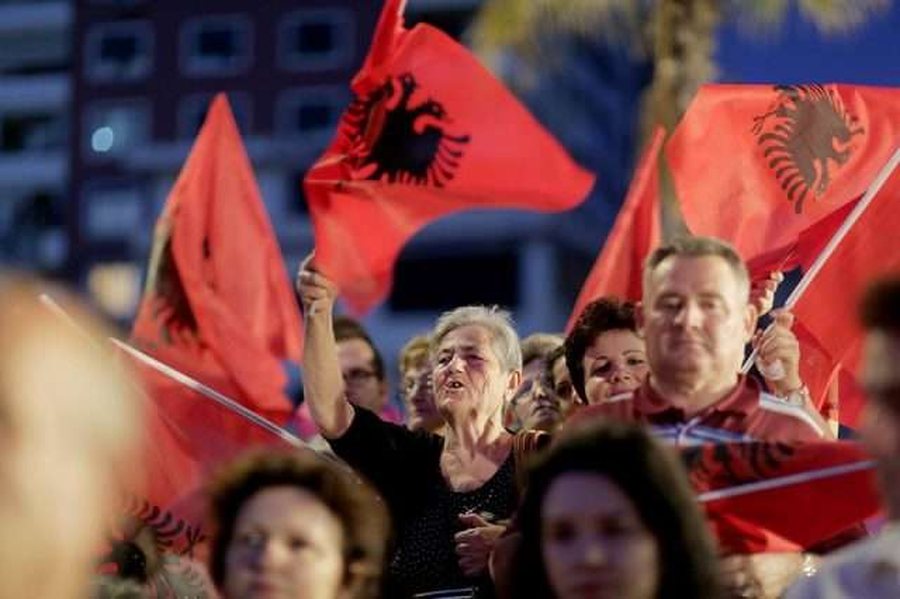
What remains is that the public must make the difference itself, because it cannot punish the demagogue. Aman, the level of schooling and negative information today does not help us. "Political fraud" remains legally unpunished, and not a few times the demagogue turns out to be the beneficiary.
Since the first calls of the people in the early 90s, among which the most popular was and remained "We love Albania like all of Europe", a lot of time has passed. Albania is on the path to EU membership, having completed the screening process and is now awaiting the start of the process for opening chapters, a long road with challenges and, above all, alignment of its laws with other member countries.
Any of the main leaders of the country in the direction, be it Nano, Berisha and recently Rama, in the framework of this journey expressed themselves and now the prime minister continues to affirm our achievements and above all: popular sovereignty. The power belongs to the sovereign, you hear it in almost every discussion panel of politicians. The structure 'people' has been used and continues to be affirmed by everyone and it is probably the only moment, where the primates of the Albanian state unite in a whole: "giving" power to the people.
This kind of idealism, which has its roots not here at this time, but in the coming of democracy. Albania is serving as an example, like other countries of the East, of where the ideal democracy is going. It's not for nothing that you hear the concepts of equality, self-government and popular sovereignty in the articulation of every politician who deals with developments in the country. It happens, not a few times, when you ask them about the real designs of these concepts, they give the correct theoretical answer, but never the correct practical one: Why doesn't it happen like this in the field?!
If these concepts were implemented properly, we would be in democracy, because in the end those concepts are complementary to each other. "When you say that the people are sovereign, it means an equal sovereignty of the individuals that make it up. And the people are like that, or more and more like that, the more they self-govern.
Further: if everyone is equally sovereign, then everyone is entitled to equal power and from equal power one can reach general equality", explained the well-known political scientist Giovanni Sartori, in "What is democracy" (also published in Albanian). But what is popular sovereignty, which is used more? And why do we hear it so much? You can find the answer again in the above theoretician, where it is explained that there is a principle of legitimacy, while equality is because there are laws that act the same, added to the fact that there is a guaranteed and equal vote. If you ask the PD about the last elections, it has a whole file, which it calls the "Black file", where all the violations are lined up, which "no one" can prove. Even what we consider equal laws for all. Like the case of Dibra and Durrës, they never gave a correct answer, except for some penalties that the elections had problems. Some time ago, the SP did this against the DP, without mentioning the ongoing accusations against the LSI (Today PL).
Is this realism on the ground a disappointment for today's democracy in Albania? "Just as there is a bad realism, there is, at the other end, a bad idealism: perfectionism. Both ends give strength to each other, says Sartori in the same bud in chapter IV of the book, "bad realism feeds, as a reaction, perfectionism and, conversely, perfectionism and the realist controversy". Why are these concepts misunderstood and where is the difference between so-called good and bad ideals? Let's clarify with Sartor's mind: "Perfectionism means a wrong way of understanding and using them".
Theorists have dealt a lot with ideals, while Sartori has explained the effort to determine why an ideal is achieved, while another stage has been: what the ideal itself really is and how it works. The great difference between the concepts of the ideal does not spoil the work of demagogic politicians. And the so-called perfectionist solves everything by exalting the ideal. "His foot is always on the gas pedal. And it ends at the point where it cannot control the ideals it seeks to advance", explains Sartori metaphorically.
But why do we have so many 'perfectionists' in Albania and why do we trust them so verbatim? Because now there are no more impossibilities, just like the excuse that ideal things do not prevent politicians from bringing us back to reality. After all, ideals are not destined to become facts. And striving for reality is one thing but doing something real is another (Ibid). Today there is no answer from those in power (not economics specialists) why Albania and Kosovo remain the two poorest countries, despite the promises of politicians and narratives that were created with real premises, that our countries are very rich. And, the ideals presented to us today by politicians, when they are in power or their successors, are like a striking force: they just attack. And they attack all the more, the more they overdo it and overdo it.
This ideal is destined to fail. Is this the case of Albania? Yes! And not only. Some time ago, in an observation in all the countries of the East, the frightening return of communist nostalgia was seen in all our countries. Albania was no different. Disappointment with democracy and the way it is implemented has reached such proportions that politicians are trying to erase it at any cost. Not only voter abandonment, public indifference, distaste for politics and the transformation of politics are trending.
“The point is that the ideal at departure is different from the ideal at arrival; that the former is not designed to 'become a fact'; and that the second, the more it is transformed from an opposing ideal into an ideal capable of implementation, the more it 'succeeds'", says Sartori (Ibid). The author himself, who we relied on for this article, was saved from the word demagoguery and expresses this with the narrow border that separates demagoguery and perfectionism. But even here it makes sense, since perfectionism is usually a mistake made by intellectuals, while demagoguery is the true cynical account. You have nothing to do with the demagogue.
In Albania, he has the form of a hero (the almost pathological case of Berisha on top of the balcony, while Rama's kilometer-long reflections are labeled as rhetorical models!), in Kosovo they also raise statues (as happened in the last days with Albin Kurti) and the only thing is to reveal its face and label it as such. What remains is that the public must make the difference itself, because it cannot punish the demagogue. Aman, the level of schooling and negative information today does not help us. "Political fraud" remains legally unpunished, and not a few times the demagogue turns out to be the beneficiary.
It is the public that can really be influenced, but not lied to, and above all we should pay attention to what Sartori taught us that it is "the perfectionist who adds credibility to the demagogue, so it is important to keep our mind off perfectionism". In the end, politicians will continue to sell us smoke, as they always remind us of the ideal of the 90's "Make Albania like all of Europe"... but in reality not like Europe. (Homo Albanicus)




Lini një Përgjigje