


 Shkruar nga Ben Andoni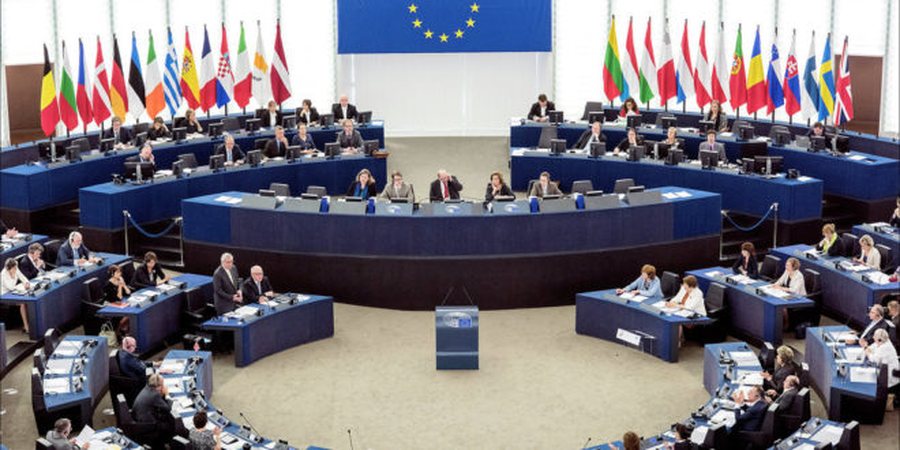
Against the wishes of the public and politicians, foreign officials continue to say that integration is one of its highest political priorities.
Europeans will go to the polls this week, which are expected to change the usual configuration of the bloc to some extent. More precisely, from June 6 to 9, an estimated 400 million people in the 27 EU member states will have the right to vote for the next 720 members of the European Parliament (EP). The European Parliament, one of the three main institutions of the European Union, is considered responsible for EU laws and budgets. It consists of MEPs, who are elected by each member state and come together to form European party groups. Will the result of the EP elections have an impact in the Balkans and especially in our country, related to Euroscepticism?
Albania is the main Balkan country, which supports EU membership almost without any reservations. Months ago (2022), the Eurobarometer described at 95.9% the number of respondents who supported EU membership, against only 0.5% who did not support it. In Kosovo, 92% of respondents supported it and only 4% did not support European integration.
The Federation of Bosnia and Herzegovina without Republika Srpska also had high values. Referring to these data, 77.4% of respondents would vote for BiH's entry into the EU, compared to 16% who opposed EU membership, a figure that is considered to be 4% more than a similar survey in 2021. In the calculation others, the support in the Federation of Bosnia and Herzegovina was up to 90%, but in Republika Srpska 54.5% and this is understandable. Montenegro also had high numbers: the CEDEM poll of December 21, 2022 showed that 75% of respondents supported Montenegro's EU membership, while 13% opposed it.
In North Macedonia, the number of respondents was around 49%, who thought that in general the country's membership in the European Union would be a good thing, against 34%, who did not think so. This accounted for a 20 percent drop in membership support compared to the previous poll. Whereas in Serbia, only 43% would vote for Serbia's EU membership, against 32% who would vote against and 13% would not vote at all, as was a figure of 12% who did not know how they would vote.
But going back to our argument: If far-right populist parties are calculated to have a lot of growth, this is likely to have an overall effect on the growth of Euroscepticism in the European Union. The emphasis is that these influences, in case of structural changes, will openly affect the future political agenda of the bloc, the legislation and above all the foreign policy.
Until now, the center parties have dominated with the grand coalition of the European People's Party, Socialists and Democrats and Renew Europe. While the latest opinion polls suggest major victories for the European Conservatives and Reformists (ECR), which includes the "Brothers of Italy" of the current Italian Prime Minister Meloni, who arrives in Albania tomorrow, and Poland's "Law and Justice" Party, as well as the radical right group "Identity and Democracy" (ID), which includes Marine Le Pen and the Dutch Freedom Party.
For years, the Balkans have been waiting for a positive response to integration, but the methodology has changed, while the European Union has already set the year 2030 as the new goal for the Western Balkans in its efforts to join the EU. In fact, promises, postponements, proposals have weakened the Balkans, while articulations about it are often considered empty rhetoric. To think that there are countries like North Macedonia, which started the process more than 2 decades ago, or Montenegro, which is the most advanced among us and has barely closed 3 chapters out of 35 eyes, then you realize that you cannot no date is predicted, which can warm us.
Meanwhile, Albania has confirmed its commitment almost 3 decades ago and leaves no possibility without expressing it. Against the wishes of the public and politicians, foreign officials continue to say that integration is one of its highest political priorities. But will it really be like this with the new policies? No one can predict this anymore. As Ambassador Mazi said a while ago, it seems that integration itself has become abstract. The concern is whether a different stance of EP policies will increase Euroscepticism. We will wait and see, but one thing is known: the enthusiasm for integration has fallen, because even integration is apparently tired of our testimony and affirmation of respect for it.



Lini një Përgjigje