


 Shkruar nga Pamfleti
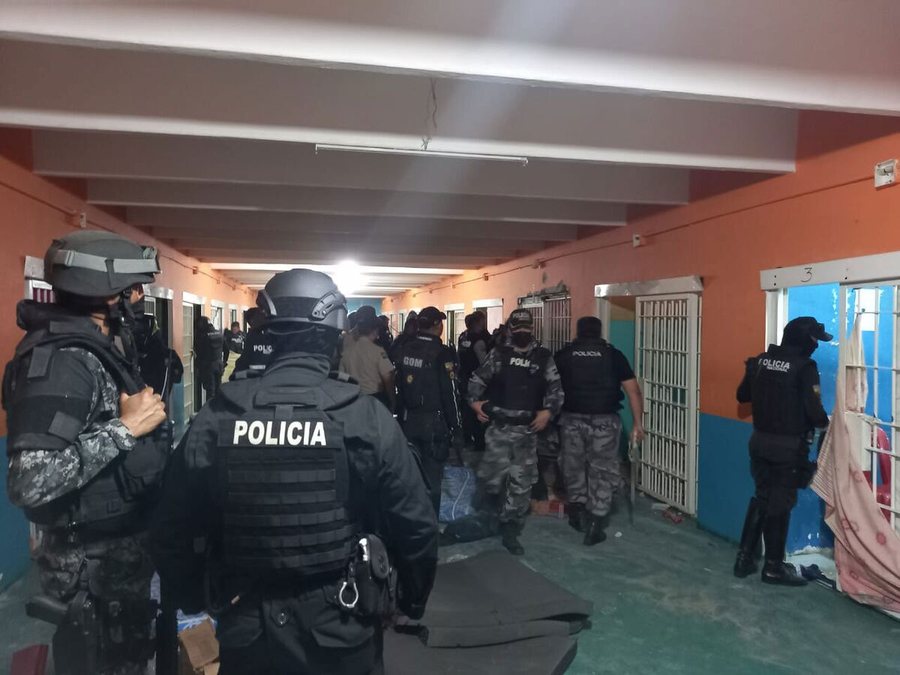
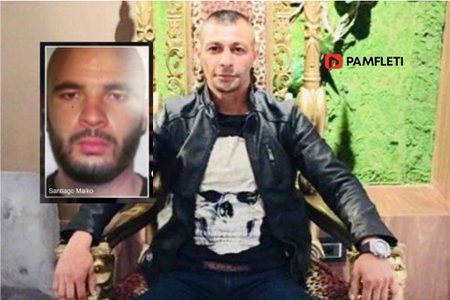
Albanian gangs seem to have started to rule the law in Ecuador. A few days ago, an Albanian was executed there, as this happened after the arrest of Dritan Rexhepi. The latter was imprisoned in Turkey, but has had a long criminal career in Ecuador. A few days ago, the local media remembered how the presidential candidate Fernando Villavicencio was killed shortly after mentioning Dritan Rexhepi's name. Regarding this event, but not only, "Bloomberg" has made an article, where it shows how the former presidential candidate was killed and how Albanian groups have started to spread their roots in Ecuador.
The article
One evening in August, Fernando Villavicencio, a prominent candidate for the Presidency of Ecuador, had just finished a campaign rally at a school in northern Quito. The journalist and trade unionist for a long time was running under the banner of a centrist conservative party, although much of his rhetoric was associated with foreign populism. The country's political leaders were too corrupt to govern effectively, he said, and a shake-up was needed if his people were to be freed from organized crime.
"For years, rivers of money have flown into the pockets of white-collar criminals," he told the hundreds of people in attendance. He had been in the middle of the presidential pack for a while, but a recent poll put him in second place.
As he walked outside the school, a team of tall and burly security personnel in blue jackets scanned the throngs of press and supporters, as did a group of police officers. Supporters shouted and mobbed Villavicencio as he made his way to his silver SUV. However, as soon as the vehicle door was closed, 12 gunshots rang out. As the crowd dispersed, security staff and police discovered that Villavicencio had been shot several times, including in the head. (The car was not bulletproof). He was rushed to a nearby clinic, where he was pronounced dead.

President Guillermo Lasso, the current president of Ecuador, declared three days of mourning. He also declared a 60-day state of emergency and deployed Ecuador's armed forces across the country, saying they may be needed to keep the peace. Within hours of the assassination, authorities arrested six suspects, followed by more arrests weeks later. Although they offered little evidence, police said the suspects were Colombian hitmen with gang ties.
For many of Ecuador's citizens, this was proof enough that the state had become powerless against organized crime. From 2016 to 2022, the rival gangs quadrupled the national homicide rate, turning the country of about 18 million people from one of the safest countries in the region to one of the deadliest on Earth. In the first seven months of this year, Ecuador's violent deaths reached 3,568, a 72% increase from the same period in 2022. Meanwhile, the cocaine trade has taken center stage. Drug seizures in Ecuador have more than doubled in recent years. Shortly after Villavicencio was killed, authorities in Spain announced the seizure of approximately 10 tons of cocaine from a shipment of Ecuadorian bananas, a record. Guayaquil, the country's main port, is beginning to resemble the front lines of the global war on drugs.
Mafias based in Colombia, Mexico and even Albania are now widely understood to control much of Ecuador's territory. This has made it more difficult to make an honest living there. The official unemployment rate has remained low, but Ecuador's gross domestic product per capita has shrunk by 5% in the past four years.
"You used to be able to drive around the country, no problem. Now you have to plan ahead and tell people when you're going and how long you expect to go," says Angel Quintana, a taxi driver in Quito.
A driver in Guayaquil, who spoke on condition of anonymity out of fear for his safety, says that every time he wants to visit his mother, he has to ask permission from the gang that now runs the neighborhood where he grew up.
This is the creeping loss of freedom that Villavicencio promised to restore. He called Ecuador a "narco state" and said he would do whatever it took to get violent criminals off the streets. In interviews before his assassination, the candidate told supporters he was avoiding death threats he was receiving.
"You come from a brave people, and I am brave like you. Let the drug lords come. Let the killers come. The time for threats is over," he said during a speech in July.
He claimed he had been threatened by Los Choneros, a powerful drug-trafficking group linked to Mexico's Sinaloa cartel, whose leader is jailed in Guayaquil.
Several rival gangs blamed his death in social media posts, but Quito police commander Victor Herrera said in a late September interview with Bloomberg Businessweek that it was too early to say definitively who ordered the hit.
"We're still trying to figure out the logistics of the crime before we go over who actually committed it ," said Herrera, who could not be reached for an update on the case.
However, for the rest of Ecuador, the conclusions of an official investigation may be beside the point. The stability and fortunes of the country have fallen so far, so quickly, that it can be difficult to understand how it all happened, let alone what to do next.
Authorities say Mexican cartels and the Albanian mob buy Colombian cocaine, ship it to Ecuador and then rely on local gangs to get it through Ecuadorian ports and into the U.S. and Europe, where a kilogram can fetch $40,000 to $60,000. . European drug control agencies say cocaine sales are on the rise. This has helped make Ecuadorian gangs more motivated and violent, especially along the Colombian border and in port cities like Guayaquil.
To some extent, logistics have been made easier by the country's years of heavy investment in roads and other infrastructure, as well as its decision decades ago to adopt the US dollar as its national currency. The use of the dollar makes it relatively easy to hide foreign money in Ecuador and makes the country's economy more dependent on an inflow of dollars. But there's also so much money at stake, says Pablo Ramírez, Ecuador's national director of drug investigations.
"Organized crime can pay a policeman in a day what it can earn in 30 years." /Adapted "Pamphlet" from "Bloomberg"




Lini një Përgjigje