


 Shkruar nga Pamfleti
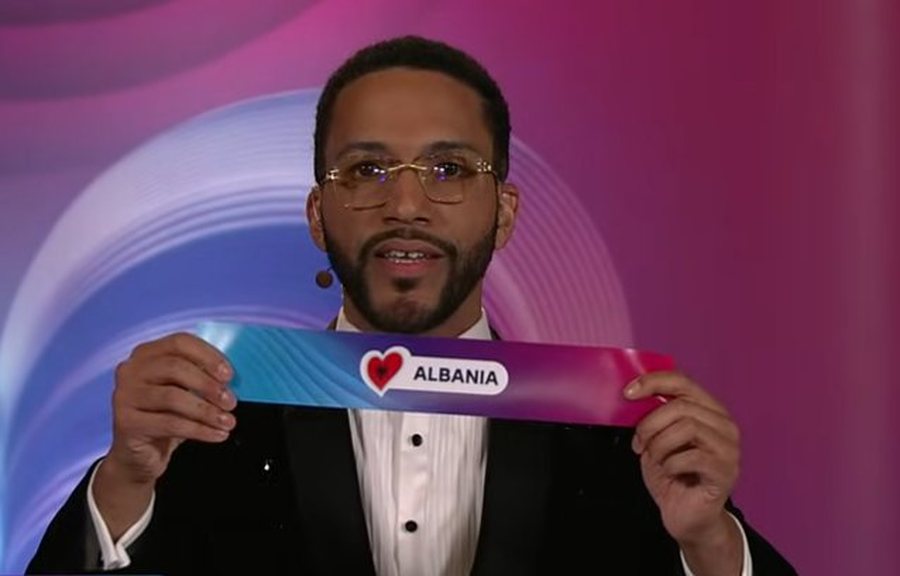
The semi-final line-up of the 70th edition of the Eurovision Song Contest has been officially determined through a draw, which was preceded by the traditional handover ceremony at the Rathaus of this year's host city, Vienna.
The draw involved 30 of the 35 competing broadcasters, who were allocated to compete in Semi-Final One and Semi-Final Two, with 15 places in each. The allocation was made on the basis of five pots, created according to historical voting patterns, calculated by Eurovision's official voting partner, Once.
First Semi-Final – May 12
First half:
Georgia (GPB)
Portugal (RTP)
Croatia (HRT)
Sweden (SVT)
Finland (YLE)
Moldova (TRM)
Greece (ERT)
Second half:
Montenegro (RTCH)
Estonia (ERR)
San Marino (RTV)
Poland (TVP)
Belgium (RTBF)
Lithuania (LRT)
Serbia (RTS)
Israel (KAN)
Second Semi-Final – 14 May
First half:
Armenia (AMPTV)
Romania (TVR)
Switzerland (SRG SSR)
Azerbaijan (Ictimai)
Luxembourg (RTL)
Bulgaria (BNT)
Czech Republic (CT)
Second half:
Albania (RTSH)
Denmark (DR)
Cyprus (CyBC)
Norway (NRK)
Malta (PBS)
Australia (SBS)
Ukraine (Suspilne)
Latvia (LSM)
The exact order of performances within the two semi-finals will be determined by the end of March by the producers of the competition, with the aim of creating the most dynamic television show possible.
Albania will be represented this year with the song "Nan", performed by Alis Kallaçi, which will compete for a place in the Grand Final through the Second Semi-Final.
Meanwhile, the so-called Big Five countries – France (FTV), Germany (ARD/SWR), Italy (Rai), the United Kingdom (BBC) – as well as Austria (ORF), the winner of the previous edition, automatically qualify for the Grand Final. However, each of these countries will broadcast and participate in the voting in one of the two semi-finals.
Eurovision 2026 is expected to be one of the most watched editions in recent years, while attention is already focused on the performances, scenography and strong competitions expected in Vienna.








Lini një Përgjigje