


 Shkruar nga Afrim Imaj
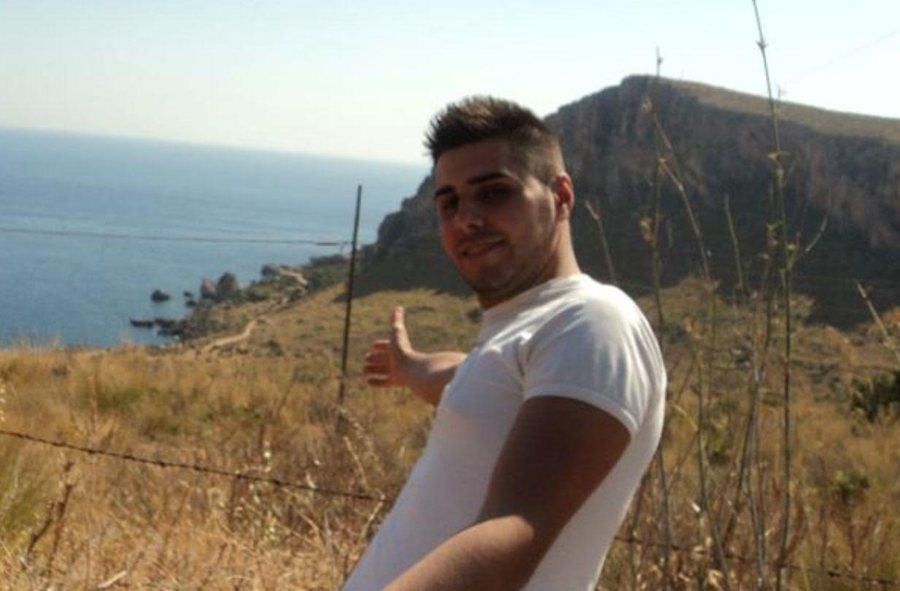
It was a hot afternoon in the distant June of 1946, when the Italian engineer Saverio Guidera was killed while deactivating mines on the Albanian coast. One of them, which apparently had not obeyed his hands, had unexpectedly exploded and blown up the anti-mine man himself. After that fatal explosion, his body was found dismembered where the track of the "Bleart" tourist complex was built...
To despise death to save the lives of others! It happened to the Italian engineer Saverio Guidera, he comes closer to the fatal moment every day as he deactivated hundreds of mines on the coast of Durrës in the first years after the liberation. A friend of Adem Pilku's family, he lived in his house from 1938 to June 1946 and was martyred one June afternoon with a mine in his hands on the day he was going to travel to repatriate to Palermo, Italy. The story of the Italian who was bound by duty and befriended the Albanians during the difficult years of the occupation. An unsolved event with the life and many sacrifices of antimine man. There is also a tombstone that is missing in the area of the beach at the rock of Kavaja where Saverio Guidera was killed 70 years ago...
A simple family lives in Tirana that every time June 26th knocks, they choose from the most beautiful bouquets of carnations and flowers in the beach area at Shkëmbi i Kavaja. Exactly where the wave of water meets the track of the "Bleart" tourist complex, the carnations in the sea take on a special appearance. Until some time ago, this ritual was led by the head of the family, Adem Pilku, who passed away years ago. It is now being continued by his son, Nexhati, as part of his father's legacy. It's been like this for 70 years. For six decades in a row, this simple family has chosen this way to honor and pay tribute to their Italian friend, Saverio Guidera, who in the years after the liberation did a lot to deactivate the beach area at the Rock of Kavaja.
Saviero Guidera arrived in Albania there from the beginning of 1938. From the first days he worked as an engineer in the Ministry of World Affairs. All those who have known him and whose work has connected him remember him as a very capable specialist and a restrained person. Before he excelled in his profession as an engineer, Saviero demonstrated a sincere friendship and warm relationship with his Albanian colleagues. During the war years, he joined the part of those who openly expressed their revolt against aggression and anti-human operations. With the decisive nature of a soldier qualified in the field of mines, since the days of the war he put his skill at the service of people's lives. This is how he remained fixed in the memory of Nexhat Pilku, the son of a close friend of the Italian who chose Albania as his second homeland...
Behind a mine, where a death slept
In the first days after the war, when Saviero Guidera could freely return to his family in Palermo, Italy, he promised his friends that he would stay for some time to deal with the deactivation of the many mines left behind by the conqueror. "Especially in the Durrës beach area, there were thousands of mines of various types", recalls Nexhati, who adds that Saviero, who had seen this landscape up close, was the first to sound the alarm, and even insisted on strictly guarding the area so that no one enters it. But that was not enough. With the equipment he had started working on his own to remove one by one the mines located along the entire length of the Durrës beach. Taking care of the lives of the residents of the area, says Nexhati, was the main preoccupation of Savierio, who never got tired of going from house to house to make clear the danger from mines. The Italian who took him even after the war in Albania, remember those who knew him, often said that where there is a mine, there is death...
At Shkëmbi Kavaja where a tombstone is missing
Nexhat Pliku, who closely knew the Italian who disabled hundreds of mines in the beach area, takes his story to the event of June 26, 1946. It is exactly the day when his family friend would pass away holding in his hand one of the mines he had clawed out of the depths of the earth. "Here, at the rock of Kavaja, there is a tombstone missing for the life and sacrifices of Saviero Guidera", explains succinctly Nexhati, Adem's son who has kept the Italian from Palermo as his own child at home, who did a lot for the residents of area. Then his confession brings a complete retrospective of what happened on June 26, 1946... Saverio Guidera "Until June, Saverio freed the bridges and main roads that connected Tirana with Durrës from mines. Right there, from June 20, he gave you the right to repatriate home, where he said his mother was eagerly waiting for him. The discovery of a new minefield near the rock of Kavaja postponed his repatriation for a few days. Several exhausting and very tiring days passed for him. Dozens and hundreds of mines deactivated in the newly established new area. Then, when it was about to end, the fatal act happened. It was June 26. That morning he left our house not as usual. As we greeted him at the door of the house, he uttered an expression that we had never heard from him. "God, see you this evening!" This was Saviero's wish on the eve of parting. After he had worked from morning to night and had accumulated more mines than on other days, at about 7 p.m. one of them, which apparently had not obeyed his hands, exploded unexpectedly and blew up the anti-mine man himself. After several hours of searching in the waters of the sea, where today the track of the "Bleart" tourist complex is built, we were able to find his left hand together with the watch he was wearing. And that's all. That was all that was left of our dear friend who gave his life to ensure the normality of the life of an entire area./ Pamphlet


Lini një Përgjigje