


 Shkruar nga Pamfleti
What was seen was that civil emergencies in Albania, a NATO member country, do not even have the most necessary equipment in case of fires.
Albania is facing a fire emergency situation, while Prime Minister Edi Rama attempted to put it into perspective with what is happening in many other countries, including Greece, Spain, Turkey, and even Bulgaria.
But in at least two municipalities, Gramsh and Delvina, the inhabitants of rural areas faced an apocalyptic situation, where the fires got out of control, while a capitulation of the authorities was observed. The testimonies of the people themselves confirm this, while they lost their homes, livestock, crops. The only thing that seems to have worked was the forced or not evacuation of citizens, in the name of the fact that human life is much more precious than anything else. Yes, this is true and no one questions it, but those people who lost their modest assets, placed for years in villages that are considered lost, today do not know whether they will be compensated or not, for the damages caused to them by a natural disaster, while the Government has not declared any emergency situation, even local.
But what did the last 48 hours show?
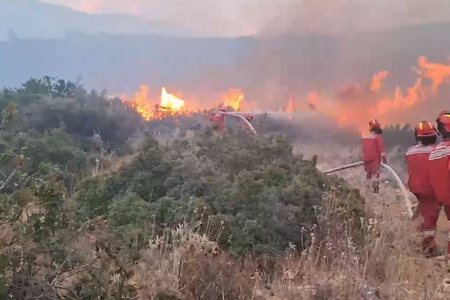
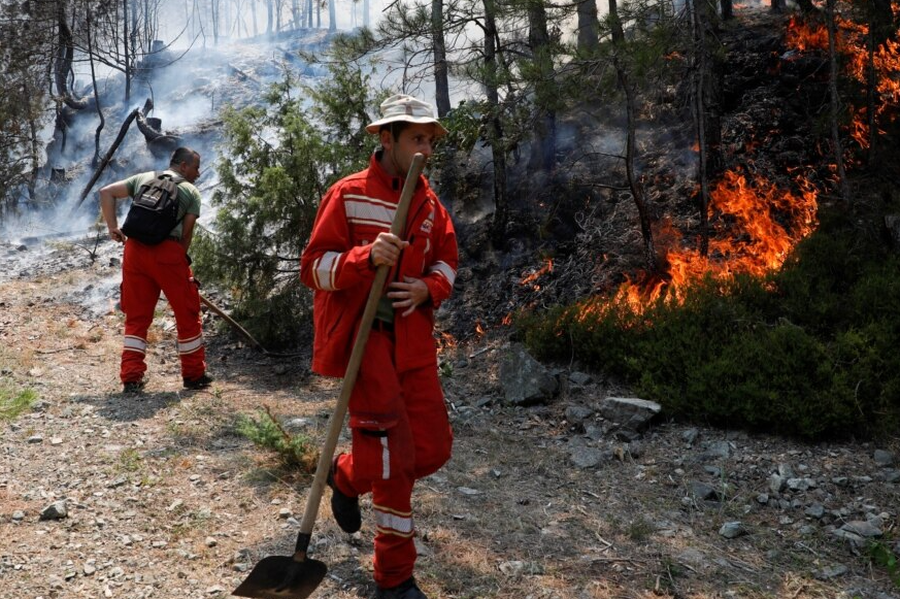
What was seen was that civil emergencies in Albania, a NATO member country, do not have even the most necessary equipment in case of fires. And while we saw firefighters ready to go to the scene, none of them were wearing fire suits, none of them had that 20-25 kg water canister, none of them had the minimum conditions, even to protect their lives during operations. We saw them with shovels and tree branches in their hands, as the main tools to put out the flames.
And this is the first institutional capitulation, whether local or governmental, whether of Civil Emergencies or the Armed Forces, which in peacetime have only one duty: to protect citizens and the territory in cases of natural disasters.
The fight against fires has shown that when firefighting vehicles cannot reach the areas where the fires are, due to the terrain, they wait until a firefighting plane or helicopter from a neighboring country arrives, as if the flames have stopped, and wait for the Government, the Army, Civil Emergencies, or even those who run these sectors, to take measures.
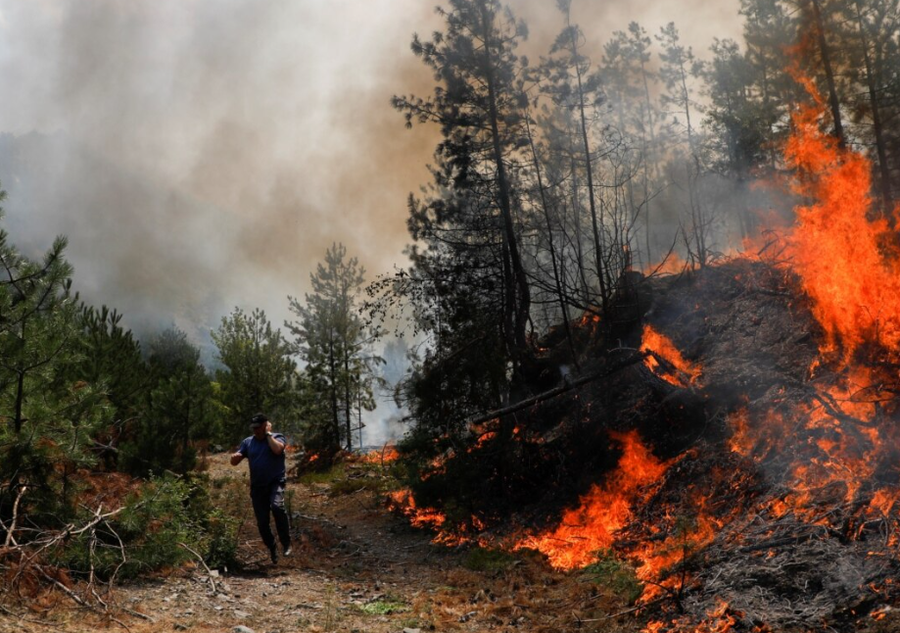
Fires are a story that repeats itself year after year, just like floods. When we face them, we are reminded that certain measures need to be taken, but as soon as the story ends, things don't move forward again and such situations repeat themselves like that movie that is shown once every 3 or 6 months, while we are expected to watch another sequence, while there is only repetition.
Simply the way everyone behaves, from the Prime Minister to the Director of Emergencies, the Minister of Defense or the Interior, is just a show, with the only difference being that 'Babloku' appears with red glasses, and no one stops him from sometimes taking on the role of the police who announces how many arsonists have been arrested and sometimes telling us how many hectares have been burned, how many houses and livestock have been burned, but when he doesn't show what measures he has taken... /Pamphlet/
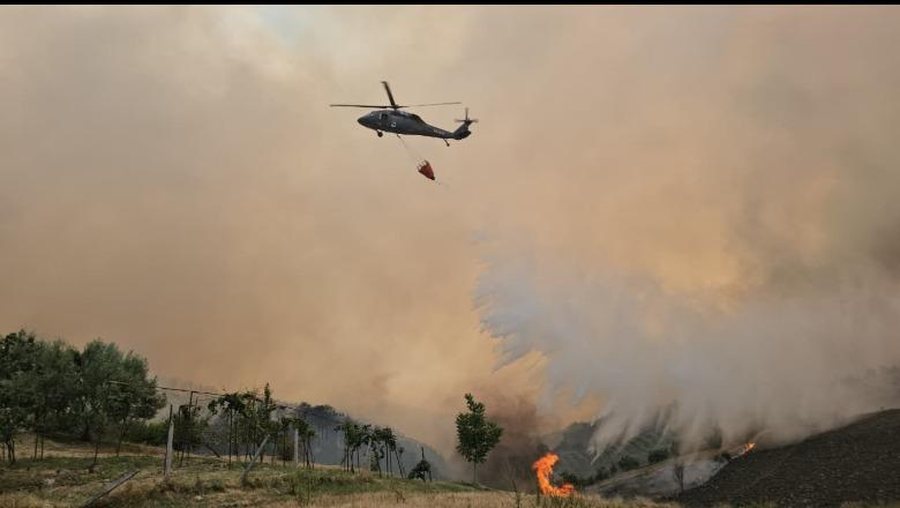
The fire situation continues to be out of control. According to data, about 40 houses in the villages of Gramsh have been completely destroyed by flames and have become uninhabitable. The full assessment has not yet been completed, as the fire continues with variable intensity.
Regarding the damage to livestock, the villages of Kullollas, Bletëz, Menkollar and Shimër were the most affected, as they did not have time to prepare for evacuation. According to field inspections, 50 to 60 heads of cattle were found burned, as well as dozens of working animals that could not be taken out of their shelters. Measures have been taken today to bury them.
Meanwhile, livestock remaining alive in the deepest areas, where the fire started, face a high risk of survival due to high temperatures and lack of water, as residents continue to be evacuated. This situation also makes it difficult for them to return to their homes.
Residents in Ermenjë have requested urgent assistance, while there are currently only two firefighters in the village, who are facing difficulties in managing the situation.
Currently, the flames are of low intensity, but continue to be monitored by local structures, as the wind occasionally strengthens, increasing the risk of reviving existing fires or creating new ones.
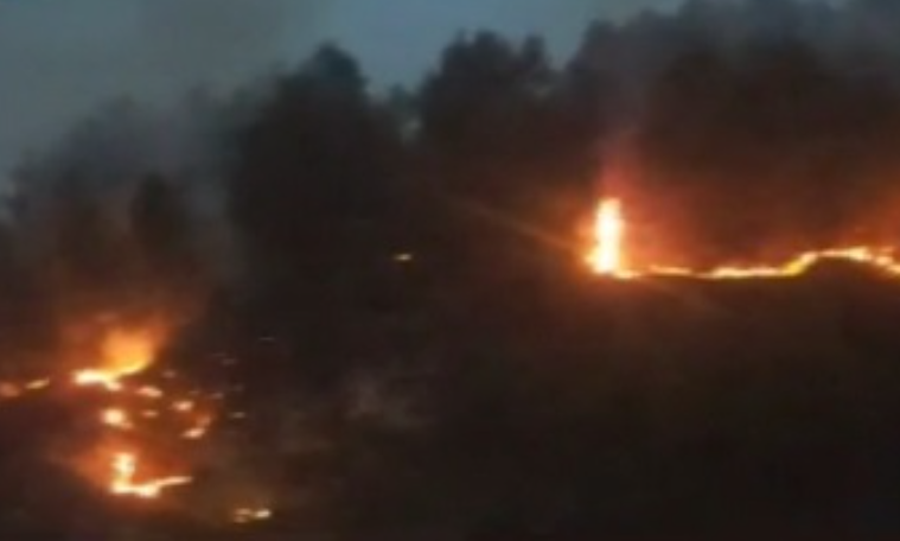
The fires that have engulfed the place where Kuçi escaped, where two fires have been identified, which according to emergency teams have been reactivated.
Two firefighters, as well as civil emergency personnel, have been engaged in bringing the flames under control, while the situation is not considered alarming so far.
Kuçi is the Prime Minister's favorite place to visit once every 4 years, whenever there are parliamentary elections.
In at least two elections, 2021 and 2025, Rama has stopped in Kuç, a few weeks before the elections where he determined the results.
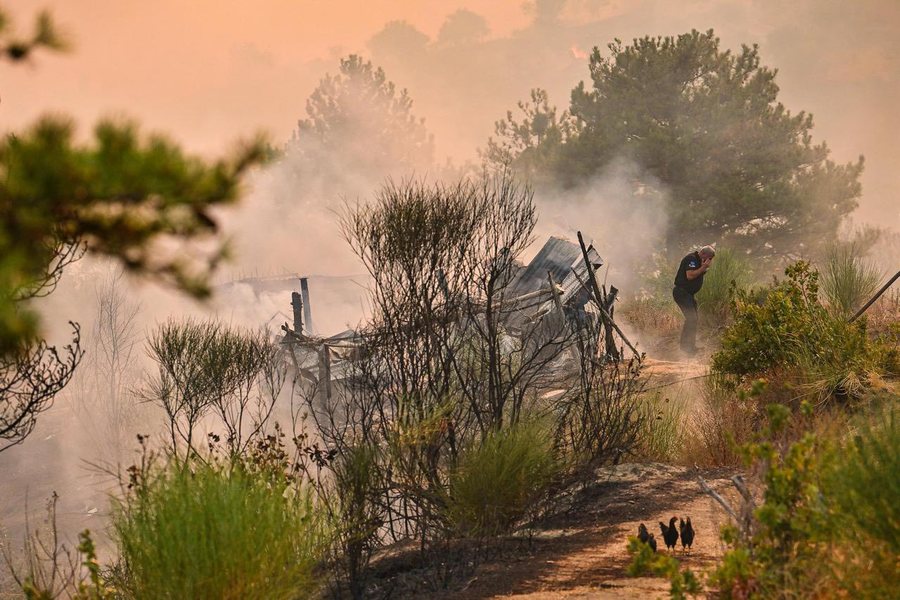
Prime Minister Edi Rama, although very late, has turned his focus to the fire situation in the country. Through a post on the social network "Facebook", Rama announced that during the last 24 hours, 34 active fires have been registered, while 13 have been isolated and extinguished.
He further emphasized that the hotbeds that require ongoing attention are in Delvinë, Poliçan, Gramsh, Dropull, Finiq, Berat, Tepelena and Bulqiza. He also thanked the state structures that have been working for days to extinguish the flames.
Rama's full post:
A day of sacrifice and pride for all state structures, which continue their efforts on the ground to extinguish the fires throughout the country.
During the last 24 hours:
34 active foci
13 isolated and extinguished
The following are involved in the operations:
Dozens of fire engines and Fire Protection and Rescue Service troops in all affected municipalities
Over 600 Armed Forces personnel, firefighters, municipal employees and volunteer forces
5 helicopters and 1 Canadair firefighting aircraft generously provided by dear Italian friends. Hundreds of vehicles, including ambulances and transport vehicles for the evacuation and support of residents. Hot spots requiring attention include: Delvinë, Poliçan, Gramsh, Dropull, Finiq, Berat, Tepelenë and Bulqizë, where ground forces and air vehicles are working non-stop to protect the lives of citizens and property.
Readiness is maximum and cooperation between all state structures and the support of European and Emirati partners is continuing to cope with this difficult situation.
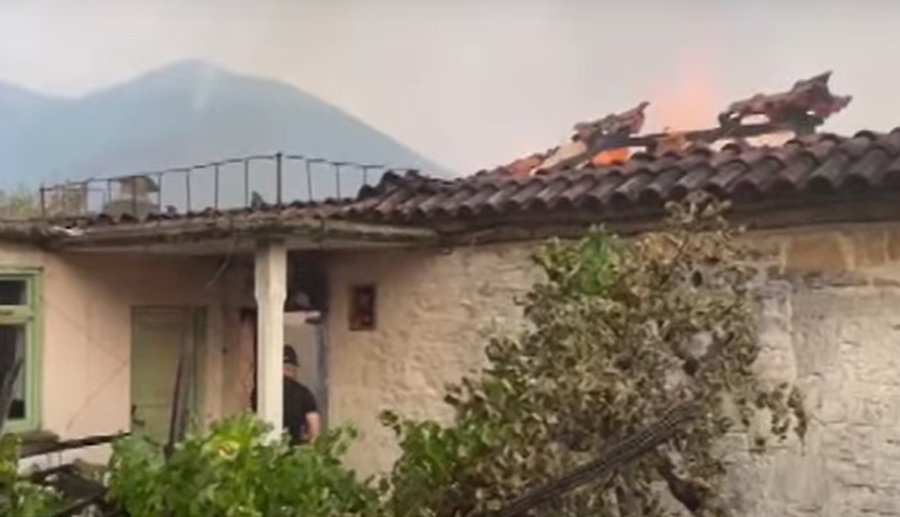
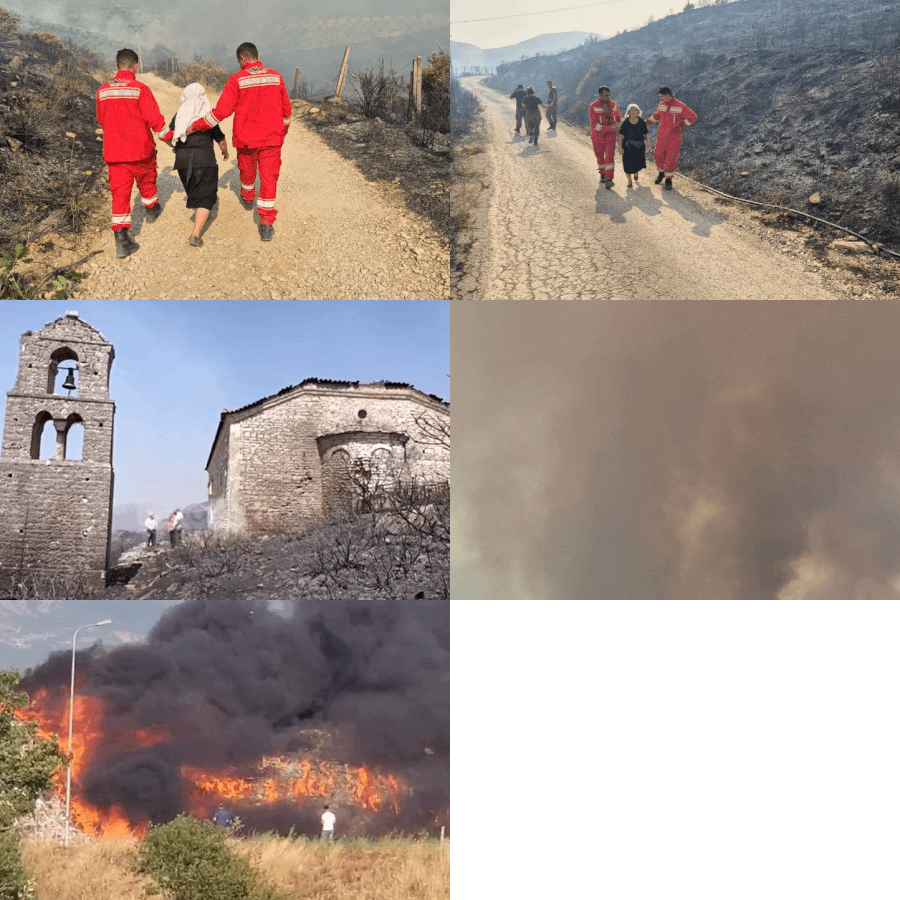
A house is currently engulfed in flames in the village of Lefterhor, Delvina.
Residents are intervening to neutralize the flames, as they say that no firefighters are in the area.
"No firefighters have come here. None," the resident tells Top Channel.
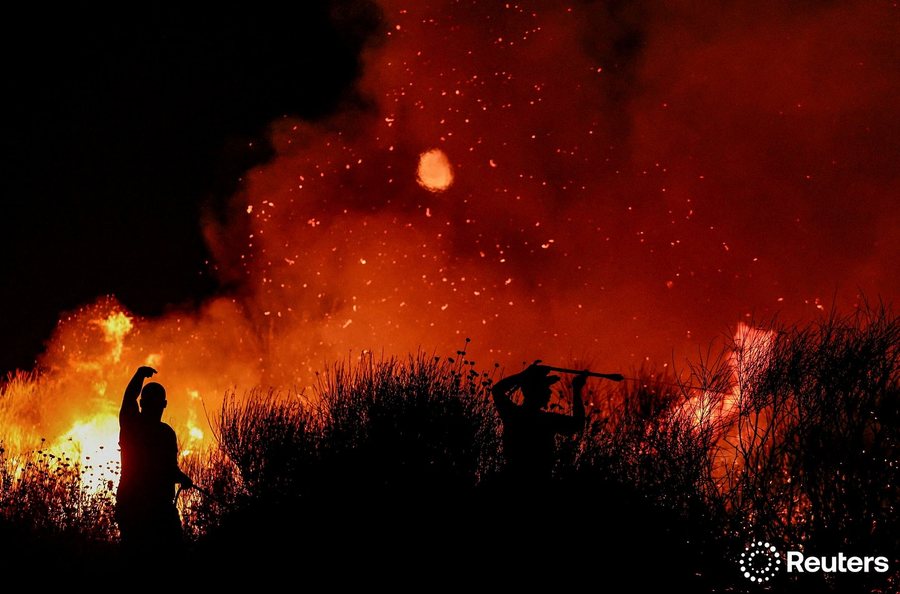
Albania is in an emergency situation caused by fires, although the Government has not officially declared any emergency, even in certain regions, where the flames have caused extensive damage.
There are hundreds of hectares of forests and pastures, olive plantations and roots, homes and livestock that are considered damaged in various areas of the country due to the fire situation.
In some cases, the situation has become so dramatic, such as in Gramsh and Delvina, that in recent hours they have been considered the most dangerous hotbeds.
Despite the intervention of firefighters, the army, the police, and residents of the areas, an apocalyptic situation occurred in Delvina, while in Gramsh a citizen lost his life.
The following video shows a moment when two citizens try to put out a fire. They are using tree branches, while one says to the other: "Get out of here right now, we're burned...".
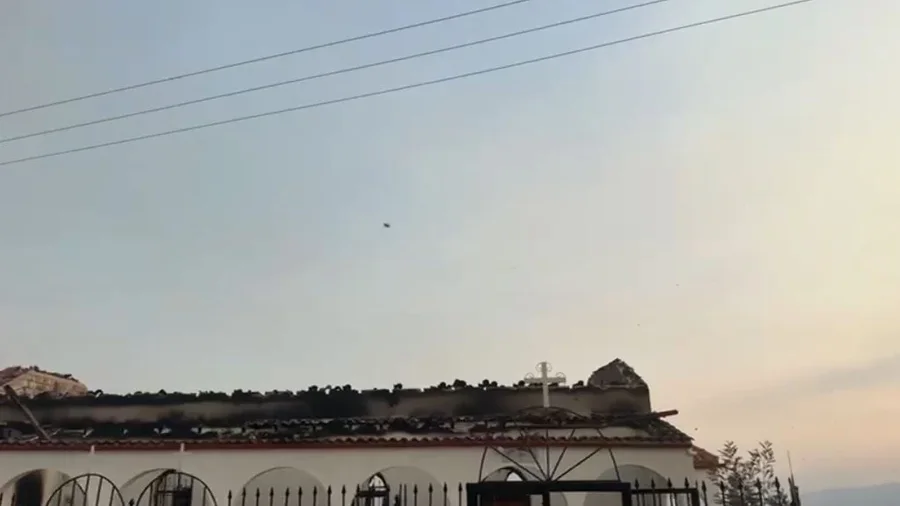
The situation in the village of Lefterhor in Delvinë is serious, and the fire has also burned down the village church. Currently, the fires in this village have been extinguished, but the residents fear they will rekindle.
Top Channel journalist Kristi Gongo reports that the fire continues to be active on the mountain, and according to residents, in the evening hours they fear the flames could descend towards the village again.
Meanwhile, the fire has also burned several beehives, as the latter roam around the village.
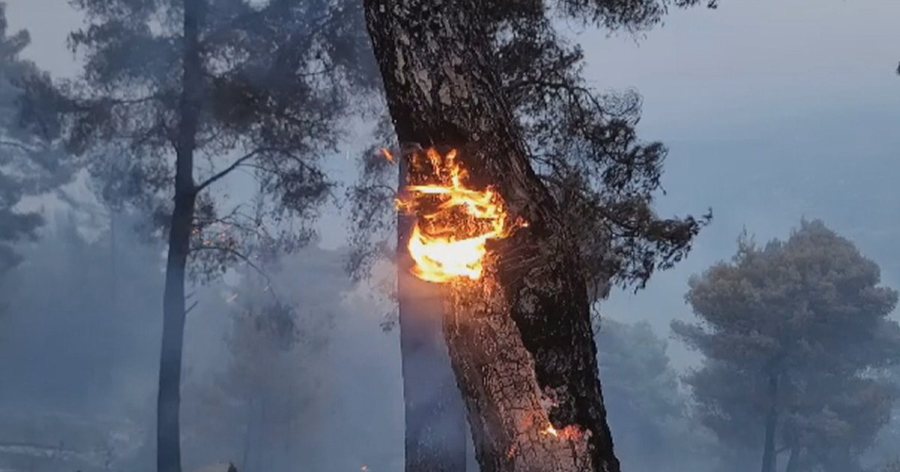
The damage caused by this year's fires is breaking records in recent decades, causing colossal damage.
As soon as one fire is extinguished, others appear in our country, with areas like Delvina, Poliçan, and Gramshi having seen forest massifs burn down and flames that even endanger residential areas.
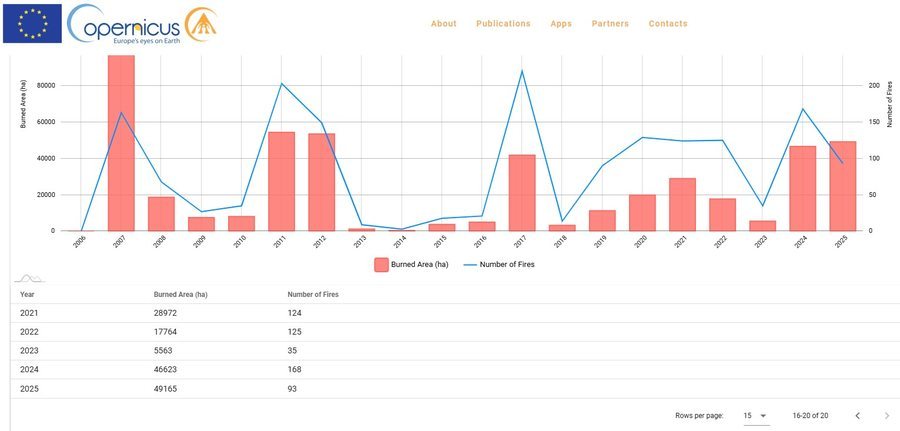
The European Forest Fire System says that so far 49 thousand hectares of forests have been burned in Albania with 93 identified fire sources, while last year a total of 46.6 thousand hectares were burned./ A2CNN
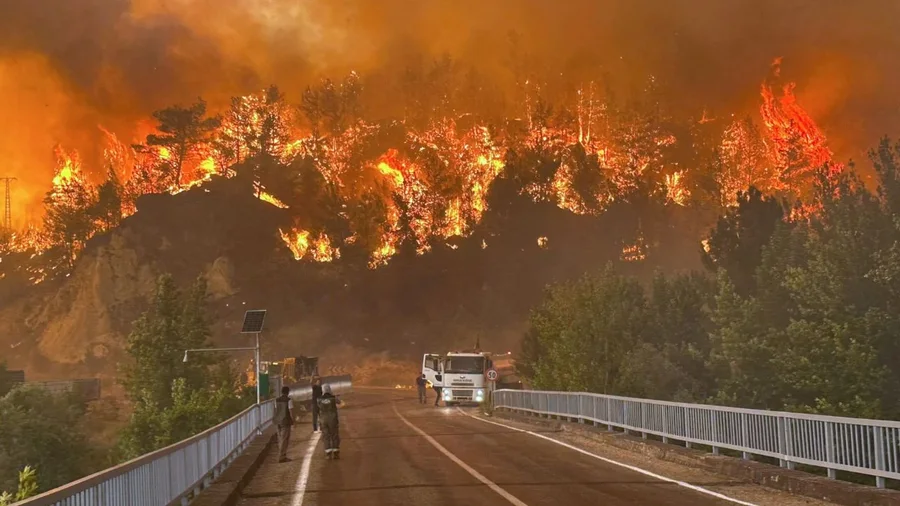
Mediterranean countries are facing wildfires that are burning thousands of hectares of forests, homes and taking the lives of people and animals.
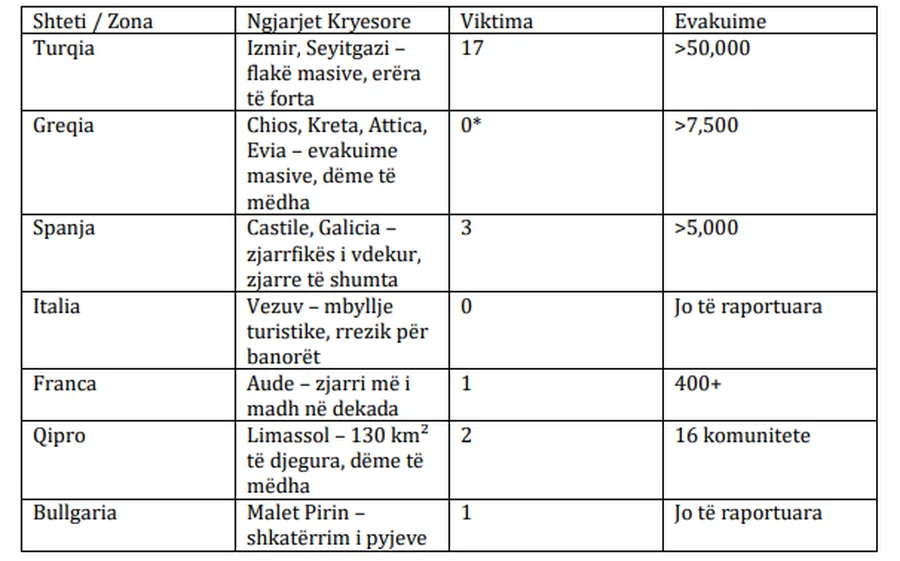
High temperatures, also influenced by climate change, have caused large fires, difficult to neutralize by firefighting teams in Turkey, Greece, Spain, Italy, France, Cyprus and Bulgaria. So far, 24 people have lost their lives, while over 65,000 people have been evacuated across the region.
More than 50,000 people have been evacuated since June due to wildfires in Izmir and surrounding areas in Turkey. Five firefighters and five rescue workers have lost their lives in Seyitgazi and Eskişehir.
An elderly person died in Keratea, Greece. Meanwhile, thousands of people, including tourists, were evacuated in Chios, Crete, Attica, Evia, Kythira and Messenia.
A volunteer firefighter died during operations in Castile, Spain, where more than 5,000 people were evacuated. High-intensity fires were reported in Castile and León, Galicia and Madrid.
The Vesuvius National Park in Naples also faced an unusual situation, as the fires drove even tourists away from the site.
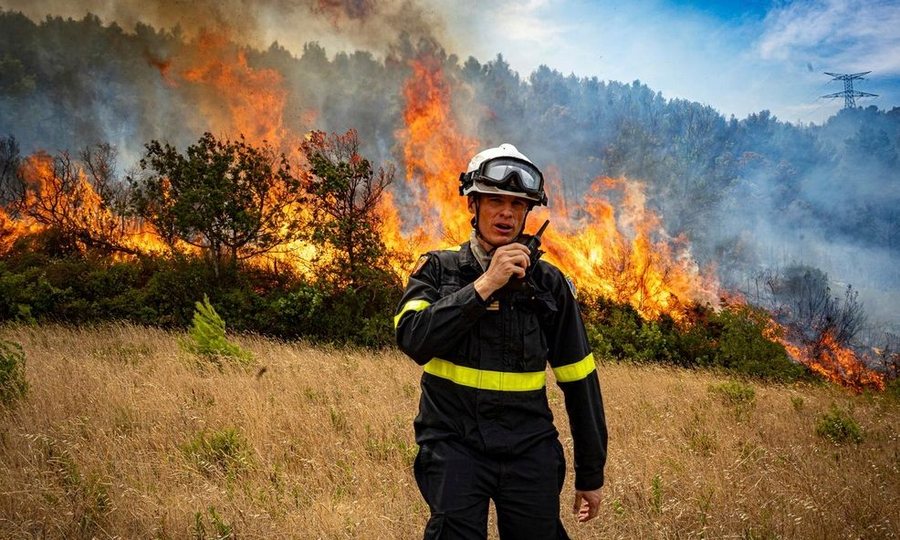
Thousands of firefighters are battling blazes in many countries of Southern Europe in the Mediterranean and the Balkans, as another heat wave pushes temperatures near or above 40 degrees Celsius in many areas of the Old Continent, as Reuters points out.
Global warming is causing hotter and drier summers in the Mediterranean region, according to scientists cited by the international agency, with fires increasing every year and sometimes turning into "fire whirlwinds."
The situation in northern Portugal is extremely difficult, with more than 1,300 firefighters, supported by 16 aircraft, trying to bring three major fires under control. One of them, in the Vila Real region, has been burning for ten days. "They are burning us alive, this cannot continue," said Mayor Alexandre Favaios, as three major fires broke out.
"It's been 10 days since our population has been in panic, not knowing when the fire will knock on their door," he added, speaking to the RTP television station. The situation is also critical in Spain, where temperatures reached 44 degrees Celsius and minimal rainfall combined with winds is expected to worsen the fire risk, as Reuters points out.
The country's Interior Ministry has put national services on alert, with nearly 1,000 members of the armed forces already supporting firefighting operations. In addition, rail services between northwestern Galicia and Madrid have been disrupted due to the fires.
In Spain's largest region, Castile and Leon, more than 1,200 firefighters were battling 32 wildfires on Tuesday, forcing thousands of residents to evacuate their homes. The situation is similar in Albania, where, according to Reuters, vast swaths of forest and farmland have been scorched by blazes while 30 fires remain active and spreading, helped by strong winds.
The Defense Ministry said four military helicopters and 80 soldiers were assisting firefighters. It also reported the death of a man suspected of starting a fire in his yard, which then spread.
And in neighboring Montenegro, authorities, supported by helicopters from Serbia and Croatia, managed to control a fire near Podgorica on Tuesday, with the capital shrouded in smoke.
According to Reuters, widespread fires have claimed lives. On the outskirts of Madrid, a man working in a horse stable died when the fire spread to houses and farms.
Another man died in a fire in Albania, while in Montenegro a soldier was fatally injured while trying to put out a fire.
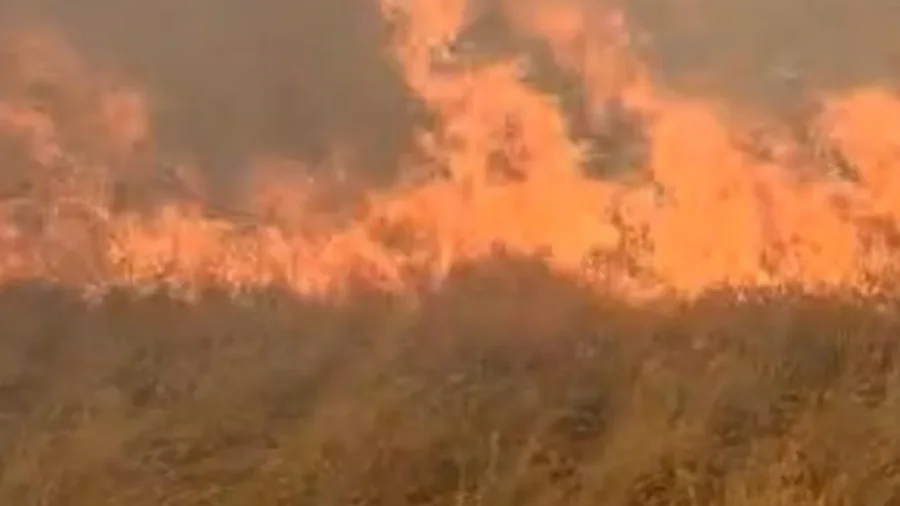
From Delvina, which is considered the hottest hotbed of fires in Albania over the last 24 hours, the flames have also spread to Gjirokastra.
Initially, the fire engulfed the Sopot mountain and one of the villages at risk on Wednesday afternoon is Lazarat.
Strong winds and drought favor the spread of the flames, while the residents of Lazarat, one of the largest villages in the south of the country, are also helping the firefighting teams.
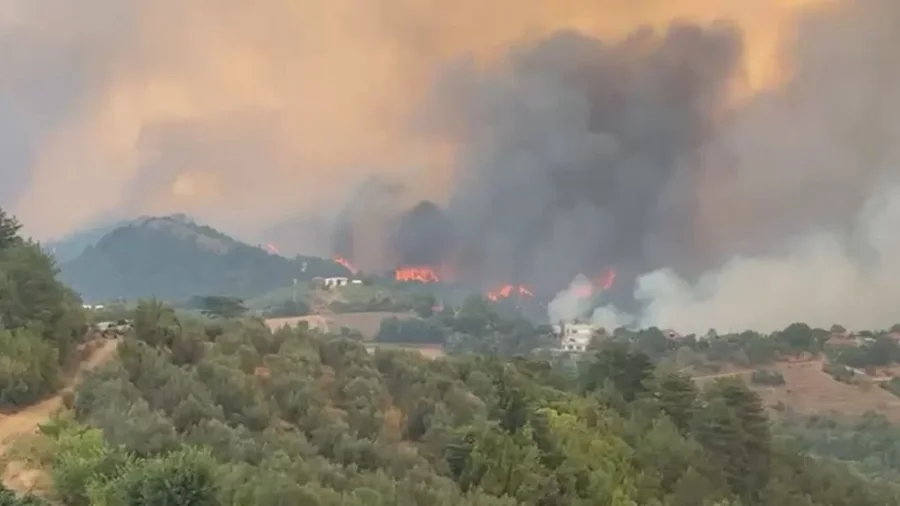
The fires have also created a critical situation in the Municipality of Poliçan, where in the village of Plasnik, evacuation of residents and air intervention have been requested.
The alarm was given by the Mayor of Poliçan.
"There is a serious situation in the village of Plasnik, especially in the administrative unit of Tërban. The situation is critical. We are barely getting residents out of their homes due to the fire and smoke," he said.
In the village of Vokopolë, Tërpan administrative unit, Poliçan municipality, as a result of a spark from a disconnected power line, a fire was activated, which quickly grew in size.
Forces and vehicles from the Ministry of Environment and the municipality were deployed to the scene. As a result of the fire, 6 apartments were burned, 3 of which were uninhabited.


Lini një Përgjigje