


 Shkruar nga Pamfleti
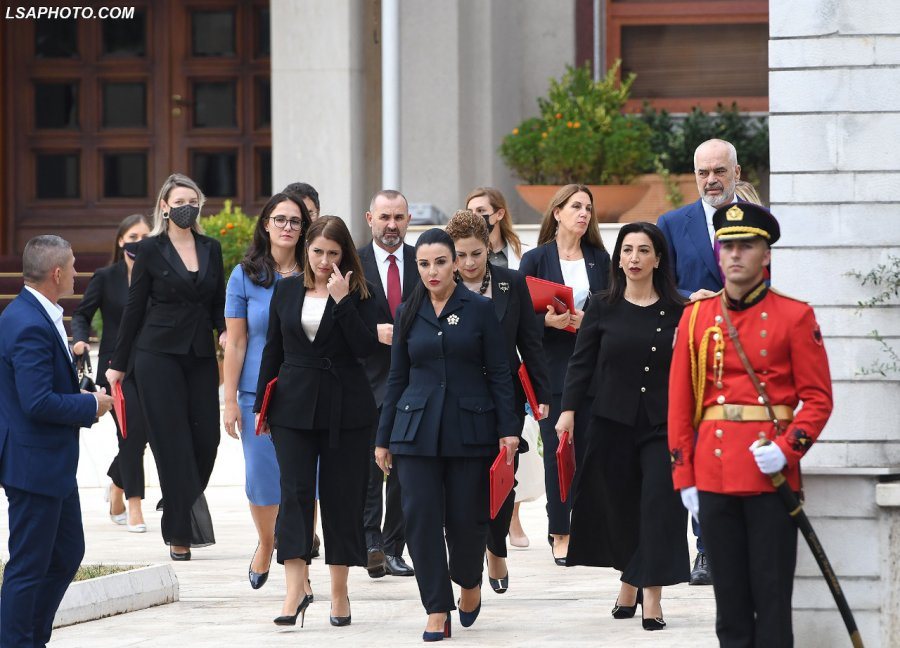
Today's case of Olta Xhaçka, the woman who held two key positions in the country, that of National Defense and Diplomacy, is the most meaningful example of this phenomenon...
In the history of mankind, the role of women in political power games has been decisive. Not only in the shaping of the Gods, where most were women as powerful as Zeus, but also in the Homeric narratives of the Iliad and the Odyssey, where women like Helena, Andromache, Penelope, Engenia or Clytenestra, are the basis of the great tragedies of humanity.
In the Rome of Caesar and Cicero, the war between Servilia, the mother of Brutus and Axia, Caesar's granddaughter, Mark Antony's lover, but also the mother of the First Roman Emperor - Octavian, were even more decisive, fiery and dramatic than the wars between Caesar and Pompey.
And so on in history, where we have seen that one woman in the powerful rooms is enough to set a powerful example for nations and generations.
Margaret Thatcher was the only woman in Western history to lead a government for years. She set a strong example, created a model, how a woman leads the state, behaving as a devoted wife and mother.
We come to the scheme that Edi Rama implemented as soon as he came to power, once in the municipality of Tirana, but more in the government. Where most of his collaborators were and are women. And according to the axiom that Babloku repeats like a parrot, each time paraphrasing the Iron Lady, "If you want to do work, hire a woman, if you want to talk, a man does it better."
In fact, Edi Rama gave great power to many of the women he brought into the government, even breaking the balance of equality with men.
Did the women of Rama in the direction of the SP and the country create an example, first of all for women in the country, and then for all people?
Today's case of Olta Xhaçka, the woman who held the two key positions of the country, that of National Defense and Diplomacy, is the most meaningful example of this phenomenon.
Where for two years, even though the clear conflict of interest with her family's strategic investment in Dhërmi was made public, she never called this a violation. An act that did not match the behavior of a high-ranking official, an act that insulted the citizens and the fundamental postulate of our system that "the law is equal for all".
In an arrogant way, Xhaçka answered the opposition's accusations about her case, calling it normal that her husband could take the role of strategic investor from the Council of Ministers.
He called it normal even though a deputy or minister cannot have another activity apart from his duty. Cursing all those who did not accept that a minister can also get an economic privilege by being such. Did Olta want to become an entrepreneur? Very good! To leave the post and deal with her business and family! But no, she called it normal, she was even bothered by attacks, criticism and accusations.
Like Olta, we also have other models of women that Rama raised and lowered according to his mood. None of these, which Bablok may have had as part of his scheme, have never given what they thought, what they felt as leaders of the SP.
Neither of these have inspired women in the first place, and then others, with their commitment model. On the contrary, as occasional polls say, most or all of the women placed by Rama in leadership have never had an increased popularity among the public. When in reality the opposite should happen, being mothers, sisters, women who give families an important power in their growth and functioning, they do not enjoy respect, or to put it bluntly, they are hated by the women who have them on staff, in the department, in the party and government.
The women ministers in the SP, with some minor exceptions, are the most unwanted politicians in public perception, and they come to Edi Rama in the constant polls he does.
This has only come from the lack of a model that these women applied in their work, placing what Freud-Unin says, at the center of everything.
When in reality a woman gives up herself for the other, as scientifically she is more sensitive and more intelligent than men.
All these women of Edi Rama cannot even replace similar basic models that communism once promoted, but which had a wide impact. Because above all they were women and not peaches.../ Pamphlet





Lini një Përgjigje