


 Shkruar nga Pamfleti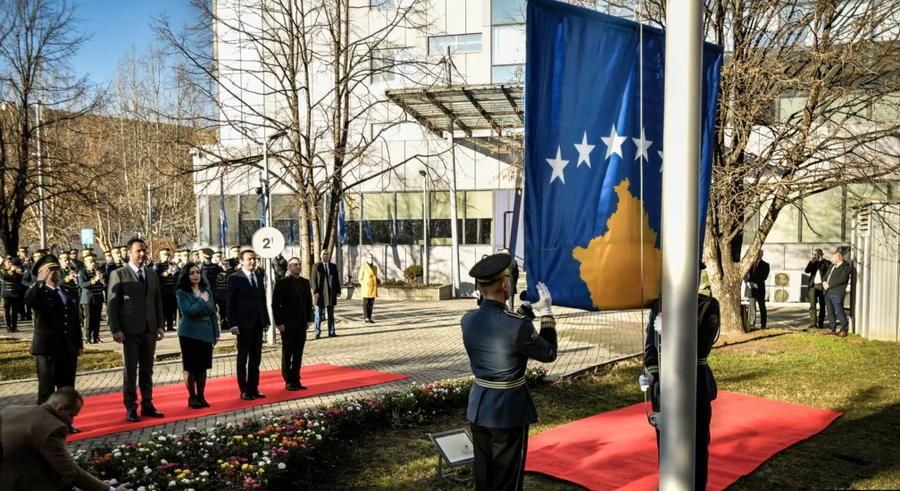
The position of the president of Kosovo seems to have transformed from a symbol of unity into a symbol of division, as there are many who have cited this position as one of the reasons why there is no consensus to form a new government, following the parliamentary elections of February 9.
According to the Constitution of Kosovo, "the president is the head of state and represents the unity of the people of the Republic of Kosovo", and among the main competencies he has are: representing the state inside and outside the territory, announcing elections, issuing decrees and signing international agreements.
The President is also the supreme commander of the Kosovo Security Force, and has the right to make various appointments and dismissals.
Broadly, this position is described as highly ceremonial, as in Kosovo, a state with a parliamentary democracy, the primacy lies with the Assembly, in the legislative aspect, and with the Government, as the executive branch.
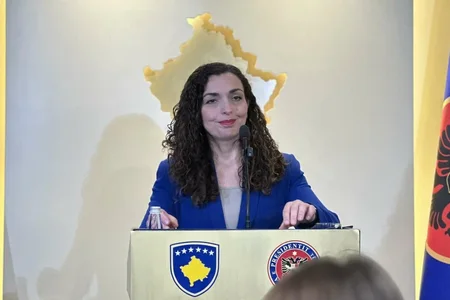
Since the five-year mandate of the current president, Vjosa Osmani, expires in April next year, it seems that the parties have also had to make calculations for this position, something not unknown in the political scene of Kosovo.
The President of Kosovo is elected by the Assembly by secret ballot, and must secure 2/3 of the votes in the first two rounds. In the third and final round, a candidate must secure a majority of the votes of all deputies.
In such a situation, among all the theories, there is also the question of whether this responsibility should be taken away from politicians and passed to the people.
Ehat Miftaraj, director of the Kosovo Institute for Law, tells Radio Free Europe that he does not see a solution in electing the president directly by the people, because then one would also have to discuss what the powers and responsibilities of a president would be.
"If we want to change the form of the state, to have a semi-presidential or presidential system, this would mean that certain powers of the Assembly or the Government would have to be delegated to the president."
Furthermore, Miftaraj mentions that any such change also requires the blessing of international partners, as they have recognized the state in its existing format.
How can changes be achieved?
For Bekim Salihu from the Group for Advanced Studies - GAP, the process of changing the way the president is elected is neither easy, nor quick, nor simple.
Moreover, the motive is not acceptable either, because in this case the change is not sought with the aim of factoring in the position of the president, or of Kosovo itself, but due to the lack of consensus and political compromise.
He mentions this aspect, since even to change the method of election there must be political will, so that a parliamentary commission could then be formed to amend the Constitution, which would require 81 votes in the Assembly.
Then, that committee would have to submit the amendments, which would also have to be voted on by 81 deputies, including 2/3 of the non-majority community, and later submitted to the Constitutional Court for assessment of constitutionality.
So, it's a relatively long process. Add to that the public discussions that take their time.
"We, as a state, are in a position where we are not even able to process and approve things that are easier than that, let alone things that are so complicated and lengthy," Salihu tells Radio Free Europe.
All of this makes it clear that, even if there were ever such changes, they would only apply to other mandates, as they are now almost impossible.
Have there been any attempts to change the method of selection?
Yes. The most serious initiative was that of 2011, when the three political leaders of the time, Hashim Thaçi of the Democratic Party of Kosovo, Isa Mustafa of the Democratic League of Kosovo, and Behgjet Pacolli of the New Kosovo Alliance, with the mediation of the then US ambassador, Christopher Dell, reached an agreement to overcome the institutional crisis, proposing Atifete Jahjaga for president, until the necessary constitutional changes were made to elect the president directly by popular vote.
The then-legislature voted to form a committee to make the constitutional amendments. The Speaker of the Assembly then sent them to the Constitutional Court for evaluation, but ultimately, the amendments that received the green light from the Court were never approved by the Assembly.
According to a survey conducted by the Democratic Institute of Kosovo in 2015, regarding this issue, 89.7 percent of respondents said they were in favor of electing the president directly by vote, while only 10.3 percent believed that there should be a method that is still implemented today.
Where is the president elected by direct vote?
Of the countries in the region, the president is directly elected by the citizens of Montenegro, North Macedonia, Serbia, and Bosnia and Herzegovina.
The same thing happens in democracies like France - and a good part of the European Union countries - or the United States, although in the latter there is a slightly more complicated process. As in Kosovo, the president is elected by the Assembly in Albania as well./ REL


Lini një Përgjigje