


 Shkruar nga Pamfleti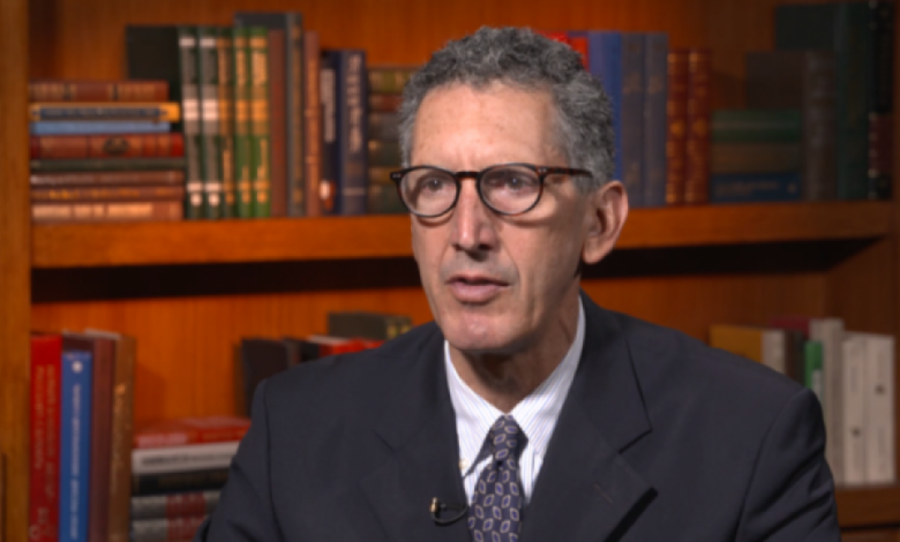
The American professor, Edward Joseph sees the situation in the Balkans after Russia's invasion of Ukraine as gloomy.
According to him, the USA and the EU should better understand the implications of that war in the region and take the right attitude towards Kosovo, which, he says, they should advance towards international recognition and bring Serbia into acceptance of the Western order. This, according to him, would isolate Putin and give more security to Ukraine.
No region on the globe has seen the more surprising and shocking impact of Russia's aggression in Ukraine than the Balkans. So writes Edward P. Joseph, a professor at Johns Hopkins University in Washington, in an article entitled "Disruption after the invasion in the Balkans", published on Tuesday by the Center for Baltic and East European Studies at Sodertorn University in Sweden.
Joseph writes there about disturbing developments in the Western Balkans since the start of Russia's war in Ukraine.
" Fundamentally, the US and the EU have failed to seize the opportunity - and the need - created by Putin's occupation to close the ethno-national disputes inherited from the collapse of Yugoslavia three decades ago. The most important among these unresolved issues is Serbia's refusal to recognize the 2008 independence of its former province, Kosovo" , writes Joseph, Paparaci reports.
The American professor emphasizes that the lack of a solution to this problem is the main obstacle that has long delayed the Euro-Atlantic integration of both countries.
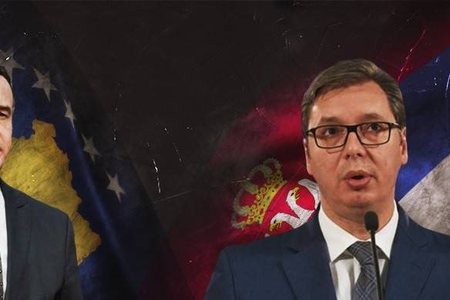
He writes that "Serbia's leverage over Kosovo" is allowing Serbian President Aleksandar Vučić to "isolate the former province", which he says is his priority, and "continue his falsehood" of "balance" between the EU and Hungary, China and Russia.
" By far the largest country - with the largest economy - of the BB6, Serbia has a tremendous influence on its WB6 neighbors, especially in the three countries with significant Serbian populations (Bosnia-Herzegovina, Kosovo and Montenegro ). This makes Belgrade the main channel for Russian influence and regional destabilization in the Balkans, as clearly reflected in public opinion polls ," the article states.
He recalls that "the most shocking display of regional instability occurred in Kosovo on September 24, 2023", when a group of Serbs attacked the Kosovo Police and Sergeant Afrim Bunjaku was killed.
" Five EU countries - four of which are NATO members - do not recognize Kosovo ", writes Joseph, who further emphasizes that neither the US nor any EU country has drawn the findings from the analyzes of intelligence for the episode of September 24, "let alone condemning Belgrade".
" American officials seem to be satisfied with the resignation of Aleksandar Vulin, the notorious former head of Serbian intelligence ," he writes. However, Joseph adds that the openly pro-Russian Vulin continues to appear in Serbian media promoting "Greater Serbia".
" Operation Banjska suggested that official Belgrade - with the possible approval of autocratic leader Vučić - had drawn up a plan to change the status quo in Kosovo by force. That such a brazen attempt would take place in a territory protected by NATO, including nearby American troops, suggests a dramatic loss of respect for Western authority ," the American professor writes.
Joseph recalls that in February 2023, the prime minister of Kosovo, Albin Kurti, as he writes, "surprised his supporters, and especially Vučić, by accepting the new EU proposal, including the controversial autonomy for the Kosovo Serbs ( Association)".
He further indicated Serbia's withdrawal in a way from the agreement on the normalization of relations.
"Even if the "normalization" plan is accepted, it is still not clear (and probably impossible) whether Kosovo will even have a path to NATO and EU membership ," he writes.
As Joseph explains, "the stalemate in Kosovo has been prolonged by European divisions over Kosovo's independence".
" With Russia's active support, Belgrade can continue the status quo, isolating Kosovo until the EU and the US finally agree to a partition - a strategy not unlike Putin's in Ukraine. Indeed, the September 24 attack in Banjska may have been an attempt to speed up this result ," he emphasizes.
" The acceleration of instability in the Balkans confirms Putin's assertion that the Western order is illusory and arbitrary. The position of non-recognizers also allows Putin to use Kosovo as a "precedent" to dismember Ukraine, while he and other Russian officials accuse the West of dismembering Serbia ," Joseph continued.
He writes that the West missed the opportunity to extract a strategic decision from Serbia at the beginning of the war in Ukraine, to impose sanctions on Russia, and adds that "the US and EU officials seem to have settled for a very volatile situation 'modus vivendi' with Belgrade".
There are two ways for the US and key EU partners to "recover their damaged credibility and restore balance," according to Joseph. First, as he writes, "Belgrade should respect the EU sanctions and shut down RT and Sputnik Serbia", and secondly, "the US and the EU's main partners can encourage Ukraine to recognize Kosovo" .
" Recognition of Pristina by Kyiv would provide the catalyst for the uniform recognition of Kosovo in NATO" , according to Joseph, as the country that is - quoting US President Joe Biden - "on the front line fighting to save the democratic principles that unite all free people".
Joseph writes that recognizing Ukraine would give Athens the context Greek officials say they need to recognize Kosovo. He recalls that Athens already has good relations with Pristina and has expressed its willingness to recognize Kosovo in order to advance important Greek interests. He adds that Athens needs stability in the Balkans and has an interest in preventing a division of Kosovo, which would open the door to 'Greater Serbia', 'Greater Albania' and Turkish influence in the Balkans.
He also writes about the possibility of Kosovo receiving recognition from Spain.
Spain's fundamental decision in January to recognize Kosovo's passport (after the liberalization of EU visas for citizens of Kosovo) suggests that Madrid may move towards full recognition, if Kyiv, together with Athens and other non-recognising countries change their position" , writes the American professor.
" In summary, the gloomy post-invasion (Ukraine) situation in the Balkans can be reversed if the US and the EU understand the implications for the overall war against Russia and recognize that true stability requires the right attitude towards Kosovo. Belgrade's plea – the illusion that Vučić will cooperate – is a proven failure. Advancing the uniform recognition of Kosovo in NATO (in the first place) will support US-EU diplomacy, and finally bring Serbia to the acceptance of the Western order - leaving Putin more isolated and Ukraine more secure," he writes. Edward Joseph at the end of the article.


Lini një Përgjigje