


 Shkruar nga Kastriot Kotoni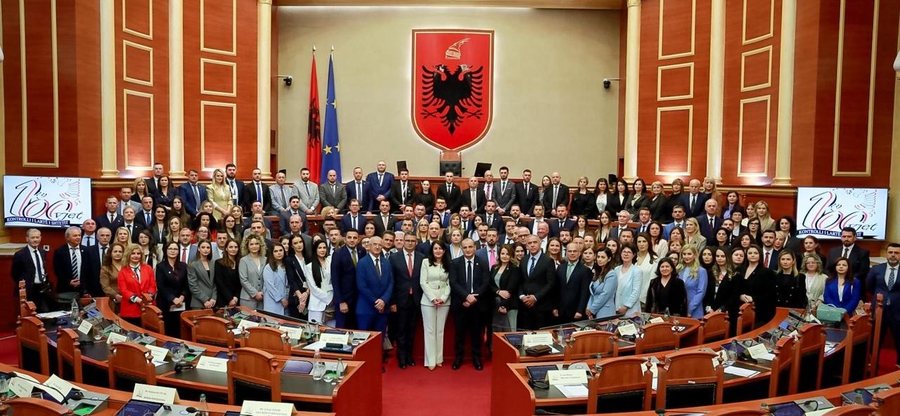
Despite attempts to portray the Albanian people as incapable of building a state, institutional history and the development of financial control mechanisms prove the opposite. From the early periods of social organization in Albanian territories, to modern efforts to build independent and efficient institutions, the line of control of public assets has been followed and developed continuously.
In the documents of the Albanian state since the Statute of Lushnja (1922), we find the first attempts to institutionalize financial control through a “Financial Control Body”, with a predictive and punitive role. This attempt, although not fully fulfilled at the time, was concretized with the formation of the Control Council in 1925, by decree of the President of the Republic. Fejzi Alizoti was the first chairman, and the novelty was the inclusion of a prosecutor within this institution, as happened with Dhimitër Kacimbra in 1929.
The historical influences on these developments are numerous – from the Byzantine and Ottoman models, where centralized forms of financial control existed, to more modern experiments with Western systems in the 1920s and socialist influences after 1944. During the communist period, the existence of institutions such as the Court of Arbitration and the audits of state-owned enterprises, attest to a continuity of control functions, regardless of political circumstances.
After 1990, the need for a non-politicized and professional institution was essential. The events of 1997 showed the weakness of the existing institutions, but in the meantime the way was opened for strengthening the independence of the Supreme State Audit Office, which today is not only a constitutional institution, but also an actor with real influence on financial good governance.
The SAI has today expanded the spectrum of its activities, including areas such as cybersecurity, the environment, social issues and national security. Cooperation with justice structures has intensified, while international engagement with INTOSAI and EUROSAI has opened new horizons for the exchange of expertise and methodological standardization.
From the period when financial inspectors known as "mufetis" operated in the Ottoman Empire, to the control functions during the time of Prince Vid or during the Austrian and French occupations, control practices have never been absent. They have changed in names, methodology and function, but have essentially maintained the basic goal: protecting the public interest and guaranteeing legality in the use of state property.
In this 100th anniversary of the supreme audit institution, this history, although not always fully documented, is proof that Albania has had and has internal capacities to build sustainable institutions. The history of this institution is the history of a state that has known how to fight corruption, sometimes successfully, sometimes with difficulty, but always with a spirit that remains: the logic of accountability./ Pamphlet



Lini një Përgjigje