


 Shkruar nga Pamfleti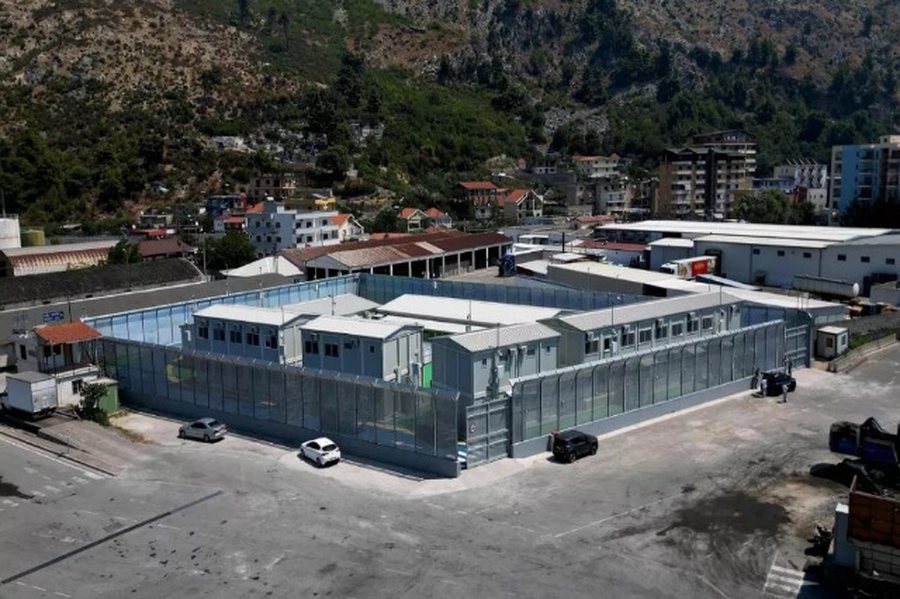
But there is a problem, there are no sewers, waste water and waste will be discharged into the river Drin.
The Italian newspaper "La Stampa" writes that in Shengjin and Gjadër, the immigrant centers are almost ready to open.
But there is a problem, there are no sewers and the waste will be discharged into the river Drin.
" At the moment it has been decided that everything will be thrown into the river Drin. The first migrants can arrive here from September 10 until the end of the month. They are rushing to take them there ," the article says.
Aleksandër Preka, the administrator of the commune of this small town in the north of Albania, says: " We had three thousand inhabitants during communism, we have six hundred left. But now there are all these new people coming and coming. Here is the field: containers, nets, fences. There are carabinieri and Italian policemen everywhere.
These houses are rented for an amount of 30 to 50 euros per month, your soldiers have received 400 euros per month for two years . "
The silence, all around, is broken only by the excavator still pounding away over the scorched earth to lay the last pipes.
The first Italian immigration detention center built on foreign soil is now ready.
There was no doubt that the work would continue in the port of Shengjin: the reception for three hundred people could be opened tomorrow.
This will be the first stop for the emigrants who went to Italy and were deported to Albania, by the choice of the Italian government in agreement with the Albanian government.
From there they will not see anything, the whole perimeter is surrounded.
But maybe they will hear the last songs of the summer blasting from the bars by the sea.
Then, after identification procedures, they will be loaded on buses and sent to Gjadër.
However, there is still no connection to the sewers here, and doubts begin. The Gjadër administrative detention center is built in the air. The land was unsuitable. There were no foundations. There was no electrical system and there is water. This is the reason for the delays.
Yesterday they were testing internet connectivity, which will be essential to remotely manage thousands of cases for thousands of lives awaiting trial.
The camp will have 1,150 places for detention and 24 for a small internal prison, but there are many unresolved questions.
800,000 euros have been spent on the construction of the two structures so far.
But it is an expense, which lacks all those "items at the bottom of the list" that have to do with travel, food and accommodation for those who will participate or will have to participate in this operation in Albania.
It was supposed to be ready in May. It will be in the next few days, it says in the fall.
The materials were purchased by the Italian government from companies in Trento, Colaziocorte and Carimate.
The workers who set up the camp are Albanians, Kosovars and Montenegrins. They worked all summer, even on Saturdays and Sundays.
Meanwhile, the recruitment of 300 Albanian workers who will have to support the Italian operators in the management of the two detention facilities has started.
The newly published announcement starts like this: "The Medihospes company, which will manage the Shengjin and Gjadër refugee camps, starting from August, is looking for emergency staff for the services inside the camps according to the following profiles ".
They are looking for psychologists, cultural mediators, translators, social workers, IT technicians.
For a "simple service worker", work that includes the tasks of food distribution and delivery, accompanying immigrants, cleaning accommodation and common areas, the basic salary will be 1 thousand 200 euros per month for 38 hours of work in week.
"But do you know how much an Albanian high school teacher earns? Less than 600 euros per month".
They talk about this in the only bar in Gjadër. From the money that is arriving with the immigrants.
Due to the fact that workers in this area had never earned 30 euros for a day's work.
"I am doing all the installations for the web connection. We are close to finishing the work. But the last containers are still missing, the entrance gate is missing, then there is the problem of where they will discharge the waste water", says worker Andrit Prenga.
They have decided that they will pour into the river, and from the river into the sea.
In the war between the poor, the last will be those inside the cages, ready to fill them. Ships of deportees are ready to arrive./ Adapted "Pamphlet", taken from "La Stampa"






Lini një Përgjigje