


 Shkruar nga Pamfleti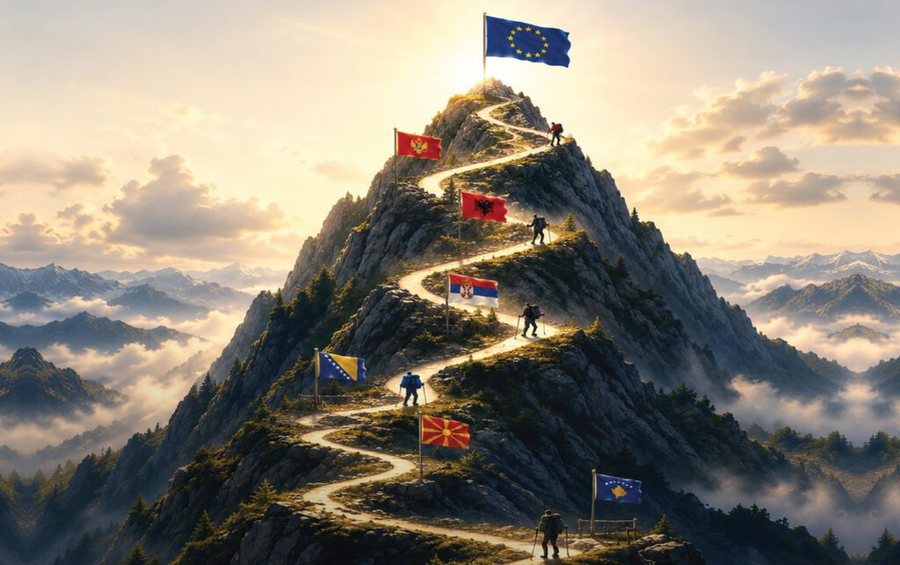
Since July 1, 2013, when Croatia became the 28th member of the European Union, the door to enlargement remained formally open for the other 6 Western Balkan countries.
During this time, the integration process has become more stringent in terms of conditions, while the countries have not overcome ethnic conflicts and have a large gap in economic and governance standards with the EU. The region's former project of membership in the bloc has fallen apart, as the countries are progressing at different speeds.
"Monitor" has analyzed, based on the writings and figures of six economic journalists from the Western Balkan countries, in a project supported by GIZ and #SustainMedia, the speed of integration of the Western Balkans.
Montenegro and Albania have moved faster, while North Macedonia remains blocked by political and ethnic issues, Serbia is moving at a slow pace, and Kosovo and Bosnia and Herzegovina continue to face fundamental state-forming and institutional obstacles.
Montenegro has the potential to become a member sooner than other countries. The country has long opened negotiations and has provisionally closed 16 of the 33 chapters. The official ambition is membership in 2028, an objective that has also received political support from Brussels.
However, behind the technical progress lie problems such as the rule of law, corruption, politicization of institutions and the lack of deep reforms in the justice system, which remain the main obstacles. Many analysts in Podgorica warn that there is a risk of formal membership, but no visible progress with economic standards.
Albania has made the fastest progress in the region over the past two years. In June 2026, the country officially entered the phase of closing negotiations, having opened all chapters. The government's objective is to close negotiations by the end of 2027 and join around 2030.
However, the main challenge is no longer opening chapters, but implementing European standards in the economy and institutions. Experts warn that Albanian businesses have only a few years to adapt to the rules of the common market, while estimates show that only 10-15% of enterprises are currently considered ready for European competition.
On the other side stands North Macedonia, perhaps the most unique example where the process is not progressing on political criteria. Two decades after the Stabilization and Association Agreement and after the change of the country's name through the Prespa Agreement, the country has still not started negotiations. The blockage is linked to the demand for constitutional changes that would include the rights of the Bulgarian community, a condition that the government rejects.
Kjo ka krijuar ngërç politik ku Brukseli këmbëngul te ndryshimet kushtetuese, ndërsa Shkupi kërkon garanci se nuk do të përballet me veto të reja në të ardhmen. Mbështetja publike për anëtarësimin në BE ka arritur në rreth 71%, por procesi duket më larg se kurrë.
Serbia përfaqëson një rast krejt të ndryshëm. Ajo mbetet vend kandidat dhe vazhdon negociatat, por ritmi është ngadalësuar ndjeshëm. Nga 35 kapituj, vetëm 22 janë hapur dhe vetëm dy janë mbyllur përkohësisht. Pengesat kryesore mbeten normalizimi i marrëdhënieve me Kosovën, sundimi i ligjit dhe refuzimi për t’u harmonizuar me politikën e jashtme të Bashkimit Europian, sidomos lidhur me Rusinë.
Megjithatë, Serbia është tashmë thellësisht e integruar ekonomikisht me BE-në, e cila është partneri i saj kryesor tregtar dhe po ashtu në investime nga BE. Kjo ka krijuar një situatë që disa analistë e përshkruajnë si “gjysmë-anëtarësim”, ku të dyja palët përfitojnë nga status quo-ja pa pasur domosdoshmërisht interes për ta përshpejtuar anëtarësimin e plotë. Megjithatë, vendi synon të anëtarësohet në BE rreth vitit 2035.
Kosova mbetet vendi më larg anëtarësimit. Dhjetë vjet pas hyrjes në fuqi të Marrëveshjes së Stabilizim-Asociimit, ajo ende nuk ka statusin e vendit kandidat. Përveç reformave të brendshme në drejtësi, administratë dhe luftën kundër korrupsionit, Kosova përballet me një pengesë kryesore që lidhet me mosnjohjen nga pesë shtete anëtare të BE-së.
Për më tepër, dialogu me Serbinë vazhdon të jetë kushti kryesor politik. Edhe pse ka bërë hapa në fusha si SEPA, Plani i Rritjes dhe integrimi ekonomik rajonal, rruga drejt anëtarësimit mbetet e bllokuar nga faktorë që shkojnë përtej reformave të brendshme.
Procesi i integrimit për në BE i Bosnjë-Hercegovinës mbetet tepër sfidues. Edhe pse mori statusin e vendit kandidat në vitin 2022 dhe në vitin 2024 mori miratimin politik për hapjen e negociatave, procesi mbetet i kushtëzuar nga reformat institucionale.
Vendi vuan nga mungesa e mekanizmave efikase për planifikimin dhe koordinimin e fondeve të BE-së, ndërsa ende nuk është përcaktuar qartë se cilat institucione do të mbajnë përgjegjësinë për raportimin mbi zbatimin e aktiviteteve të reformës. Bosnja mbetet mes statusit të kandidatit dhe vështirësive të një shteti që ende po përpiqet të ndërtojë konsensusin e brendshëm për drejtimin e tij strategjik.
Mali i Zi: Kryeson garën, por ka ende shumë punë përpara
Ndërsa qeveria malazeze synon me ambicie anëtarësimin në Bashkimin Europian në vitin 2028, ekspertët mbeten skeptikë. Ata paralajmërojnë se shoqërisë i mungon progresi thelbësor dhe reformat strukturore të nevojshme për një integrim të vërtetë, duke tërhequr vëmendjen ndaj rrezikut të një “anëtarësimi në letër”, që nuk sjell përmirësime reale për qytetarët.
Since opening accession negotiations in 2012, Montenegro has provisionally closed 16 of the 33 chapters. The government insists that the remaining chapters will be finalized by the end of 2026, paving the way for full membership in 2028, but the Ministry of European Affairs did not respond to questions regarding the deadlines for closing the remaining chapters./Monitor.al


Eurokurva ti e shkerdheve Ballkanin duke te genjyer mendja qe, do e gllaberonit sipas oreksit anglo-franko-gjerman. Mos harroni se Ballkani e ka pasur emrin Gadishulli Ilirik. Ju Eurokurvat qe jeni grindur e gjakosur tere jeten me njeri tjetrin, se pari pastroni sherret me njeri tjetrin. Fatmiresia e Europes eshte qe, jane raca e bardhe me e bukur, me inteligjente ne bote. Mirepo jane gjakosur aq shume me njeri tjetrin kombet e saj sa qe, eshte veshtire te quhemi Europiane pa shoshitur te kaluaren. Kur Europa sulmohej nga Aziatiket Mongole e Ottomane, Eurokurva shkonte deri ne Antarktide per pasjuri e troje. Cfare fitoi, luftra mes vehtes e shkaterrim. Bastioni Ilir mbrojti natyrisht vehten por mbrojti edhe Eurpoen thike mbas shpine. Natyrish Eurpoa 'kurva e motit' krijoi edhe modelet e veta favelat e Brazilit, juntat ushtarake ne Arjgentine e Uruguaj, imnerializmin luftenxites qe ka krhyer mbi 48 luftra pas Luftes se dyte Boterore, etj, etj.