


 Shkruar nga Pamfleti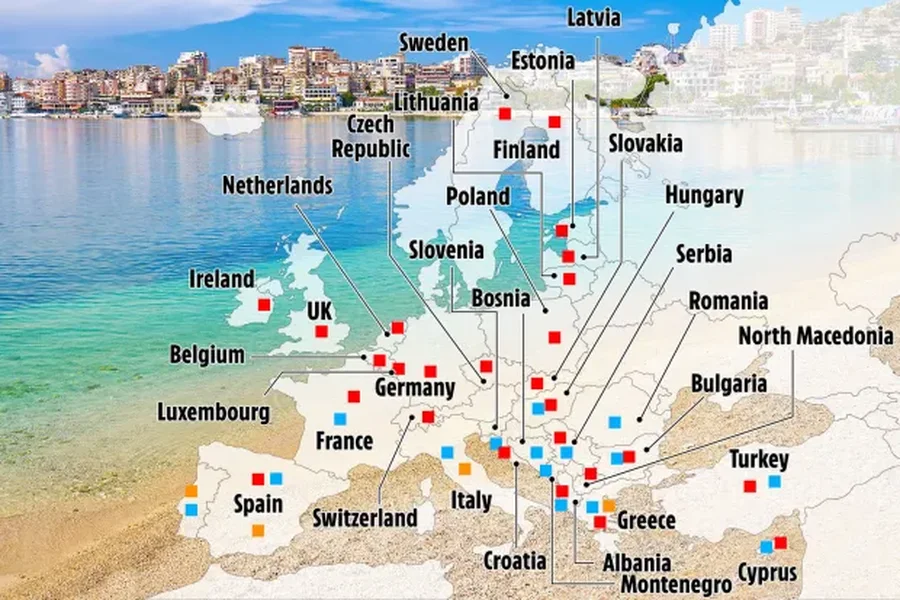
Europe is at risk from 9 tropical diseases, and the map is expanding. These are diseases caused by infected insects that have reached Europe from countries such as Africa, Asia, and Central and South America.
Last year, Europe saw a significant increase in mosquito-borne diseases, with a doubling of some species.
According to a report published by The Sun, in 2024, West Nile virus infected 1,436 people in 212 regions in 19 countries.
Traces of this insect, which can leave its victims paralyzed, were discovered as far north as Britain for the first time in 2023.
In 2025, France has already reported six outbreaks of chikungunya that began in May and June.
In response, EU health chiefs are warning those heading to the continent to take 'personal precautions' when visiting infected countries.
They have also increased disease tracking and now publish a weekly report showing how countries are managing outbreaks, so everyone can stay informed and prepared.
According to the ECDC, three different species of infected mosquitoes, three species of ticks prone to infections and one species of fly are 'established' in several European countries.
Professor Francois Balloux of the Institute of Genetics at University College London warns that we are likely to see more of these infections in parts of Europe as the climate becomes "more suitable".
"Many of these insect species prefer warm, humid weather," he says.
Below, The Sun publishes nine different diseases you can get from insects that inhabit Europe...
1. Chikungunya virus
Spread by Aedes mosquitoes
Countries where the virus has been established: Italy, France, Spain, Portugal, Greece, Cyprus, Croatia, Serbia, Montenegro, Bosnia and Herzegovina, Albania, North Macedonia, Romania, Bulgaria, Turkey and Madeira (Portugal).
Chikungunya is a virus spread by two different invasive mosquitoes of the Aedes genus: Aedes and Albopictus.
The name of the disease means "to become twisted" in the African language Kimakonde, as it causes severe muscle and joint pain.
Other symptoms include sudden fever, headache, fatigue, rash, nausea, and red eyes.
Most victims will recover within a few weeks, but in some cases, joint pain can persist for weeks, months, or even longer.
It is usually found in tropical areas such as Central and South America, Asia and Africa, but the mosquito has also found its way into the warmer parts of Europe.
Most cases in Europe have come from people traveling from countries where the disease is endemic.
2. Ethet hemorragjike të Krimesë dhe Kongos
Përhapet nga Rriqra Hyalomma
Vendet ku është vendosur virusi: Spanja, Bullgaria dhe Greqia. Ethet hemorragjike të Krimesë-Kongos janë një virus që përhapet nga rriqrat dhe mund të shkaktojë gjakderdhje të rëndë dhe temperaturë të lartë. Nuk është shumë e zakonshme, por është shfaqur në Evropë .
Nëse dikush infektohet, mund të fillojë të vuajë nga simptoma të ngjashme me gripin përpara se kjo të përparojë në gjakderdhje të rëndë nga sytë dhe dëmtim të organeve.
Sipas Organizatës Botërore të Shëndetësisë (OBSH), kjo sëmundje vret deri në 40 përqind të njerëzve të infektuar .
3. Virusi i dengutit
Përhapet nga mushkonjat pushtuese Aedes
Vendet ku është vendosur virusi: Italia, Franca, Spanja, Portugalia, Greqia, Qiproja, Kroacia, Serbia, Mali i Zi, Bosnja dhe Hercegovina, Shqipëria, Maqedonia e Veriut, Rumania, Bullgaria, Turqia dhe Madeira (Portugali). Denguja - e quajtur edhe 'ethe e thyerjes së kockave' për shkak të dhimbjeve të forta të muskujve dhe kyçeve që mund të shkaktojë, po bëhet gjithnjë e më e zakonshme në Evropë.
Përhapet nga mushkonjat pushtuese Aedes, konkretisht lloji aegypti - i njohur edhe si mushkonja tigër.
Gjatë dy viteve të fundit, një numër rekord rastesh të dengues u zbuluan në disa vende në të gjithë kontinentin, përfshirë Francën, Italinë dhe Spanjën. Simptomat më të zakonshme janë ethe të forta, dhimbje koke dhe dhimbje trupi.
Rreth një në 10 prej të infektuarve do të zhvillojnë dengue të rëndë , e cila mund të rezultojë në shok, gjakderdhje të brendshme dhe madje edhe vdekje.
4. Leishmanioza
Përhapet nga mizat e rërës flebotomine
Vendet ku është vendosur virusi: Spanja, Italia, Greqia dhe Portugalia. Leishmanioza është një sëmundje që mund ta merrni nga pickimi i një mize rëre të infektuar. Është e zakonshme në pyjet e shiut, shkretëtirat dhe zonat urbane të Amerikave, Azisë, Afrikës - dhe në dekadat e fundit, të Evropës.
Megjithatë, një studim i kryer nga ECDC zbuloi se raportimi i rasteve nuk është i detyrueshëm në shumë vende evropiane.
Kjo do të thotë se është e vështirë të krijohet një pamje e vërtetë se në sa vende janë të vendosura mizat që mbartin sëmundje.
Mund të shkaktojë plagë në lëkurë që mund të zhvillohen në ulçera të dhimbshme. Forma më serioze e sëmundjes prek organet e brendshme si mëlçia dhe shpretka, duke shkaktuar ethe, humbje peshe dhe anemi.
Nëse nuk trajtohet në kohë, mund të shkaktojë vdekje.
5. Sëmundja e Lyme-it
Përhapet nga rriqra e drerit evropian (Ixodes ricinus)
Vendet ku është vendosur virusi: Mbretëria e Bashkuar, Irlanda, Franca, Gjermania, Holanda, Belgjika, Luksemburgu, Zvicra, Austria, Italia, Spanja, Portugalia, Greqia, Qiproja, Turqia, Polonia, Republika Çeke, Sllovakia, Hungaria, Rumania, Bullgaria, Serbia, Kroacia, Sllovenia, Bosnja dhe Hercegovina, Mali i Zi, Shqipëria dhe Maqedonia e Veriut. Një pickim nga rriqra të vegjël, që zakonisht gjenden në zona me bar, mund të rezultojë në sëmundjen Lyme dobësuese. Ky është një infeksion bakterial që u transmetohet njerëzve nga rriqrat e infektuara - zakonisht rriqrat e drerit evropian. Simptomat e sëmundjes Lyme përfshijnë një skuqje rrethore ose ovale rreth zonës së kafshimit, si dhe lodhje dhe simptoma të ngjashme me gripin. Në shumicën e rasteve, sëmundja Lyme mund të trajtohet në mënyrë efektive me një kurë antibiotikësh.
6. Malaria
Përhapet nga mushkonjat Anopheles. Vendet ku është vendosur virusi: Spanja, Portugalia, Italia, Greqia, Qiproja. Malaria është një infeksion i shkaktuar nga një parazit i vogël që përhapet në gjak, i cili transmetohet nga pickimet e mushkonjave femra të infektuara Anopheles. Njihet si sëmundja më vdekjeprurëse e përhapur nga mushkonjat në planet. Shumica e rasteve që dëgjoni janë nga njerëz që e kanë marrë atë gjatë udhëtimit në vende ku malaria është më e zakonshme, si Afrika ose pjesë të Azisë. Anofelet janë të pranishme në pjesë të caktuara të Evropës, por aktualisht nuk e bartin më sëmundjen.
Në fakt , Evropa u shpall e lirë nga malaria nga OBSH-ja në vitin 2015, por tani kërcënimi i saj po afrohet përsëri. Sëmundja është vërejtur në Evropën Jugore dhe rastet mjekësore të pushuesve të prekur që vijnë në Britani janë në nivelin e tyre më të lartë në më shumë se 20 vjet, me 2,106 raste në vitin 2023.
7. Encefaliti i lindur nga rriqrat
Përhapet nga rriqra e drerit evropian (Ixodes ricinus) dhe rriqra e siberisë (Ixodes persulcatus). Vendet ku është vendosur insekti rriqra e drerit evropian: Mbretëria e Bashkuar, Irlanda, Franca, Gjermania, Holanda, Belgjika, Luksemburgu, Zvicra, Austria, Italia, Spanja, Portugalia, Greqia, Qiproja, Turqia, Polonia, Republika Çeke, Sllovakia, Hungaria, Rumania, Bullgaria, Serbia, Kroacia, Sllovenia, Bosnja dhe Hercegovina, Mali i Zi, Shqipëria dhe Maqedonia e Veriut.
Rriqra siberiane: Estonia, Letonia, Lituania, Finlanda, Suedia (pjesët veriore).
Tick-borne encephalitis is a virus that can be carried by both European deer and Siberian ticks, and is something to watch out for in certain parts of Europe. Most people who become infected with the virus will have no or only mild flu-like symptoms. However, the virus can progress to affect the brain and central nervous system and can sometimes be fatal. The disease-carrying creatures, which are mainly found in tall grass or woodland areas, were traditionally only found in central and eastern Europe. Nowadays, the virus is also being reported in areas of northern Europe that were previously not thought to be infected, including the United Kingdom.
8. West Nile Virus
Spread by Culex mosquitoes
Countries where the virus has spread: Spain, Portugal, France, Italy, Greece, Cyprus, Bulgaria, Romania, Serbia, Croatia, Hungary and Turkey.
West Nile virus is transmitted to humans by Culex mosquitoes that feed on infected birds, which are the natural reservoirs of the disease. Typically, the infection is found in Africa, the Middle East and parts of Asia. A few decades ago, the disease spread to Europe - but only recently have we seen an increase in cases.
About one in five people will develop symptoms, including headaches, joint pain and a rash. And one percent will develop serious illness, including two brain-swelling conditions called encephalitis or meningitis, both of which can be fatal.
Illustration of the flu-like symptoms of West Nile virus: fever, swollen lymph nodes, headache, diarrhea, body and joint pain, vomiting, and rash.
9. Zika virus
It is spread by the invasive Aedes mosquito. Countries where the virus is established: Italy, France, Spain, Portugal, Greece, Cyprus, Croatia, Serbia, Montenegro, Bosnia and Herzegovina, Albania, North Macedonia, Romania, Bulgaria, Turkey and Madeira (Portugal).
Zika is generally a mild virus, causing fever, rash or headache, although most people infected will never develop symptoms.








Lini një Përgjigje