


 Shkruar nga Pamfleti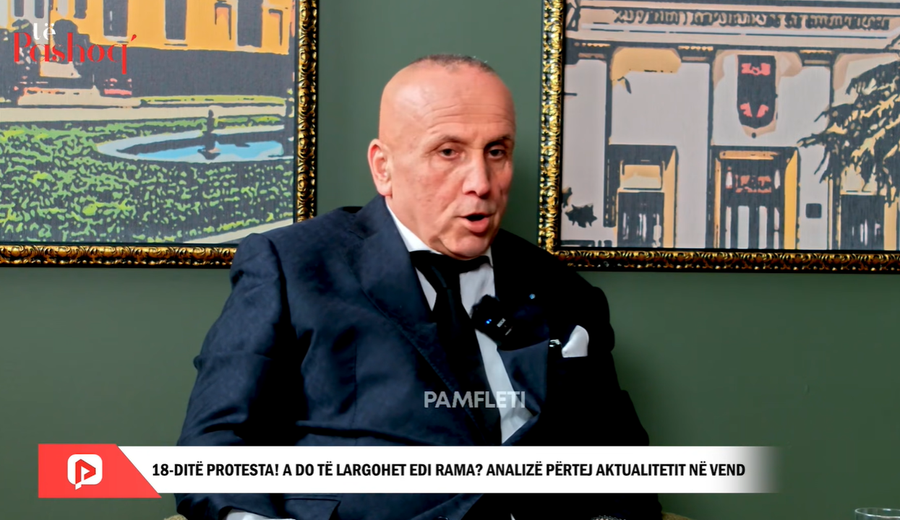
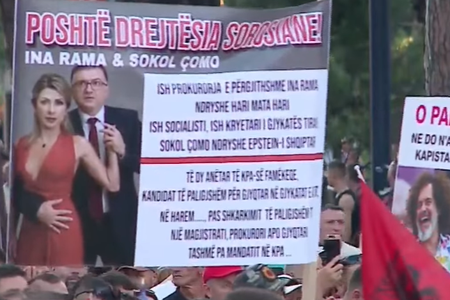
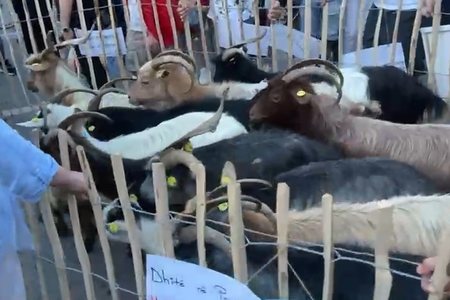
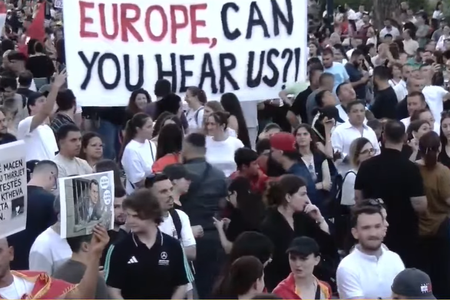
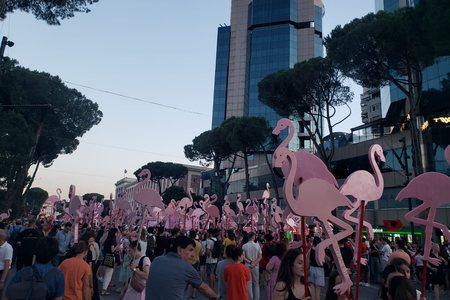
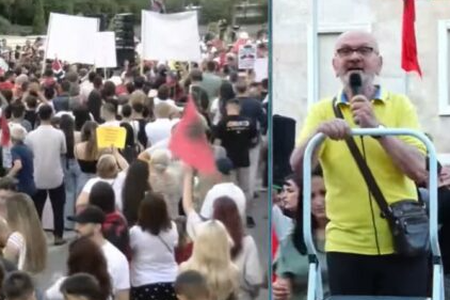
Security expert, Ilir Kulla, has assessed that the protests taking place in Albania have not only achieved their initial objectives, but have exceeded them, bringing, according to him, significant changes to the country's political landscape.
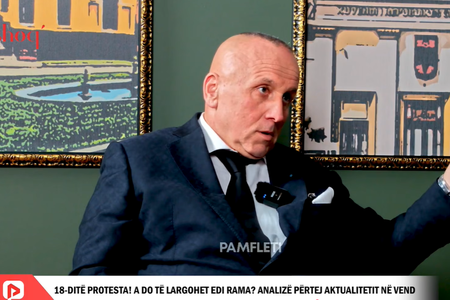
Invited to the show "Të Pashoq", Kulla said that Albania has gone through a 35-year period of transition dominated by a few political forces and a few individuals, while the current protest has shown that citizens can organize and influence public life even without the support of traditional media.
According to Kulla, Prime Minister Edi Rama must read the message the protests are conveying and take on the role of leader of the reforms that Albanian society is demanding. He also criticized attempts to minimize or delegitimize the protests through conspiracy theories, emphasizing that the protesters' demands are related to real needs of Albanian society.
According to him, one of the most important effects of this movement is the blow to the traditional model of political bipolarity in Albania, which he linked to the 2008 political agreement between the Democratic Party and the Socialist Party. In his analysis, he also focused on the impact of populism on Albanian politics, arguing that social networks and new forms of communication have changed the way political support is created.
To illustrate this phenomenon, Kulla brought up the hypothetical example that figures outside of traditional politics could gain widespread public support if they were backed by powerful civic movements.
"In this period of transition, we have had a 35-year-old politically monopolized by the two major parties and by a few leaders, a few hands. So if in business we have more or less the same names that were in the early years when capitalism began, then there is no generational change there either. The same in the media, but now this protest and social networks have shown that you don't even need television for this job anymore.
Then, it leads us to reflect that, I say that this protest has not only reached its objectives, it has exceeded them. And it would be in the wisdom of a political leader like Edi Rama, to understand that the messages of that protest, the need for transition that that protest transmits, he would lead himself, doing what he told a friend of his, who is also my friend, many years ago, telling him that I will be the last leader of the transition in Albania. Any kind of form that makes him a denier, a negationist, any kind of conspiracy theory, such as the ones they had at the beginning, that is, Edi Rama remembers that the world's secret services do not know where Iran is, what Iran is doing, and where the Greek services are, what they are doing, and others. They know better than us, there is no need for us to translate them into this language. Not only does it distract him from this mission, but if I were his advisor today, I would tell him: "Be the voice of protest and start the reforms that the people want."
Even though you don't talk to him. Iran didn't talk to the US either, and the US didn't talk to Iran, they were negotiating with third parties. Because the things they demand in the square are the things that this society, this country needs. From time to time, they are things that you have also articulated publicly, or your people. And I think that in the third week of the protest, the protest has not only strengthened, because the strength of the protest is not visible from the increase or decrease in numbers, as I explained, at the beginning there were very few people, and yet it went where it went. But it is visible from the process that has started and keep in mind that the political bipolarity concreted with the 2008 agreement between Berisha and Rama, that this is the problem, was destroyed by this protest. I said in Kosovo two days ago, I must explain it well, I am not a partisan of this thing, but I said that if today those people who are in the square, with the populism that it has created... because they are the populists. And I did not introduce the populist system in Albanian politics, that is, with social networks and others, I am of the Fatos Nanos school that needs party institutions, party democracy, and others.
"I didn't create it, this duo created it, the introduction of populism, social networks, and others. If today, then, because of the populism that Edi Rama has created and led this process, without the slightest doubt, populism in politics ," said Kulla.


Ilir Kulla njohësi më i mirë i realitetit shqiptare. Mund të bëjë qasjen e tij ...