


 Shkruar nga Pamfleti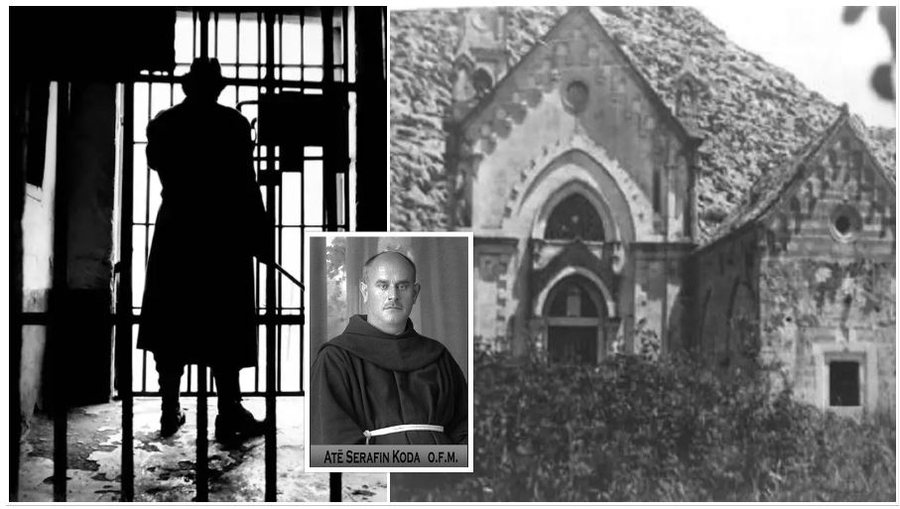
It must be said from the beginning that it is somewhat difficult to adequately describe this portrait, and even more so to reflect deeply and clearly the life and work of this martyr. This holy missionary deserves to stand out with those sacrifices and pains that he experienced, with his extraordinary contribution, to the sublimation of life, as the wise spiritual shepherd, who should take his place at the altar of deserved.
Life and the ordeal of pain
Gjon Serafin Koda, the son of Gaspri and mother Ananijeta, was born on April 25, 1893, in Janjevë, Kosovo, in a family with religious, patriotic and patriotic traditions, a blessed family of the Karadak Highlands, an area known for heroism and homeland -love. John was educated since childhood, with faith in God and devotion to the homeland. Thus, thanks to the great desire of his parents, he became a priest.
And precisely, in 1908, he fulfilled the call he had received from God and carried out the legacy of his parents and the desire of his heart. He finished his higher studies in Austria. According to the tradition of the Friars, he received the name Seraphim. He celebrated the first Mass on July 30, 1925. Afterwards, the friar from Janjeva would follow the path of the shepherd of the flock of Jesus Christ.
He also served among the dioceses of the motherland, Albania, such as in Dushman, Shale, Prekal, Bushkash, Vukël, Kelmend and finally, he was assigned to the Diocese of Sapa of Lezha. When Father Serafini arrived in the old city of Lezha, with the Franciscan robe and a rope tied between his body, he meditated with the eyes of a man who was stepping on those unknown lands for the first time.
At the first meeting in the Parish, they told him that on that small hill, to the west of the city of Lezha, opposite the 2500-year-old fortress, where the ancient city of Lissus once lay, through which the river Drin passes, in Saint Francis stopped at that shore, 700 years ago, during his pastoral journey and left a bequest, so that a church could be built there.
And so it was. Saint Francis planted a pine tree as a good sign for the foundation of the church. The construction of that Temple was later reflected in the "Hyllin e Drita". Moreover, the city where Father Serafini served was also the land of the "Covenant of Lezha", the Albanian principalities, headed by Skënderbeu. Also, there are the foundations of the Church of Shënkolli, where our National Hero, Gjergj Kastrioti, Skënderbeu is buried.
Like all the clergy and Father Serafini, he experienced the days of religious service in the Diocese of Lezha, with dedication and tirelessness, where even today the spirit of the work and the ideal he dedicated himself to, at a time when he was experiencing poverty, can be felt cross-legged in the Albanian lands.
With the end of World War II and the eventual establishment of the communist regime in Albania, Father Serafini and his Franciscan brothers would go through an ordeal of pain, from the most unscrupulous crimes of the regime, through the infamous Albanian State Security, which killed the cream of the intelligentsia of the clergy, of the innocent people, who were slaughtered by the Stalinist-Enverist regime.
Arrest and imprisonment
Serafin Koda was a parish priest in Lezha when he was arrested. This happened after the Security people previously held a meeting, to discuss economic problems, with the Speaker of the Assembly, but in fact, there the Security officers were activated as never before, to give it political meaning.
Tied like that, they isolate him in one of the chambers of the Assembly, torturing him with the most inhumane, psychological and physical methods, with fabricated alibis, as one of the opponents of the communist regime and for the overthrow of their power. They asked him for cooperation, to testify against other clerics, so that the State Security would arrest the intelligence of the clerics.
It was May 1947, he had just turned 54 years old, exactly, as we quoted above, on April 25. That day was celebrated by him and the other clerical brothers and he expressed quite enthusiastically that he was happy to have been born on that date, which for him was symbolic, that it coincided with the Day of the Evangelist, St. Mark.
This date also evoked nostalgia for his birthplace, that in Janjevë, the first Albanian school was opened in 1671, a historical letter bearing the date April 10, 1683, and Pjetër Bogdani's own note, in the book "Ceta e Profetenve", which was sent at that time from Janjeva.
Investigation and torture
It didn't take long for the brave priest to be questioned by State Security investigators and subjected to the most inhuman and unimaginable tortures.
- "Hey, tell us, priest Serafin, what hostile plot have you prepared against our immortal communist power"?
- "No way, no and no, neither me, nor even any of my friends. We have not even thought, absolutely, of what you are telling me, fellow investigator, No, No. In no way"!
- "Do you hear what he is saying to me?! Yes, I am not your friend, you are an enemy of the people, a puppy of the Vatican".
- "Please, no, I am not an enemy, I am only a priest, I do not know hatred, we are for peace and love. Belief in God itself does not allow us to hate and insult people".
- "Eh, well, if we caress your cups with our fists, here's another one." Blood was flowing from Father Seraphim's face, from his mouth and nose.
– “Return to your bargain, O vile Seraph. Hey, if we listen to you, tell us, which one of you is the leader of the group, in that nursery school of yours"?
- "I personally don't know anything, none of my friends and comrades, I haven't heard them speak out against popular power".
- "Don't show us those leaders in your 'Sapa', you answered?" And a frenzy of punches, kicks and blows, poured out on the priest.
– “Ne s’kemi as hierarki, as të parë, të gjithë jemi vëllezër”.
– “Tani na thuaj, ku i keni fshehur armët, se për ndryshe, të mbytem në këtë minutë”?
– “Pasha nderin, pasha të drejtën, ju betohem, nuk kemi armë”.
– “Dëgjo mirë pra, keni tre minuta kohë të tregoni gjithçka dhe në rast se jo, paç veten në qafë”!
– “Për atë besë që ka burri, nuk kam asgjë për të thënë”!
Të tre hetuesit që e kishin marrë në pyetje, u lëshuan mbi At Serafinin, duke e torturuar e rrahur barbarisht, derisa ai humbi ndjenjat. Ashtu i shtrirë në dysheme, i gjakosur, i dërmuar dhe i pavetëdijshëm, njëri nga hetuesit i fut duart në fyt, për ta mbytur meshtarin e pafajshëm.
Nga fyti filloi të rridhte gjak. Por bisha komuniste nuk ngopej me kaq. Torturat vazhduan edhe për disa orë të tjera. Kur ata ikën, At Serafini po jepte shpirt, në çimenton e ftohtë të dhomës.
Nga mesnata e datës 11 maj 1947, At Serafini, i rënduar nga plagët, u përmend vetëm për disa minuta. Vëllezërit e tij klerikë, e muarën për ta çuar tek infermierja. Kur po kalonte para trupores së Zonjës, iu lut me zërin e çjerrë, përmes gjakut që i rridhte nga goja: “O Zoja Virgjër, vepro sa më shpejt me shpirtin tim”. Sapo e vendosën në shtrat, u lut për herë të fundit, pa mundur të bashkonte duart:
“O Jezus, merre në duart tuaja shpirtin tim, që të jam kushtuar me gjithë zemër”.
“Ati ynë që je në Qiell”, e… dha shpirt…! Ia dorëzoi Atit të gjithëpushtetshëm shpirtin e tij të bardhë, që t’i bashkohet korit të engjëjve në qiell, ashtu qoftë.
Mbas vdekjes së Atë Serafinit
Besimtarët e Famullisë, bashkëkohësit e tij, e deshën shumë meshtarin trim, që me qëndrimin e tij burrëror, u shndërrua në një martir. Ata humbën, jo vetëm një njeri të përkushtuar ndaj fesë, por edhe njeriun e dashur, që kurrë nuk u pat munguar, me ndihmën e fjalën e Zotit, në gëzime dhe hidhërime familjare.
Ai u kishte shërbyer në të gjitha rastet, duke vizituar të sëmurët, rrëfime, bekime shtëpish, pagëzime, salikimin e të vdekurve. Njerëzit shpreheshin me fjalët më të mira të shpirtit, duke thënë se At Serafini, ishte një misionar i zellshëm, i përkushtuar, me zemër të madhe dhe i dashur.
Infermierja e atyre viteve, Marie Ndoja, e cila mjekonte At Serafinin, në momentet e agonisë së plotë, bëri të pamundurën ta shpëtonte, por plaga e madhe e dëmtimit të venave e, rrjedhja e gjakut nga fyti, ia shkurtuan jetën. Maria e varrosi me mjaft mundim e në fshehtësi të plotë meshtarin trim, poshtë një ulliri, që ishte në oborrin e Kuvendit të Fretërve, në kodrën që populli e thërriste; “Kisha e Dom Lleshit”.
Edhe sot e kësaj dite, s’dihet pse u quajt me atë emër. Ndoshta ndonjë famullitar në atë Kishë, ka lënë gjurmë me emrin e tij. Ndoshta, nga pushtuesit osmanë, ishte bërë theror edhe Dom Lleshi, e në kujtim të tij, u quajt kisha në kodër. Por vitet kanë kaluar dhe asgjë nuk dihet me saktësi.
The greatest insanity of the communist system was that of fratricide, as happened to Father Seraf Koda, the martyred priest from Janjeva, Kosovo, who was barbarically killed by the communist State Security. But Father Serafini's dedication, contribution and work have left an indelible mark in Lezha.
After 34 years, the grave of Father Serafin Koda was discovered, which was preserved with fanaticism and spiritual obligation by the nurse, a humane woman in spirit, Marie Ndoja, a Catholic believer, with a great spirit and kindness. She testified about the Friar's grave, only in the years of democracy. Maria, during the time of the communist regime, did not even dare to show her act of kindness, but kept it as a hostage in her heart.
She always thought about the friar, whose relatives were in Janjevë, who did not even know his grave. If the State Security found out, Maria would be sentenced to prison and for this she was careful to keep it a secret. After the restoration of religious faith in Albania, in the years of democracy, she would tell everything.
Nurse Marie even claimed that on that night, when she buried the priest, she remembered that as a sign, she was wearing only the friar's robe, with a bridge around her neck and a pair of elastic shoes on her feet. To everyone's surprise, when they took him out of the grave after 34 years, the elastic shoes were found intact and at the head of the cross and some grains of the bridges.
The reburial of the blessed remains of Father Serafini took place after the restoration of the "Zoja Nunciate" Church, in its mausoleum. On the wall with a length of 90 cm., which coincides with the left side of the Altar, where Mass was once celebrated by Father Serafin Koda himself.
On September 16, 1994, the people of Lezha and its surroundings expressed their honor and respect, pain and memory, by participating in the mass that was celebrated in honor of the reburial of the friar's remains, by bishops and priests. Ironically, September 16 coincided with the Peza Conference. That history was left behind, but the memory of the Nation's Clergy was immortalized in history. Father Serafin's tombstone speaks volumes, so much so that there is a story to write.
At the end of this story, of this painful and terrifying event, let's not forget and learn from the message it conveys that; "Time has eaten its sons"! It is a great honor and a fortunate example for our country, that the Catholic Church, in the procedure of declaring a martyr, among the 38, has chosen the priest Father Serafin Kodë./Memorie.al


Lini një Përgjigje