


 Shkruar nga Pamfleti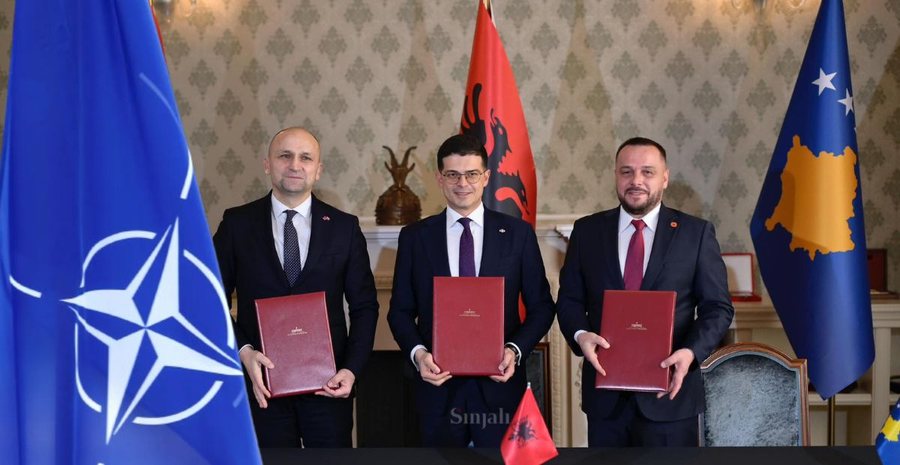
Senior NATO official emphasizes the role of regional member states and demands responsibility for incidents in northern Kosovo
NATO Deputy Secretary General Radmila Sekerinska stated that for the security and stability of the Western Balkans, also influenced by global geopolitical developments, investments in defense are important, but political dialogue remains crucial.
She emphasized that Alliance member countries from the region make an important contribution to stability.
In an interview with the Beta agency, given on the sidelines of this week's NATO Defense Ministers' meeting in Brussels, Sekerinska said that NATO has repeatedly called on authorities in the region to engage in dialogue, resolve outstanding political issues, and support regional prosperity and stability.
"We believe that all countries in the region can contribute and are interested in supporting stability. We expect everyone to provide support in this regard," she said.
Commenting on the recent meeting between defense officials from Croatia, Albania, and Kosovo, as well as the announcement of the first joint military exercise, which prompted the Serbian Ministry of Defense to react to possible long-term security consequences, Sekerinska stated that Albania and Croatia contribute to regional stability.
According to her, both countries are reliable allies within NATO and contribute to regional peace and stability, including through participation in the KFOR mission in Kosovo.
She explained that NATO did not participate in the discussions or consultations on the declaration of cooperation in the field of defense signed by Zagreb, Tirana and Pristina in March last year. However, NATO membership, she stressed, does not prevent countries from concluding additional defense agreements with third parties.
Sekerinska assessed that the global geopolitical situation has also affected the region, bringing more military exercises and increased investments in defense and security. She emphasized that NATO encourages allies and partners to engage in parallel in political dialogue and in resolving open issues.
"There is no military equipment that can help without proper political dialogue," she declared.
In this context, NATO supports the dialogue between Belgrade and Pristina and aims to create a favorable environment for a political solution.
Regarding the increase in military capabilities and arms purchases in the region, Sekerinska recalled that NATO member states, as well as other states, have increased defense investments due to clear threats, including Russian aggression against Ukraine and terrorist threats.
She recalled that at the NATO summit in The Hague last year, member countries pledged to increase defense spending to five percent of GDP by 2035, with the aim of strengthening defense and deterrence.
"This is not an arms race, but a response to real threats," she said, emphasizing that NATO focuses on prevention and defense, not aggressive postures.
Sekerinska also demanded that those responsible for the attack on KFOR members in Zvecan and for the events in Banjska in 2023 be brought to justice. She stressed that they have received guarantees from the authorities in Belgrade that responsibility will be determined.
NATO Secretary General Mark Rutte stated this week in Brussels that he still expects accountability for the events in Kosovo and that the Serbian president has promised him concrete results.
Šekerinska said that NATO will repeat this request and expects results from the Serbian authorities.
She stressed that NATO's presence in the region through KFOR and other missions demonstrates the Alliance's commitment to peace and stability. According to her, the Western Balkans are of strategic importance to NATO, which remains active in the region, despite its focus on strengthening defense and supporting Ukraine.
NATO has several member states in the region, Montenegro, Albania and North Macedonia, as well as partners, including Serbia, she concluded. /Adapted from Pamphlet /






Lini një Përgjigje