


 Shkruar nga Pamfleti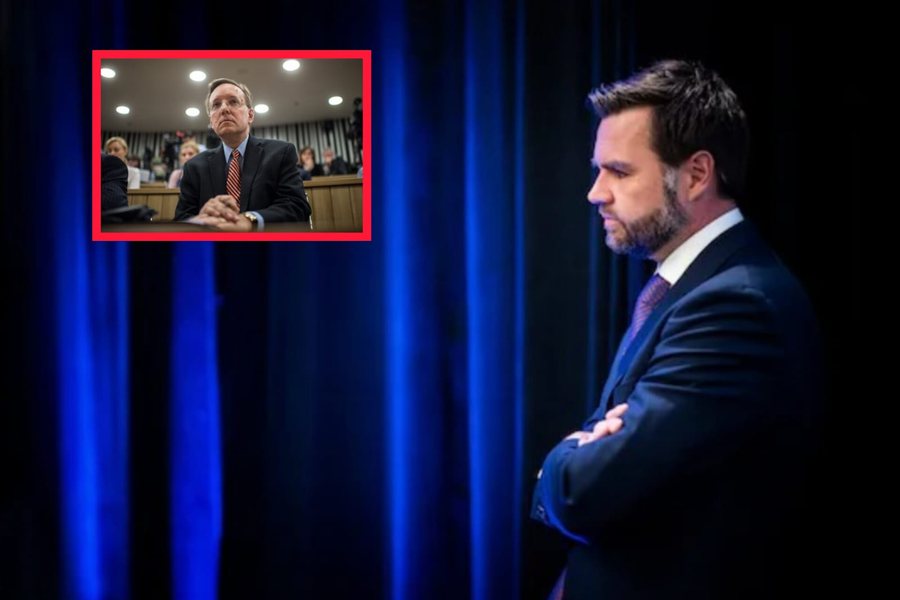
He allowed about 30 nominations to be approved, except for two: Sullivan chosen for Africa and David Kostelancik, Biden's choice for ambassador to Albania.
Before JD Vance became Donald Trump's choice for vice president, he was known in the most powerful offices of the State Department as the single biggest obstacle to confirming career ambassadors to the Senate.
Armed with a questionnaire on key social issues related to gay and lesbian rights, gender transition care and employment practices related to diversity, equity and inclusion, Vance (R-Ohio) held off on nominations for more than a year. of dozens of diplomats appointed to serve in posts in the Middle East, Africa and Latin America.
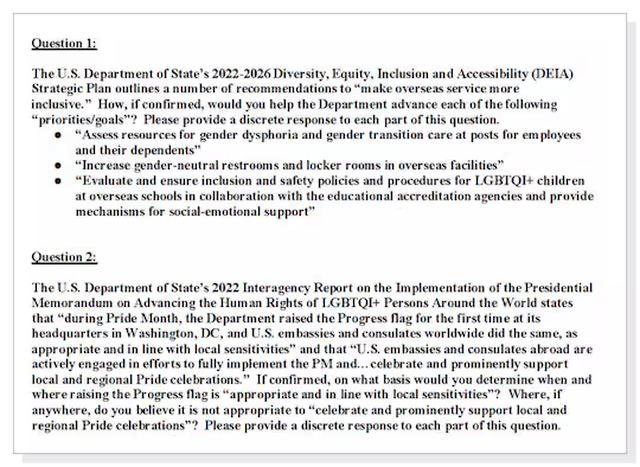
A copy of Vance's questionnaire, obtained by The Washington Post and published here for the first time, asked potential ambassadors whether they would increase the number of "gender-neutral bathrooms" at US embassies, whether they would increase resources for " gender dysphoria and gender transition" and whether they will raise the flag of these groups during their official holidays in the respective countries.
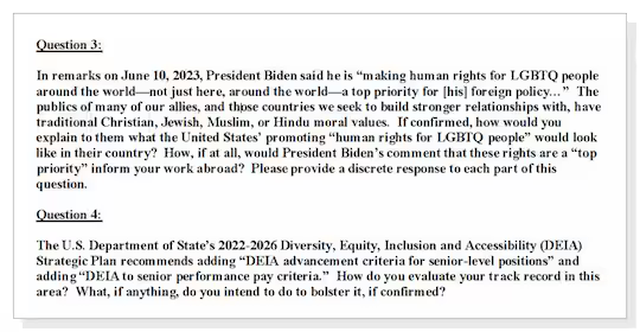
" The audiences of many of our allies and those countries with which we seek to build stronger relations have traditional Christian, Jewish, Muslim or Hindu moral values. If confirmed as ambassadors, how would you explain to them what the United States' promotion of 'human rights for LGBTQ people' would look like in their country? ,” Vance wrote in the questionnaire he gave to all ambassadorial nominees.
Vance's memo and President Biden's intense vetting of ambassador nominees reflect his view that cultural elitism has infected America's diplomatic corps and must be rooted out through extraordinary vetting efforts, said U.S. officials, who spoke on condition of anonymity to discuss the matter. meetings with closed doors.
Neither Vance's Senate office nor the Trump campaign responded to requests for comment for this story.
For many conservatives, Vance's oversight was a welcome response to long-standing concerns within the GOP that the United States has promoted left-leaning social values at the expense of American interests and foreign partners in more conservative regions of Africa, Latin America or Asia.
Many liberals saw the move as an attempt to prioritize his conservative agenda in a way that delayed qualified candidates from taking on jobs critical to maintaining the US's standing in the world.
For career diplomats, the question forced a complicated dance as they tried to appease the senator without challenging President Biden's assertion that LGBTQ rights were "human rights."
" This puts career diplomats at a disadvantage in being asked to continue to comment on how they would support policies that are favored by the current administration but may not be by the next administration. They are required to support the administration's policy in power, even when it means changing positions they've previously argued for or against ," said Barbara Stephenson, a former ambassador to Panama who served in senior positions under both Republican and Democratic administrations.
A year of back-and-forth negotiations between Vance and the State Department eventually led to the senator vacating most of his hold in April. At the height of his campaign, Vance placed more than 30 nominees for Senate-confirmed positions in the State Department. The holdover effect slows the confirmation process and forces the ruling party to call for individual votes instead of the faster method of moving nominations through unanimous consent.
The delay leaves vacancies in embassies that are temporarily filled by lower-level officials who do not enjoy the same status as presidential candidates.
None of the nominees Vance blocked drew his ire like Stephanie S. Sullivan, a career diplomat chosen to be Biden's envoy to the African Union.
Vance accused Sullivan, the former ambassador to Ghana who had overseen an embassy flying the Pride flag, of being "woke" and promoting a "progressive social policy" on gender identity.
“ Why do we have a diplomatic corps that is taking a controversial issue in an American political context and asking African nations to follow the lead of the far left instead of doing what they think they should do? " he said in the words on the floor of the Senate.
Liberal critics of Vance question his opposition to the United States playing an active international role in LGBTQ issues. Vance's defenders say his efforts will help make US diplomacy more successful in the developing world.
The State Department said the Biden administration stands by its efforts to "ensure that every person, everywhere, can live free from violence and discrimination, while respecting their equal rights." The White House has vowed to push back against Republican efforts including repealing a provision in a government spending bill that essentially bans the flying of Rainbow Pride flags over US embassies.
Politico reported last July that Vance had sent the questionnaire to the nominees but did not receive a copy of the document, and Vance declined to provide it. Unlike other Republicans known for holding presidential candidates like Sens. Ted Cruz (R-Tex.) or Tommy Tuberville (R-Ala.), Vance's far-reaching effort was unique in that he does not sit on the committee that oversees the nominations. , in this case, the Senate Committee on Foreign Relations.
While Vance's skepticism about Biden's nominees ran deep, officials said he asked honest questions about threats and challenges in various countries. By April, Vance and State Department staff moved past the yearlong deadlock after he felt confident the administration would not put ideology above national security considerations, officials familiar with the discussion said.
At that point, he allowed about 30 nominations to go through, except for two: Sullivan's pick for Africa and David Kostelancik, Biden's pick for ambassador to Albania.
Last month, Sullivan was confirmed through a Senate procedure known as cloture, while Kostelancik is still awaiting confirmation./ Adapted "Pamphlet" from "The Washington Post"



Lini një Përgjigje