


 Shkruar nga Pamfleti
At a time when rising prices are directly hitting households, the government is facing criticism for the way it is managing the social and economic situation in the country.
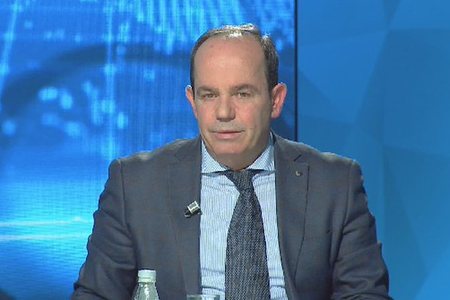
Former Finance Minister Arben Malaj has accused the government of an approach he calls "antisocial", emphasizing that unlike other countries that have intervened with support packages, Albania has chosen to wait.
" I have tried to verify this, I don't know how to name it, this antisocial attitude that the government has towards the needy. Inflation is a tax not approved by law, we call it a regressive tax, it hits those with lower incomes harder ," Malaj said on "Syri TV".
According to him, intervention should not be linked to a certain fuel price level, but to the real impact that inflation has on daily life.
" The price level has nothing to do with the necessity to intervene... while the government reports an average inflation of 3–3.5%, in fact, food and pension inflation is up to 10–15%. We cannot expect the government to 'remember' only when the price of oil reaches 220 lek per liter ," he said.
Malaj goes further, arguing that the state itself is benefiting financially from rising prices, through the automatic increase in VAT revenues.
" When we say that inflation is a tax, it means that the government, without changing the tax rate, abusively takes additional money. On a good that was 100 lek, 20 lek VAT was taken, when it becomes 120 lek, 24 are taken. So these are revenues from high inflation and should go only for social protection ," he emphasized.
According to him, the lack of a rapid and targeted response is leaving the weakest sections of society, who in Albania spend up to 60–65% of their income on basic needs, unprotected.
" In our country, there are people who spend up to 60–65% of their income on essential goods and feel abandoned. The government should have anti-inflation scenarios ready, not wake up when the crisis has happened ," Malaj said.
He suggests that support be direct and controlled, through targeted mechanisms such as special cards for purchasing food, so that funds go to those who need it most.
" Aid should be targeted. With a dedicated card that is used only for food, abuse is avoided and aid goes where it is needed. Many countries are doing this, while we still do not have any concrete instrument ," he said.
Speaking about agriculture, Malaj warns that the lack of support could have direct consequences on production and dependence on imports.
" Farmers must be helped urgently, because otherwise the production cycle will be lost. If agriculture has zero growth, while we claim millions of tourists, this means that we are fed by imports and inflation will only increase ," he argued.
Ultimately, he connects the economic situation to a broader problem of political trust and responsibility.
" When the government takes office, it makes a contract with the citizens. And the most important contract is the social contract. When citizens lose faith that their vote brings change, then authoritarian systems come without tanks ," Malaj concluded.




Lini një Përgjigje