


 Shkruar nga Pamfleti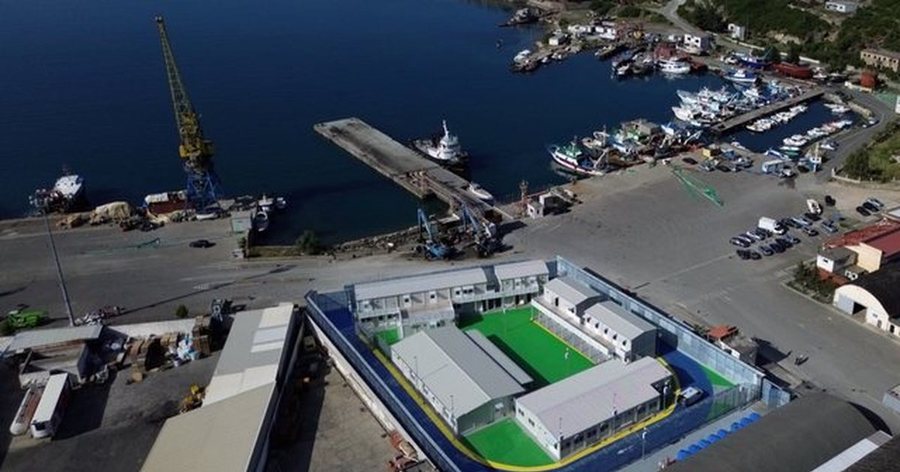
Only those immigrants who come from countries that Italy considers safe, will be able to be sent to Albania. Currently, there are 21 such countries, including Bangladesh, Egypt, Ivory Coast and Tunisia.
The Prime Minister of Italy, Giorgia Meloni, visited Albania this week, where her Government plans to build a reception camp for migrants caught at sea. In an effort to curb migration to Italy, Meloni signed an agreement with Albania last year to send some asylum seekers there and process their asylum claims there.
The agreement, initially for five years, foresees the landing of 36,000 immigrants per year in the Albanian port of Shengjin, about 75 kilometers south of the capital of Albania, Tirana.
Their cases will be treated in a center that is being built at a nearby air base in Gjadër, which will be able to accommodate 3,000 people. Both facilities will have Italian staff and operate under Italian jurisdiction. However, external security will be provided by Albanian guards. No. Only those immigrants who come from countries that Italy considers safe, will be able to be sent to Albania. Currently, there are 21 such countries, including Bangladesh, Egypt, Ivory Coast and Tunisia.
Last year, 56,588 immigrants arrived in Italy from these four countries. Meloni said last year that pregnant women, minors and other vulnerable people will not be sent to Albania. The Italian government did not come up with any figures. But, Corriere della Sera - the most read Italian newspaper estimated that it will cost around 653 million euros. The idea is that the selected immigrants will be sent directly to Albania, after being taken at sea. Meloni said officials will try to process asylum applications within 28 days, much faster than currently in Italy, where it takes months.
Those with approved asylum requests will be sent to Italy. The vast majority of claims are expected to be rejected because the countries the migrants come from are considered safe – which automatically limits their chances of asylum. Those with rejected applications will also be sent to Italy and placed in detention centers until repatriation.
Critics say this process is too slow, because many countries refuse to accept their own citizens, or set a limit on the number of returnees. Many migrants who are given deportation orders disappear from the centers and are scattered across Europe. It was supposed to start this month, but the facilities have not yet been completed. Italian newspapers speculate that the first migrants will not arrive in Albania until October or November.
Italian officials say the deal could help reduce overcrowding in Italy's asylum processing centers. Critics say it aims to discourage migrants to Africa from leaving because they could end up in Albania, which is not a member of the European Union and is not a wealthy country. By helping Meloni, the Government of Albania ensures its support as it tries to become a member of the EU.
It is also showing the rest of Europe that it is ready to help the 27-nation bloc deal with one of its most difficult problems in recent years. Albanians said this is also a way to thank Italy, which took in thousands of Albanians fleeing poverty after the fall of communism in 1991. Britain will send asylum seekers to Rwanda, but its plan differs from Italy's.
The main difference is that migrants sent to Rwanda will have to stay there, even if they gain refugee status. Another difference is that immigrants sent to Albania will be protected by the European Convention on Human Rights, unlike those in Rwanda./ REL








Lini një Përgjigje